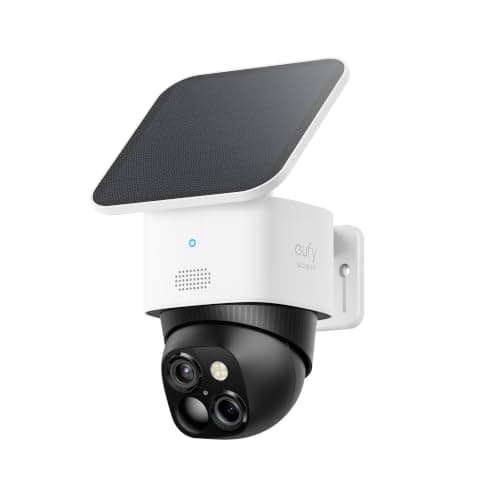
Sheds, barns, garages, workshops and stables hold the expensive, portable, uninsured things — tools, bikes, mowers, feed, a quad — and almost none of them has a socket on the wall or a Wi-Fi bar worth having. Those two facts eliminate most of the camera market before image quality is ever discussed, which is why a general outdoor camera roundup is the wrong place to shop for this.
Power is the first question and the only hard one
There are exactly four ways to power a camera on an outbuilding, and they rank cleanly.
- A cable from the house. Best outcome, biggest job. One Cat6 run carries power and data over PoE, the camera never needs charging, and it can record continuously. If the shed is 30 feet down the garden and you are willing to dig a trench or clip a cable along a fence, stop reading and buy the PoE camera.
- Integrated solar. Install-once, no trenching, no recharging, as long as the panel sees real sun. This is the right answer for most outbuildings.
- Long-life battery. No sun needed, but you climb up to change or charge cells. A camera rated in years rather than months turns that from a chore into an annual event.
- Mains inside the building. Only if the shed already has power, in which case a cheap wired camera inside is excellent value and the whole problem evaporates.
Signal is the second question, and it has cheap answers
A camera at the bottom of a garden is often one or two bars from the house router, and a marginal signal costs you battery before it costs you video — a camera that has to retry transmissions burns power doing it. Three fixes, in order of how well they work: a mesh node or access point in a window on the garden side of the house; an outdoor access point on the shed fed by the same cable you were reluctant to run; or accepting that the camera records locally and you review it on site.
That last option is a legitimate design rather than a failure, and it is the bridge to our other new page. A camera writing to a card in a barn with no connection at all is still doing its job — it is just not telling you about it in real time. If that is your situation, the wired options are ranked in our no-internet camera roundup.
A camera on a shed is also a camera on a shed.Every battery and solar pick here stores footage inside the camera, which means somebody who takes the camera takes the evidence. Mount high, out of reach from the ground, angled down at the door rather than out at the field — and if the contents justify it, a second cheap camera inside the building pointed at the same door is the real answer.
How we ranked them
Power autonomy first: how long the camera runs without human attention. Then storage, which has to be on the camera, because a plan that charges per camera is a bad deal on an outbuilding you look at twice a year. Then how tolerant the camera is of a weak signal and a cold winter. Image quality last — the distances involved at a shed door are short, and 2K at the door beats 4K from across a paddock. The rubric is at our methodology, compiled from manufacturer specifications rather than from testing.
Compiled from manufacturer specifications, October 2026. Battery and solar figures are the makers' published ratings, not measurements of ours.| Camera | Power | Human attention needed | Records to | Plan needed to record |
|---|
| eufy SoloCam S340 | Integrated solar | None, with real sun | Onboard, in the camera | No |
|---|
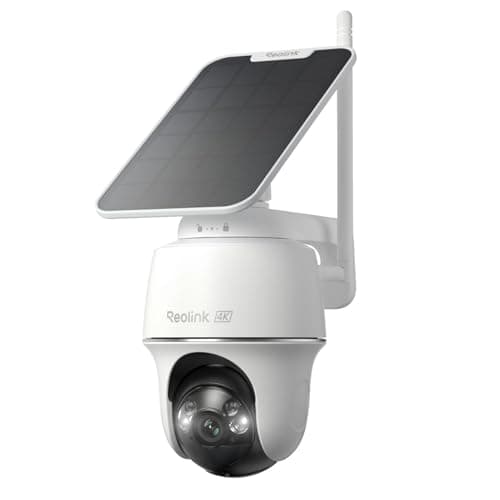
| Reolink Argus PT Ultra | Solar | None, with real sun | microSD in the camera | No |
|---|
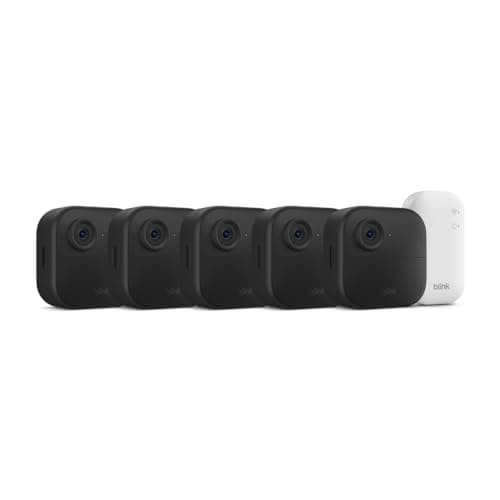
| Blink Outdoor 4 | 2x AA lithium | Published 2-year cell change | Cloud on a plan; USB via Sync Module 2 | Yes, unless you add a Sync Module 2 |
|---|
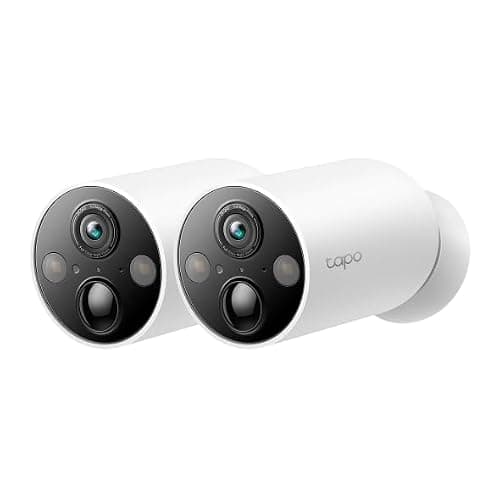
| TP-Link Tapo MagCam 2K+ | Rechargeable battery | Periodic recharge | microSD in the camera | No |
|---|
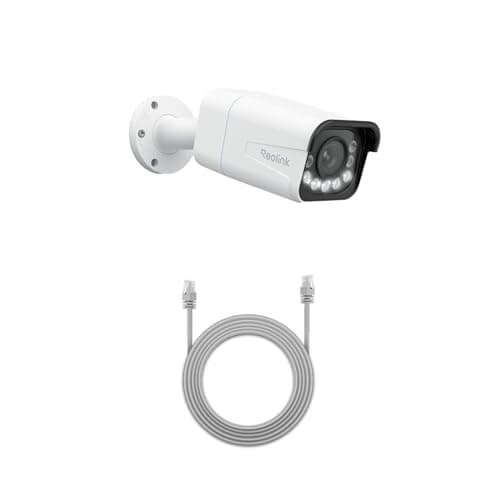
| Reolink RLC-811A | PoE, one cable | None, ever | Card or NVR, continuous | No |
|---|
eufy SoloCam S340 — install it once and forget it
The best match on this page for what an outbuilding actually needs. Integrated solar means no cable and no recharging cycle; pan and tilt across 360 degrees means a single camera on a shed corner covers the door, the side and the approach, which on a barn is the difference between one camera and three; and storage is on the camera, so there is no plan gating access to your own footage. 3K with a second zoomed lens gives you context and detail of the same scene.
The limitation is the one the product is built on. Solar only works with real sun exposure — a north wall under an eave or a shed under a tree canopy will not keep it charged, and then you have bought an expensive battery camera you have to climb up to charge. Local storage also means a stolen camera takes its footage with it, which is why the mounting note above matters more here than on a house wall. The wider solar field is in our solar camera roundup.
Reolink Argus PT Ultra — the same idea, more open
4K, pan and tilt, solar, and a microSD card with no account required to record. The reason to prefer it over the eufy is openness: Reolink publishes RTSP and ONVIF support across much of its range, which is what makes a camera usable in Home Assistant, Frigate or Blue Iris — relevant on a property where you may already be running a recorder for the house. Reolink also publishes a cold-weather story that most brands do not, which matters on a barn.
App polish is behind eufy's and Ring's, and like every battery-and-solar camera it records events rather than continuously. Reolink says so plainly in its own documentation, and the honest consequence is that a quiet approach between two motion triggers is not on the recording. What a solar camera does over a winter — and the charging cut-off that causes most January complaints — is in our solar camera winter guide.
Blink Outdoor 4 — for the shed the sun never reaches
Blink publishes a two-year battery life on a pair of AA lithium cells, and nothing else on this page is close. For a shed under trees, on a north elevation, or in a yard where no mounting position gets direct sun, that specification is the one that matters: you fit it, and you think about it again in two years. It is cheap enough to put one on each of several low-priority buildings.
It is last among the battery picks for the reason this site exists. Blink now ships the Sync Module Core with these kits, and Blink's own support documentation states the Core does not support local storage or clip backup — it has no USB port. So out of the box, saved clips go to Blink's cloud on a plan, and the plan-free path means buying a Sync Module 2 and a USB stick on top. It is also 1080p in a field that has moved to 2K and 4K. Buy it for the battery life with the extra module budgeted, or do not buy it.
TP-Link Tapo MagCam 2K+ — the cheapest way to cover a second building
Wire-free, records 2K+ to a microSD card with no plan, and mounts on a magnet — which on a steel shed or a metal barn door frame means the install is genuinely a two-minute decision rather than a drilling project. For a second or third outbuilding where the job is simply “tell me if somebody opened this,” it is hard to beat on cost.
Two caveats and they compound each other out here. A magnetically mounted camera within reach is a camera that can be taken, and on an unobserved outbuilding there is nobody around to see that happen — so this one wants height or a bolted bracket. And it is a rechargeable battery camera rather than solar, so it needs bringing in periodically, which is a worse chore at the bottom of a field than beside a back door.
Reolink RLC-811A — if you will run the cable, run the cable
It is on this page to be the honest ceiling. One cable carries power and data, the camera never needs charging or sun, it records continuously rather than in clips, it has a real 5x optical zoom for a long approach, and it publishes RTSP and ONVIF. Every battery camera above it is a compromise made to avoid this cable. If the shed is within reach of a sensible run and you own or will buy a PoE switch, this is simply the better camera.
And if the cable is not happening, it is the wrong purchase outright — there is no battery option. Be honest about which you are before ordering. Outdoor-rated Ethernet, a weatherproof junction and surge protection on a run between buildings are part of the job; the power-path options in full are in our guide to powering an outdoor camera.