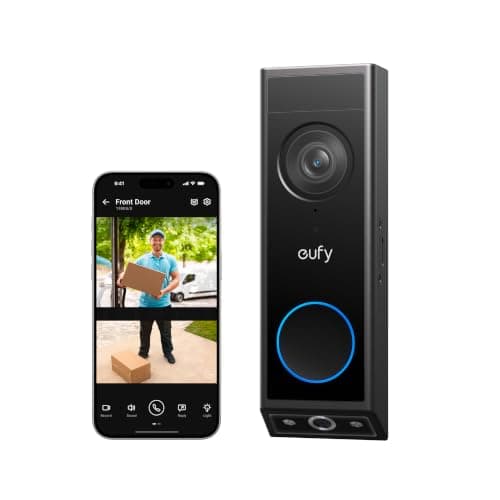
Deliveries are the single most common reason a household finally buys a video doorbell, and they are also the job most doorbells are worst at. The hardware is designed around a visitor's face: a lens at roughly chest height, aimed level, with a wide horizontal field that takes in the path and the street. A parcel is at ankle height, against the door, directly beneath the camera — the one place a level lens cannot look. You get a clip of a courier walking away and nothing of what they left, or did not leave.
The two things that decide a parcel doorbell
First, geometry: can the sensor physically see the mat. There are only three honest answers, and brands do not always tell you which one they sold you. A second, downward-facing lens is the direct solution. A tall aspect ratio — a near-square or portrait frame rather than a letterbox — is the cheaper engineering answer and often a sufficient one. A very wide single lens is the weakest, because wide buys you the neighbor's hedge, not the doorstep.
Second, who owns the alert. “Package detection” is a classifier that recognizes a box and sends a specific notification, and on some brands it runs on the device for free while on others it is a subscription feature. Those two products look identical on a listing and cost very different amounts over five years. Worse, on one brand in this roundup the recorded clip itself is plan-gated, so without a card number you have a doorbell that tells you someone was at the door and keeps nothing to look at afterward.
A detection alert is not evidence. If the clip lives in a vendor cloud you only rent access to, the day you stop paying is the day your delivery history stops existing. Every pick on this page except the last records to storage you own. The five-year shape of that choice is in our subscription cost comparison.
How we ranked them
Doorstep coverage first: a dedicated downward lens beats a tall frame, and a tall frame beats a wide one. Then whether the package classifier is a function of the hardware or of a plan tier. Then where the clip is written and whether playback costs anything. Then install flexibility — a doorbell that only works wired is the wrong answer for a house with no transformer, however good its lens is. Image quality after all of that, because a 2K sensor pointed at the wrong part of the porch is worth less than a 1080p one pointed at the right part. These are judgments compiled from manufacturer documentation, not bench tests; the rubric is at our methodology.
Compiled from manufacturer specifications and published plan documentation, October 2026. No prices appear here — live prices render on the buy rows above.| Doorbell | How it sees the mat | Package alert | Where the clip lands | Power | Chime in box |
|---|
| eufy Video Doorbell E340 | Second lens aimed down | Published, no plan | 8GB on the device | Battery or wired | No (several options) |
|---|
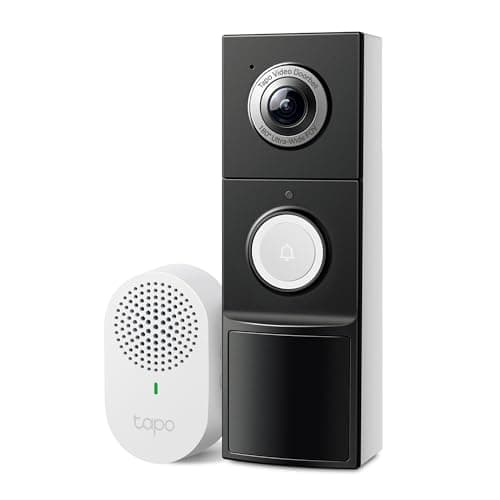
| TP-Link Tapo 2K+ Video Doorbell | 180° field, tall enough | Published, no plan | microSD in the unit | Battery or wired | Yes |
|---|
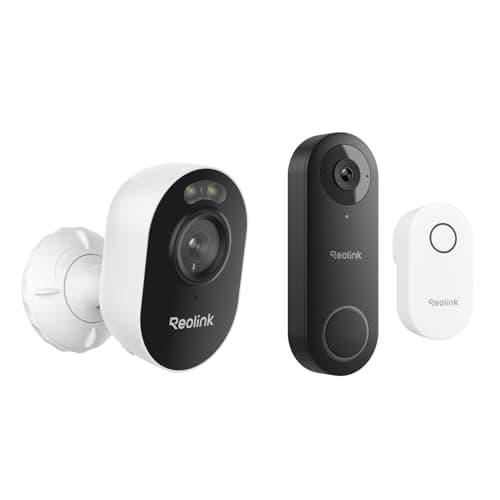
| Reolink Video Doorbell WiFi | Tall 3:4-shaped frame | Not the reason to buy it | Card or Reolink NVR | Wired only | Yes |
|---|
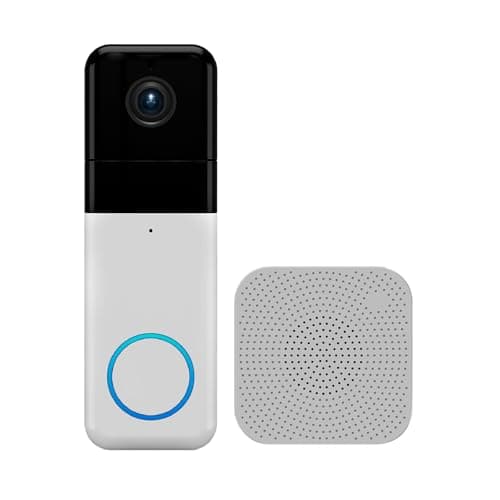
| Wyze Video Doorbell Pro | 1:1 head-to-toe frame | Cam Plus subscribers | Cloud events; card on some models | Battery | Yes |
|---|
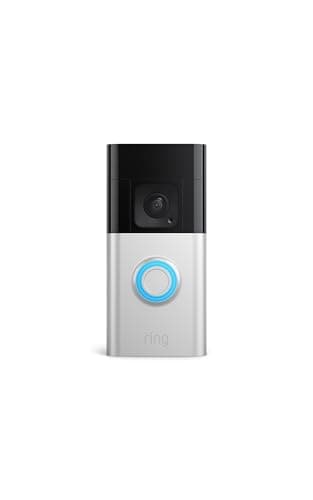
| Ring Battery Doorbell Plus | Head-to-toe aspect ratio | Ring Home plan | Ring cloud only | Battery | No |
|---|
1. eufy Video Doorbell E340 — the only one with a lens on the floor
eufy put two cameras in this doorbell: one forward at the visitor, one angled down at the step. That is the whole argument, and it is the reason this is the pick. Every other product on this page is trying to include the mat in a frame drawn for a face; the E340 has a lens whose job is the mat. eufy publishes 2K capture, color night vision, AI person, face and package detection running on the device, and 8GB of storage inside the unit — its own figures put that at months of event recordings rather than hours. There is no plan for recording, playback or detection.
The honest costs. Two video streams consume more storage than one, so the retention figure you get in practice depends on how busy your porch is. The chime is not in the box: eufy lists an existing mechanical chime, a HomeBase, its own add-on chime or an Alexa or Google speaker as the options, and in battery mode there is no chime circuit at all — so a household that needs an audible ring upstairs has a second decision to make before ordering. And 160 degrees of combined field is unremarkable for the money; you are paying for the second lens, not for width. If the full ranked doorbell field matters more to you than parcels specifically, that is best video doorbells.
2. TP-Link Tapo 2K+ Video Doorbell — free detection, any house
The Tapo is the pick when you do not know what is behind your existing bell, because it runs wired or on battery and neither mode costs you a feature. Tapo publishes person, pet, vehicle and package detection with no subscription, a 180-degree field tall enough to include the step, a microSD slot in the unit and a chime in the box. For a reader whose first question is “will this even work at my door”, that is the strongest combination here.
What it is not: a dual-lens doorbell. A wide single sensor spreads its pixels across the whole scene, so the parcel appears in frame with less detail than eufy's dedicated downward camera gives it. If the point of the purchase is reading a label or identifying a specific box, that difference is real. On battery, standby recording is reduced the way it is on every battery doorbell — a physical consequence of sleeping to save power, not a fault. The rest of the wire-free class is ranked in best battery video doorbells.
3. Reolink Video Doorbell WiFi — the frame, not the classifier
Reolink's doorbell takes the tall-frame route: its doorbell line publishes a portrait 3:4 image with a far taller vertical field than a conventional camera, which puts the caller head to toe and the mat in shot on every clip without a second lens. It records 2K to a card or a Reolink NVR, publishes an RTSP stream so Home Assistant, Frigate or Blue Iris can read it, and includes the indoor chime that several better-known brands sell separately. Nothing about it is subscription-gated.
Two caveats, and the first is a disqualifier rather than a drawback: it is wired only, fed from a low-voltage transformer behind your existing bell, with no battery variant to fall back on. Check for the transformer before you order. Second, do not buy this one for the package ALERT specifically — Reolink publishes package detection on parts of its doorbell range rather than as a blanket feature of every variant, so treat the guaranteed thing as the frame and the local recording. Our full write-up of the unit is at our Reolink Video Doorbell review, and the rest of the wired class is in best wired video doorbells.
4. Wyze Video Doorbell Pro — right shape, rented classifier
Geometrically the Wyze is one of the better answers in this roundup: a 1:1 frame, 1440 HD, genuinely head to toe, with the chime in the box and no wiring required. If the question were only “which lens includes my doormat”, it would rank higher than third.
It ranks fourth because the feature this page is about is a subscription on this brand. Package and vehicle detection are Cam Plus features; without the plan you get motion notifications and a shape walking up the path. Wyze's plan is among the cheaper ones in the category, which is a fair point in its favor and still a recurring bill for a classifier eufy and Tapo run on the device for nothing. The other reason for the ranking is not about features at all: Wyze has publicly disclosed security incidents affecting camera access, and a front door is the least forgiving place to accept that risk. That is a documented record, not a rumor, and you should read it before mounting one.
5. Ring Battery Doorbell Plus — the best alert, rented twice
Ring's package alerts are the most refined implementation of this feature in the consumer market, and the head-to-toe aspect ratio means the doorbell can see what the alert is talking about. Ring also documents the limits honestly: the classifier is tuned for medium-to-large boxes, and envelopes, tubes and food deliveries may not register. Alerts arrive fast, the app is the best in the category, and the accessory ecosystem has no rival.
It is last because you rent the whole thing. Package Alerts sit inside the Ring Home plans, and so does every recorded clip — there is no local storage option on this doorbell at any price. Without a plan it is a live-view intercom that notifies you and keeps nothing. It is also the previous generation: Ring's Battery Doorbell 2K Plus keeps the same head-to-toe shape at a higher resolution for similar money, so there is no case for starting on this one. For a plan-free household, the honest advice is to buy one of the four above; the plan-free field in full is best video doorbells without a subscription. The same storage question decided between two big brands is Ring vs Nest.
What a doorbell cannot do about deliveries
A doorbell camera records a theft; it does not prevent one. That sounds obvious and it is the main thing buyers in this category get wrong. If parcels are being taken from your step regularly, the fixes that change the outcome are a delivery location the street cannot see, a lockbox, or a redirect to a collection point — and then a camera to document what happens anyway. If the parcel is routinely left somewhere a doorbell cannot see at all, such as at the end of a drive or behind a gate, you need a camera with reach rather than a better doorbell; those are ranked in best security cameras for driveways, and the one with genuine optical reach is covered in our Reolink RLC-811A review. And if what you actually want to know is whether the front door opened while you were out, a contact sensor answers that more reliably and more cheaply than any camera: best door and window sensors.
The rest of this category — by power source, by install type and by whether a plan is involved — is on the doorbells hub.