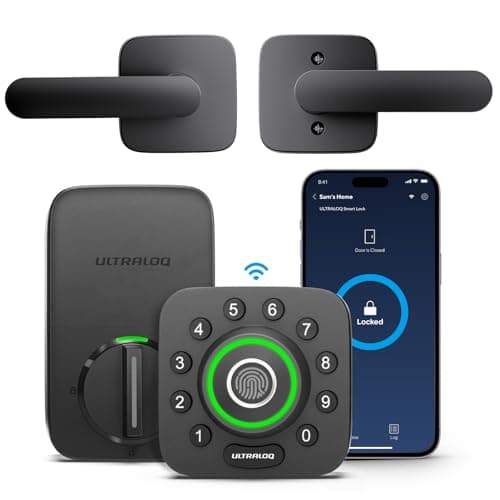
A smart lock on a parent's door is solving three specific, unglamorous problems: the door gets left unlocked, the spare key has been under the mat for eleven years and nobody knows who has a copy, and when a carer or a neighbor needs access somebody has to drive over with a key. Those are the problems to rank against — not app design, and not anything dramatic.
What actually decides this purchase
Five things, in this order. Can the person living there get in without a phone? Can they do it without fine finger control or a remembered code? Does the door lock itself, because auto-lock fixes the most common failure in this whole category? Can somebody else change access remotely, without a visit? And is there still a mechanical key, because a lock with no key fallback puts a flat battery between an older person and their own house.
Notice what is missing from that list. Resolution of the keypad, the number of integrations, voice control: all nice, none decisive. We also deliberately do not rank on alarm features or anything framed around intrusion. The realistic daily benefit is an unlocked door that locks itself and a carer who can be let in without a key handover.
Avoid a scrambling keypad for this use.The Lockly Secure Plus reshuffles the digit positions on every use, which genuinely defeats shoulder-surfing and smudge attacks — and makes the pad significantly harder for a child, an older relative or anyone with low vision. The security property and the usability cost are the same feature. It is a good lock and we rank it well in our keypad lock roundup; it is the wrong lock for this page.
Touchscreens, fingerprints and physical keys
Each entry method has a failure mode that lands disproportionately on older hands, and no maker advertises it. A capacitive touchscreen needs skin contact to register, so dry or cold fingers can tap at it with nothing happening. A fingerprint reader works from ridge detail that wears down with age and manual work, so enrollment can fail outright or degrade over months. A remembered code is fine until it is not. A mechanical key needs grip and rotation, which is the specific motion arthritis takes away first.
The conclusion is not that one method wins; it is that the lock should offer several. Every pick on this page offers at least two beyond the app, and the one that offers the most is ranked first for that reason. Where a maker publishes a touchscreen rather than physical buttons we say so in the table, because it is the method most likely to frustrate.
How we ranked them
Entry methods available without a phone, first. Then whether a second person can manage codes and see activity remotely, because that is the difference between a lock that helps the family and one that only helps the resident. Then auto-lock. Then key fallback and battery arithmetic. Then published hardware pedigree, which is where the deadbolt rankings start and this page finishes. The rubric is at our methodology and is compiled from published specifications, not from testing.
Compiled from manufacturer specifications, October 2026. Keypad type is as the maker publishes it; a blank means they do not state it.| Lock | Ways in without a phone | Keypad type | Remote code management | Mechanical key |
|---|
| Ultraloq U-Bolt Pro Wi-Fi | Fingerprint, code, key | Keypad | Yes, Wi-Fi in the lock | Yes |
|---|
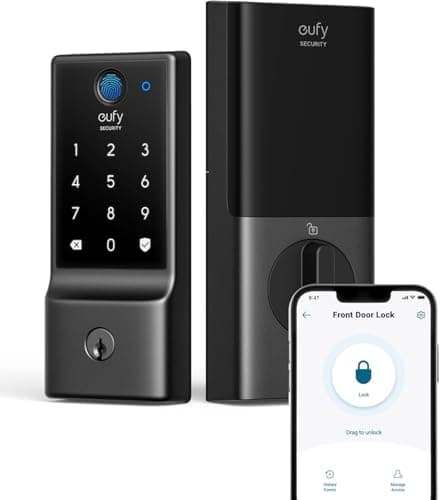
| eufy Smart Lock C220 | Fingerprint, code, key | Keypad | Yes, Wi-Fi in the lock | Yes |
|---|
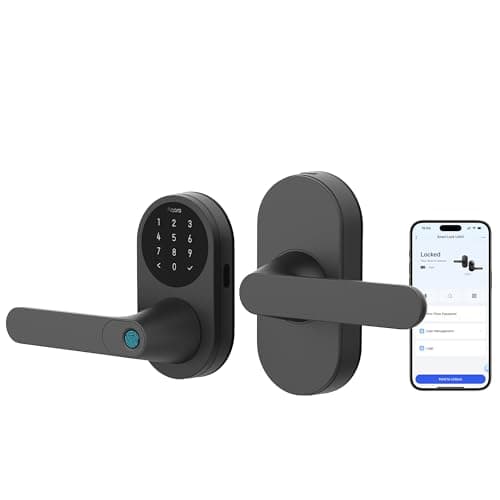
| Aqara Smart Lock U300 | Fingerprint, code, Home Key tap, key | Touchscreen | Yes, via a Matter controller | Yes |
|---|
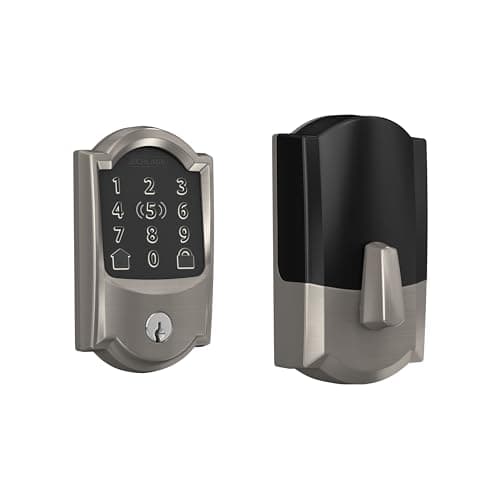
| Schlage Encode Plus | Code, Home Key tap, key | Touchscreen | Yes, Wi-Fi in the lock | Yes |
|---|
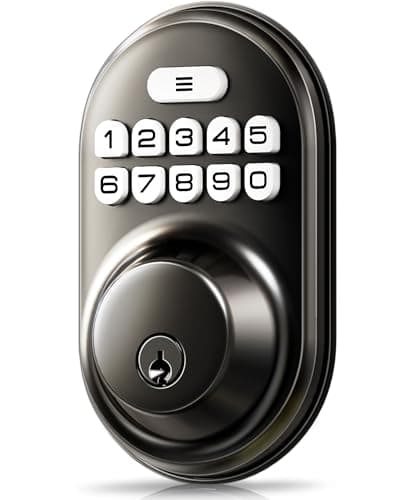
| Veise Keypad Deadbolt | Code, key | Backlit code pad | No radio at all | Yes |
|---|
Ultraloq U-Bolt Pro — the most ways in, and a door sensor
Two things put this first. The fingerprint reader is on the outside knob, where a hand already is, rather than on a separate pad that has to be found and aimed at — a small ergonomic difference that matters more than any specification on the box. And the bundle includes a door sensor, so the app can distinguish “the bolt is thrown” from “the door is actually closed,” which is precisely the thing a family member checking in from another city wants to know.
Built-in Wi-Fi means there is no bridge sitting in a hallway socket to be unplugged by a vacuum cleaner. Anti-peep code entry lets a real code be padded with junk digits in front of a stranger. The honest limitation is the one in its own record: capacitive fingerprint readers misread when wet or cold, and on an exposed door with no overhang the household ends up typing the code anyway. Enroll a code for everyone, treat the print as the convenience.
eufy Smart Lock C220 — the same three methods, less money
Fingerprint, keypad, app and key with built-in Wi-Fi, at the bottom of the price band that includes all four. For a straightforward front door on a standard bore it does everything the Ultraloq does except ship a door sensor, and eufy does not gate lock features behind a plan, which is not true of every brand in this category.
The trade is power. Built-in Wi-Fi in a battery lock is the heaviest possible draw, so expect shorter runs between cell changes than a Bluetooth or Thread lock — and on a lock somebody else maintains, battery changes are a visit. The arithmetic is worked through in how long smart lock batteries last. There is also no Matter upgrade path: it is a Wi-Fi lock and it stays one.
Aqara Smart Lock U300 — the lever, which is the accessibility argument
This is the only pick here that is a lever handle set rather than a deadbolt, and for hands that struggle to grip and twist, a lever is the single biggest usability change available on a door — it is operated with a forearm, an elbow or a closed fist. It also carries the widest set of entry methods on the page: fingerprint, touchscreen code, Apple Home Key tap, Bluetooth and a mechanical key, and it is natively Matter over Thread so any Matter platform can manage it.
The limitation is structural and it is why this is third rather than first: a lever set is the latch, not the bolt. On a front door the deadbolt is the lock that matters and this does not replace it. The realistic arrangement is this on the handle and something from the deadbolt rankingsabove it, or this on an interior or garage-to-house door. Apple Home Key specifically needs an Apple device that is both a Matter controller and a Thread border router — a HomePod or Apple TV, not just an iPhone.
Schlage Encode Plus — the strongest published hardware
Schlage is the reference point for published BHMA grades in residential deadbolts, which most smart-lock brands simply do not publish, and the Plus adds Apple Home Key so an iPhone or Apple Watch tap opens the door with no code and no app. For a parent who already uses an iPhone, a tap is the least demanding entry method on this page.
Two reasons it is not higher. The keypad is a touchscreen, which is the method most likely to fail for dry hands. And a large share of what you pay over the standard Encode is Home Key, which buys nothing at all in a household with an Android phone. It is also one of the most expensive locks in the category.
Veise Keypad Deadbolt — for a parent who wants nothing connected
Some people do not want an app on their door, and that is a legitimate position rather than a problem to solve. This is a backlit code pad with auto-lock and a physical key, no radio, no account and nothing to update — and auto-lock alone fixes the most common real failure on this list, which is a door left on the latch.
Be clear about what you give up: there is no remote anything. A code change means a visit, you cannot see whether the door is locked, and there are no alerts. If the main reason for buying is remote access for a carer, this is the wrong pick. If the main reason is that the door should lock itself and the key should stop living under the mat, it is the cheapest honest answer on the site, and a contact sensor beside it covers the alerting job for a few dollars more — which is exactly what its own record recommends.
Setting it up so it actually helps
Three things to do on the day, none of them in the manual. Enroll at least two entry methods for the resident, not one: a print and a code, or a code and a key kept somewhere sensible. Give the carer, the neighbor and each family member their own code rather than sharing one, so a code can be withdrawn without changing everybody's — the mechanics of that are in our guide to guest codes and access. And agree who owns the account before you install it: a lock administered from a phone that nobody else can unlock is a problem waiting for a bad week. The rest of the category is at the smart locks hub.