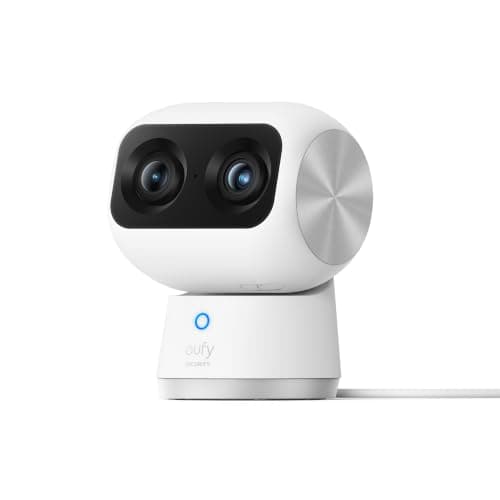
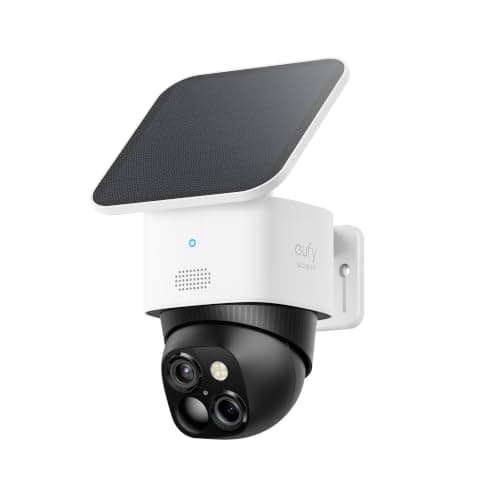
The eufy SoloCam S340 is the pick: solar powered, dual lens, and it writes recordings to storage inside the camera, so nothing about watching your own footage is gated behind an account tier. If you can run a cable instead, the wired Tapo camera below does continuous recording for a fraction of the money.
Products we claim to have tested: 0.Everyone in this category says they tested a dozen cameras on their own driveway. We have not tested any, and we say so. What we do instead: read the manufacturer's published specification and manual, work out what the camera does when you never pay, compute the running cost, and cite all of it. The rubric is published in full on our methodology page.
The best security cameras without a subscription, compared
Every column below is one of the five things that actually decide this purchase. Note that the “what you lose with no plan” column is where the category separates: two of these cameras lose nothing at all, and one loses most of what you bought it for.
Compiled from manufacturer specifications and published support documentation, July 2026. Blink is included as a reference row because it is the clearest example of subscription-free storage that costs extra hardware.| Model | Where footage is stored | What you lose with no plan | Continuous or event-only | Power | Works offline |
|---|
| eufy SoloCam S340 | Onboard storage in the camera | Nothing for recording, playback or alerts | Event-only (battery design) | Integrated solar | Records locally; alerts need the network |
|---|
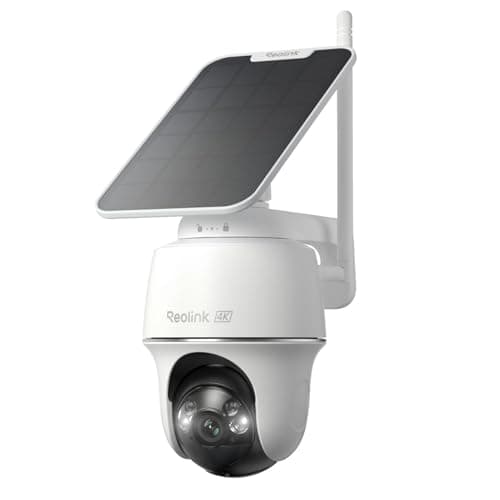
| Reolink Argus PT Ultra | microSD in the camera | Nothing for recording or playback | Event-only (battery design) | Solar | Records locally; RTSP and ONVIF for local viewing |
|---|
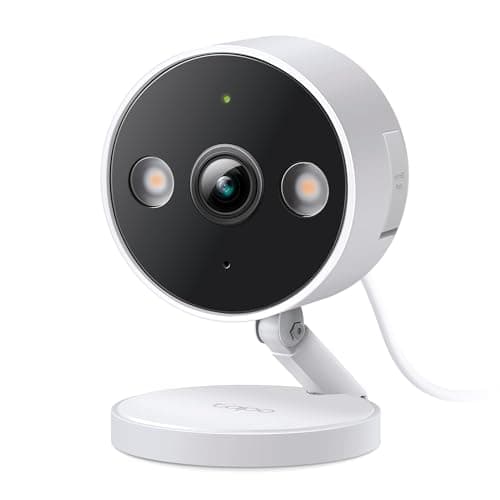
| TP-Link Tapo wired 2K+ | microSD in the camera | Nothing for continuous recording | Continuous, 24/7 | Mains | Records locally |
|---|
| eufy Indoor Cam S350 | microSD in the camera | Nothing for recording or playback | Event-only, with continuous available on mains | Mains | Records locally |
|---|
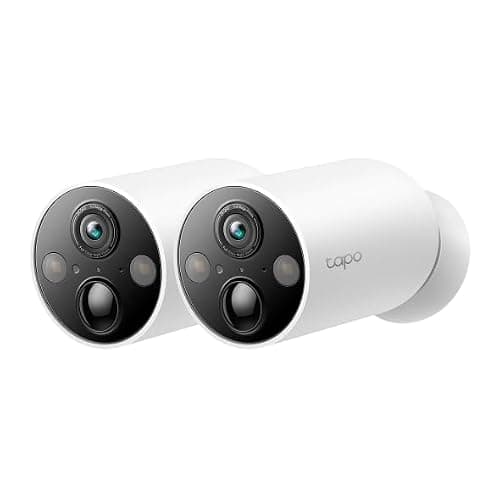
| Tapo MagCam 2K+ | microSD in the camera | Nothing for recording or playback | Event-only (battery design) | Rechargeable battery | Records locally |
|---|
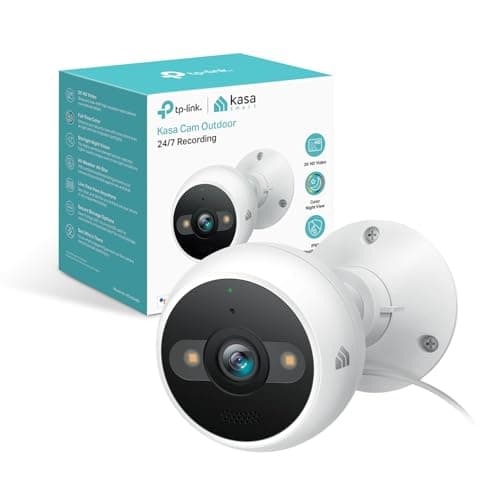
| Kasa 2K+ outdoor wired | Local storage on the camera | Nothing for continuous recording | Continuous, 24/7 | Mains | Records locally |
|---|
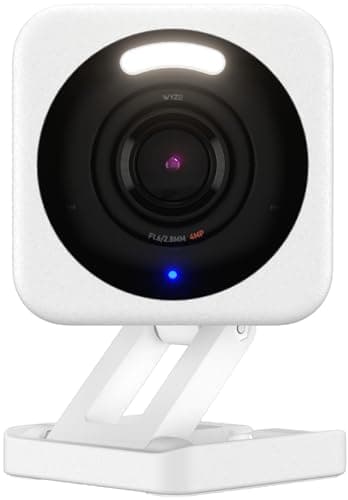
| Wyze Cam v4 | microSD in the camera | AI detection features move behind Cam Plus | Continuous to card; event features are plan-gated | Mains | Records to card locally |
|---|
| Blink Outdoor 4 (reference) | Cloud by default; USB drive via Sync Module 2 | Saved cloud clips, unless you buy the Sync Module | Event-only | 2x AA lithium, two-year published life | Only with the Sync Module fitted |
|---|
There are three kinds of “no subscription”, and brands do not separate them
This is the single most useful thing on this page. Search results for subscription-free cameras treat the phrase as binary, and it is not. A camera can be honestly described as working without a plan and still be a poor purchase for someone who never intends to pay. Three tiers, in descending order of how good the deal is:
Tier 1: truly free local recording
The camera writes video to a card or an internal store, and the app plays it back with no account tier in the way. Recording, playback, scrubbing the timeline, downloading a clip, motion alerts: all of it works forever, for the price of the hardware and a memory card. The eufy SoloCam S340, both Reolink models, the Tapo cameras, the Kasa outdoor camera and the eufy Indoor Cam S350 are all in this tier. This is what the phrase should mean, and it is what the whole of our subscription-free hub is organized around.
Tier 2: free, but only after you buy more hardware
Blink Outdoor 4 is the honest example. Blink publishes a two-year battery life on a pair of AA lithium cells, which is a genuine engineering achievement that nothing else here comes close to. But out of the box, a saved clip goes to Blink's cloud on a plan. To store clips locally you buy a Sync Module 2 and supply your own USB drive. That is not a subscription, and it is also not free — it is a second purchase that most listings do not put next to the camera. Judge it on the total, not on the camera price. The same shape applies to Arlo, whose local storage route runs through a base station that is a shrinking part of their range.
Tier 3: free, but crippled
The camera technically functions with no plan — live view works, notifications arrive — but the thing you bought it for does not. Ring's cameras are the clearest case: there is no local storage option at any price, so without a plan the camera keeps nothing you can watch later. Wyze sits in a milder version of the same place. Local card recording on the Wyze Cam v4 is genuinely free, but a good share of the smarter detection sits behind Cam Plus, so the free experience is noisier than the reviews describing the paid one. That is why the Wyze camera is ranked last here rather than left off: it is a real subscription-free camera with a real asterisk.
If you are comparing a plan-based camera against a local one, do the arithmetic before you compare the sticker prices. A monthly fee multiplied out over the life of the camera is usually the larger number. We publish the model, the formula and each vendor's plan structure at subscription costs compared.
Why the eufy SoloCam S340 is at the top
Three properties line up in one product, which is rarer than it sounds. It is solar, so there is no charging ladder every few months and no cable to route through a wall. It has two lenses, so you get a wide view of the scene and a zoomed detail view of the same event rather than choosing between them. And storage is in the camera, so the question “can I watch what happened last Tuesday” has nothing to do with an account tier.
The trade-off is stated on the product itself and we will restate it here: solar only works with real sun exposure. Under a deep porch overhang or on a shaded north-facing wall you have bought an expensive battery camera that you now have to climb up to recharge. Walk the mounting position at midday before you order. If it is in shade, buy the wired Tapo camera instead and run the cable.
The second trade-off is the one that applies to every camera on this list and that almost nobody in this category writes down: local storage means a stolen camera takes its footage with it. A cloud camera that is ripped off a wall has already uploaded the clip of the person ripping it off the wall. A card-in-the-camera model has not. We treat that as a reason to mount high and to keep a second camera covering the first, not as a reason to start paying — but you should decide that knowingly. The full argument, including the hybrid setups, is in our guide to local storage versus cloud security cameras.
Event-only or continuous: the choice that quietly decides your camera
Almost every disappointment in this category traces back to this one distinction, and the marketing does not help.
Event-only recording means the camera sits asleep, wakes when motion crosses its detection zone, and records a clip. It is the only thing a battery or solar camera can do, because a radio and a sensor running continuously would flatten any battery in days. The cost is the gap: the camera takes a moment to wake, so the first second or two of the event is often missing, and anything that never triggers motion detection was never recorded at all.
Continuous recordingmeans the camera writes every second of every day to storage and you scrub back to any moment. It requires mains power or Power over Ethernet, full stop. No battery camera does it, including every solar model on this page. If your reason for buying a camera is “I want to be able to check what happened” rather than “I want to be told when something happens”, you want a wired camera and you should stop looking at the battery ones. The cheapest honest route here is the wired Tapo 2K+, which records 24/7 to a card at a price most brands charge for event clips.
A practical middle path: wired cameras on the two approaches that matter, solar cameras on the ones that are awkward to cable. Nothing requires a single-brand house, though it does make one app instead of three. The whole-property version of that logic is worked through on our cameras hub, and the two brands that dominate this page are put head to head in eufy vs Tapo— a system with a base station against standalone cameras and a card you own.
Cameras we did not rank, and why
Leaving products out silently is how roundups mislead. Three cameras belong in this conversation and are not in the ranking above.
Ring's cameras. The app, the notification reliability and the Alexa integration are genuinely the best in the category, and we will not pretend otherwise. But there is no local storage option, at any price, on any of them. Without a plan you get live view and notifications and no saved footage. On a page about cameras that work without a subscription, that is disqualifying by definition rather than by opinion. If you want the Ring app experience and can live with the bill, the honest comparison is Ring versus eufy, head to head.
Arlo. Excellent imaging — 2K HDR, long optical reach, color night vision — attached to the most aggressive plan model in the category. Local storage exists via an Arlo base station, but it is a separate purchase and a diminishing part of the range. Arlo has also raised plan pricing more than once, which is exactly the risk a subscription-free buyer is trying to avoid.
Blink. In the table as a reference row rather than as a pick, for the Tier 2 reason above: subscription-free storage is real, and it costs a Sync Module 2 plus a USB drive. If two-year battery life is the requirement that overrides everything else, it is still the answer — just buy the module in the same order.
What a subscription would actually buy you
We are not against paying for a service, we are against paying for one by accident. Plans in this category typically bundle four things: off-site storage of clips, longer retention, cloud-side detection that distinguishes a person from a car from a package, and in some cases an extended hardware warranty or a cellular backup path.
Of those, off-site storage is the one that a local-storage camera genuinely cannot replicate, and it is worth naming plainly. Everything else is increasingly available on the device: eufy runs face recognition on the HomeBase rather than in a data center, Reolink does person and vehicle detection on the camera, and Tapo ships person, vehicle and package detection without a plan. Detection quality was the real argument for subscriptions five years ago. It is much weaker now, and the vendors that still gate it are gating a capability their own silicon can do.
How we picked
Every camera here had to record and play back footage with no plan, publish a storage mechanism we could verify in the manufacturer's own documentation, and carry a specific, disqualifying reason to skip it. Ranking weights storage freedom, no-plan value, image specification, power practicality and ecosystem openness. Scores are judgments compiled from published sources, not bench measurements. The rubric, the weightings and the exact sources are on our methodology page.
How to choose a security camera with no monthly fee
Start with power, because it decides everything else
Power is not a detail, it is the fork in the road. Mains or PoE gives you continuous recording, no charging cycle and a camera that is still running in year five. Battery and solar give you a five-minute install anywhere, event-only recording, and a maintenance task. Decide this first and half the catalog disappears, which is a good thing. The single most common regret we see described in owner forums is a battery camera bought by someone who wanted a timeline.
Then pick the storage architecture
A card in the camera is the simplest thing that works: cheap, self-contained, and nothing else to power. A base station centralizes storage from several cameras and usually takes a much larger drive, so retention becomes a hardware decision instead of a plan tier. A network video recorder is the full version of the same idea with weeks of continuous footage from four or more cameras. We work through all three, and their failure modes, in our local storage camera roundup.
Do the retention arithmetic before you buy the card
Retention is storage capacity divided by the daily write rate, and the daily write rate depends on resolution, bitrate and whether you are recording continuously. A 2K camera recording 24/7 will fill a small card in days and a large one in weeks; the same camera recording only events may keep months. Manufacturers publish maximum supported card sizes and most publish an estimated retention table in the manual. Read that table before you decide the camera is inadequate — the usual fix is a bigger card, not a subscription.
Check what happens when the internet drops
“Works offline” is not one property. A local-recording camera keeps recording during an outage, because the card is in the camera. It does not keep notifying you, because a push notification has to reach your phone across the internet that is down. Cameras with RTSP or ONVIF support — Reolink publishes both across much of its range — can also be viewed live on your own network with no vendor cloud in the path at all, which is the strongest version of offline capability sold. If that matters to you, filter on RTSP and ONVIF specifically rather than on the phrase “local”.
The mistake buyers make
They compare hardware prices across brands whose business models are different. A plan-based camera can be cheaper on day one precisely because the vendor expects to make the money back monthly, for as long as you own it. A subscription-free camera costs more up front for exactly the same reason in reverse. Comparing the two on sticker price alone is comparing a lease against a purchase. Run both through the model on our subscription cost page and compare the five-year totals instead.
Two things to verify on the listing before you order
First, the maximum supported card size and whether a card is included — most are not. Second, whether local recording on your specific model is full playback or thumbnails only. A small number of cameras store event snapshots locally and route actual video through the cloud, which is not the same product even though the listing bullet reads identically. The manufacturer's manual answers both questions and the retailer listing usually does not.