HUB 06 · Guides
How to Secure Windows From Break-Ins
Most window hardware is designed to hold a window shut, not to resist somebody trying to open it. The fixes that matter are mechanical, cheap, and come before anything with a battery in it.
We earn a commission if you buy through our links. It does not change the price you pay, and it does not decide our picks — our selection criteria are published in full. How this works.
Verdict
The bottom line
Start with the hardware, not the electronics. On most windows the factory catch is a convenience latch holding two frames together, not a lock resisting force — so the first and cheapest improvements are a keyed sash lock or a secondary stop on every accessible window, a pin or dowel limiting travel, and making sure the frame is not simply held by paint. Then consider the glass: security film does not make a window unbreakable, it changes the failure mode so the pane holds together and the attack takes longer and makes more noise. Only then add sensing, and add two kinds — a contact sensor for the window being opened and a vibration or glass-break sensor for the pane, because neither one sees what the other sees.
What a window latch is actually doing
A standard double-hung window has a cam lock or crescent catch at the meeting rail: you turn it and a cam draws the two sashes together. Its job is to hold the window closed against wind and to seal the draught. It is screwed into relatively soft wood or clipped into a vinyl extrusion, and it resists a determined upward shove on the lower sash much less than people assume. A casement window is better — its multi-point gearing throws hooks or mushroom cams into the frame — but the handle itself is often unkeyed, so a hand through a broken pane simply turns it.
That is the mechanism the whole of this page follows from. The two realistic routes into a window are forcing the sash while the catch holds, and breaking enough glass to reach the catch and open the window properly. Every fix below addresses one or the other, and knowing which one you are addressing is how you avoid spending money on the wrong thing.
Four mechanical fixes, in the order they are worth doing
- Add a keyed sash lock or a secondary catch. On a double-hung window, a keyed sash lock at the meeting rail or a second catch offset from the first means forcing one point no longer opens the window. Two fixings resist far better than one, and the second one is a few dollars.
- Pin the travel.Drill a small hole through the inner sash channel and drop in a removable pin or a cut dowel so the lower sash cannot rise more than a few inches. This is the window equivalent of a track screw in a patio door, costs nothing, and still allows ventilation. Keep the pin removable — a window that cannot open is a fire-escape problem, which matters more than the burglary risk on an upstairs bedroom.
- Fit keyed handles on casement windows.If the multi-point gearing is sound, a keyed handle turns “reach through and open it” into “reach through and find it still locked.” Keep the key nearby but not in the handle, and again, think about escape routes first.
- Check the frame and the glazing beads. On older vinyl and aluminum units the glazing beads can be on the outside, which means the pane can in principle be removed rather than broken. If yours are external, internally-beaded replacement units are the real fix and nothing else substitutes for it.
Basement and ground-floor rear windows first. Effort goes where the opportunity is: windows that are concealed from the street, low enough to climb through, and reachable without a ladder. A first-floor bedroom window over an open lawn is a much lower priority than a basement window behind a hedge, and spending the same money on both wastes half of it.
What security film does and does not do
Window security film is a polyester laminate applied to the inside of the pane. It does not make glass unbreakable and no reputable manufacturer claims it does. What it does is hold the fragments to the film when the pane breaks, so instead of a hole you get a cracked, sagging sheet that still has to be cut or pushed out of the frame. That changes the failure mode: the attack gets slower, noisier and more visible, which is what deters.
Two things decide whether it is worth it. Thickness — thin decorative film does nothing for security and the products that matter are measurably thicker. And edge retention: film applied only to the glass can be pushed out of the frame as a sheet, which is why the serious installations also bond the film edge to the frame. Judge the product by its published specification, not by the demonstration video.
Then, and only then, the sensing layer
Sensing does not stop anybody. It tells you, and it starts a noise. That is worth a lot, but it is worth more on top of the mechanical work than instead of it. Windows need two different kinds of sensing because the two attack routes look completely different to a sensor.
A contact sensoris two pieces, a magnet and a reed switch, that trip when separated. It catches the window being opened — including by somebody who reached through and turned the catch, which is the attack people forget a contact sensor still catches. It is completely blind to a broken pane that nobody then opens.
A vibration or glass-break sensor catches the pane. Vibration sensors mount on the glass or the frame and react to it being struck; acoustic glass-break sensors listen for the frequency signature of breaking glass across a room. These are different mechanisms with different coverage, and the makers of vibration sensors are explicit that theirs is not acoustic detection. Both are ranked in our glass break sensor roundup, and the contact-sensor field is in our door and window sensor roundup.
A patio slider is a window-sized sheet of glass with a door's hardware, and it has its own geometry problems — narrow stiles, a wide closed gap, a panel that lifts in its track. Those are in our sliding-door sensor roundup and our guide to securing a slider.
Where lighting and cameras fit
Lighting is cheap and it works on the opportunity rather than the window: a dark concealed side passage is the thing that makes a basement window attractive, and a motion light or simply trimming the hedge removes more risk than a better catch does. A camera does not secure a window either — it documents what happened and, if it is visible, changes the calculation before anything happens. The sensible order is mechanical fixes, lighting, sensing, then a camera. Camera positions are worked through in our camera placement guide.
Renting? Three of the four fixes are still available
A pin through the sash channel is a small reversible hole, and many landlords will agree to it in writing. Adhesive-mounted contact and vibration sensors leave nothing behind. A standalone window alarm that sticks to the pane needs no hub, no app and no account, which means nothing to uninstall and nothing to cancel. What you should not do without written permission is change the window hardware or apply film, both of which alter the unit. The renter-specific picks across every category are in our no-drilling lock roundup and our renter camera roundup.
The hardware this guide refers to
The four below are one per layer rather than a ranking: a no-hub pane alarm that needs nothing at all, a slim Thread contact sensor for the window being opened, a combined contact-and-vibration sensor that covers both routes in one body, and an acoustic glass break sensor for a large glazed room. Their prices come live from the Amazon API and were last checked October 15, 2026. Everything in this category is at the sensors hub, and the rubric is at our methodology.
The hardware
The hardware this guide is about
The products this guide refers to, with prices pulled live from Amazon and dated on every card. Full rankings live in the roundups linked above.
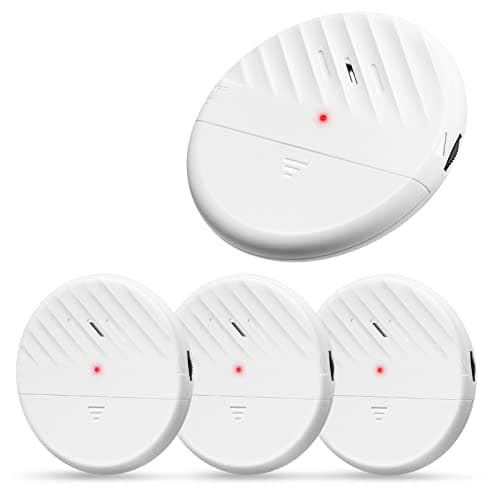
Best no-hub window alarm
WSDCAM Glass Break Window Alarm (4-pack)
No hub, no app, no account: a slim vibration alarm that sticks to the pane and sounds at 125dB if the glass is struck. The whole product is the siren, and on a rental that is often the right amount of technology.
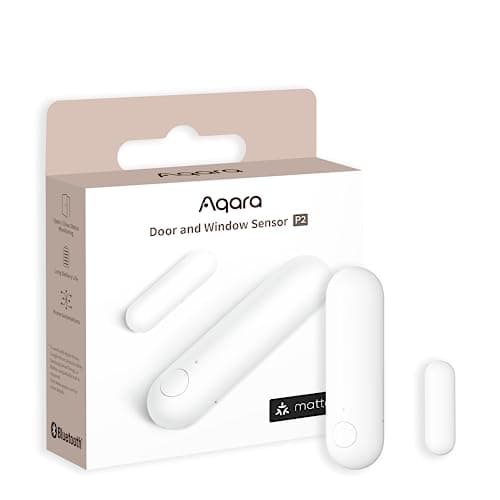
Best door and window sensor
Aqara Door and Window Sensor P2
Thread, and that is the whole point. It joins a Matter fabric directly, so it reports to Apple Home, Google Home, SmartThings or Home Assistant without Aqara's cloud anywhere in the path.
- ProductNo image
Best combined contact and vibration sensor
Aqara Multi-State Sensor P100
Contact and vibration in one body, with ten sensitivity levels — so a single device covers both the window being opened and the window being struck.
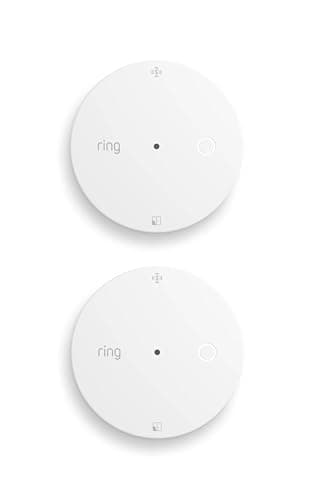
Best glass break sensor
Ring Glass Break Sensor
Acoustic glass-break detection that runs on Amazon Sidewalk with no base station, which removes the usual barrier: you no longer need a whole alarm system to cover one big window.
#ad · As an Amazon Associate we earn from qualifying purchases.
Questions
Frequently asked
What is the best way to secure a window from the inside?
Does window security film actually work?
Do I need both a contact sensor and a glass break sensor on a window?
Can I secure windows in a rental?
Should I secure upstairs windows too?
Keep reading
Related
- How to secure a sliding glass doorThe same approach applied to the opening with its own geometry problems.
- Best glass break sensorsAcoustic detection, ranked, for a large glazed room.
- Best door and window sensorsThe contact-sensor field for covering a whole perimeter.
- Where to place security camerasOnce the mechanical work is done, the documenting layer.
Receipts
Sources
- Aqara — Door and Window Sensor P2 and Multi-State Sensor P100 specifications
- Ring — Glass Break Sensor specifications and acoustic detection documentation
- WSDCAM — window alarm specifications, 125dB siren and vibration trigger
We do not run a testing lab and we do not pretend to. Specifications come from the manufacturer's own published documents and from published standards; prices come from the live Amazon API. Where a figure is not published, the page says “not published” rather than guessing. Where the published document above is a retailer listing, that link is an affiliate link like any other on this page. Read the full method.