HUB 06 · Guides
Can Smart Locks Get Wet? Outdoor Ratings and Weatherproofing, Explained
Every smart lock on this site is rated for weather on one side and for a living room on the other. What the IP code on the box actually promises, what it leaves out, and the one installation every maker tells you not to do.
We earn a commission if you buy through our links. It does not change the price you pay, and it does not decide our picks — our selection criteria are published in full. How this works.
Can a smart lock get wet?
The outside half, yes. Every smart lock on this site is built to sit on an exterior door and take rain on its keypad; most publish an ingress rating for that half, typically IPX4 to IP65. The inside half is not rated at all and is meant for a room. So the real question is not whether the lock can get wet but which side gets wet, and whether the door is a front door or a gate.
The one thing every maker agrees on
Read the fine print from Schlage, Yale, Lockly, ULTRALOQ and Kwikset and the same sentence appears in five different wordings: the interior assembly is for indoor use. Yale says the lock “is not built to handle gates or applications where the interior of the lock is exposed to outdoor conditions all day or night.” Schlage says it does “not recommend our smart locks be used on outdoor gates or on doors in which the lock's interior housing is completely exposed to the elements.” ULTRALOQ states plainly that “the interior assembly is intended for indoor use only and is not weather-resistant.” Kwikset publishes a separate, narrower temperature and humidity range for the interior side of the Aura Reach than for the exterior.
That settles the most common version of this question before any rating is read. A smart deadbolt on a garden gate, a pool fence, a detached workshop with no interior wall, or a door that opens straight onto weather from both sides is outside every one of these makers' stated use. The battery compartment, the motor and the radio all live in the interior housing, and none of them is sealed.
What the IP code on the box actually says
An IP rating is two digits from the IEC 60529 standard. The first digit is protection against solids - dust - on a scale to 6, where 6 means dust-tight. The second digit is protection against water, on a scale to 9. An X in either position means the maker did not test or does not claim that digit, so IPX5 says nothing about dust at all. The water digits that turn up on door locks:
| Second digit | What was tested | On a door, roughly |
|---|---|---|
| 3 | Spraying water at up to 60 degrees from vertical | Rain falling on it, not wind-driven from the side |
| 4 | Splashing water from any direction | Rain from any angle, a splash from a hose |
| 5 | Water jets from a nozzle, any direction | A hose or pressure-washer pass at a distance |
| 6 | Powerful water jets | Not something a door lock is normally rated for |
Two things the code does not tell you. It says nothing about temperature, which is the spec that actually kills batteries and fingerprint readers, and which every maker publishes separately. And it says nothing about time: the IEC tests last minutes, and a door that stands in weather for a decade is a different proposition from a door that gets rained on for a few minutes in a lab. Both are why the makers also publish temperature ranges and warn about direct exposure.
Who publishes what
The table below is compiled from each maker's own specification or support page, read on the date this page was published, and quotes the rating as the maker states it - including which part it applies to. Where a maker publishes no IP rating we say so rather than guessing one from the marketing. Note how often the number is for the keypad or the exterior assembly alone, and note that two makers who publish very wide temperature ranges publish no IP figure at all.
| Lock | Water / dust rating (as stated) | Operating temperature (as stated) | Maker's exposure note |
|---|---|---|---|
| Aqara Smart Lock U100 | IP65, stated for the keypad | -31 to 151 F (-35 to 66 C); 0-93% RH, no condensation | Rating is for the keypad only |
| Yale Assure Lock 2 | IPX5 | Outside -22 to 140 F; inside 5 to 158 F | Not for gates or any exposed interior |
| ULTRALOQ Bolt SE | IP54, exterior assembly | Exterior -4 to 149 F; interior 14 to 131 F | Interior is indoor-only, not weather-resistant |
| eufy Smart Lock C220 | IP53 | -22 to 158 F (-30 to 70 C) | Rated for spray, not for splashes from the side |
| Kwikset Aura Reach | None published | Exterior -40 to 185 F at 100% condensing humidity; interior 32 to 130 F, 30-95% non-condensing | “A variety of climates and a wide range of weather conditions” |
| Schlage Encode Plus | None published | Tested to about -22 F and up to 150 F, per Schlage's weather-testing post | Not for gates or an exposed interior housing |
| Lockly Secure Plus | IPX4 | -4 to 151 F (-20 to 66 C) | Not recommended under direct rain; wants an overhang |
A few readings of that table. The Aqara has the highest number and the narrowest scope: IP65 is the keypad, and Aqara does not extend it to the rest of the exterior body. The Kwikset publishes the widest exterior temperature range on this site and no IP figure - which is not evasive, it is a different way of specifying the same thing, and the “100% condensing humidity” line is arguably more useful on a real door than an IP digit. The Lockly is the honest outlier: a splash rating, and a support page that says not to put it under direct rain without an overhang. That is the advice most makers imply and Lockly states.
What actually fails in weather
Batteries in cold
The failure mode people report in January is not water. It is a lock that turned the bolt fine in October and now stalls at the last quarter turn. Alkaline AA cells lose capacity and deliver less current as the temperature drops, and a deadbolt motor is a brief, heavy draw. Every maker's battery-life claim assumes room temperature, and the interior housing where the cells sit is warmed by the house - which is one more reason the interior side is not meant for a cold outbuilding.
Lithium AA cells (Energizer publishes -40 to 140 F for its L91) hold their voltage in cold far better than alkaline, and ULTRALOQ's longest stated battery life for the Bolt SE assumes lithium cells in Thread mode. But this is not universal advice: Kwikset recommends standard alkaline rather than lithium or rechargeable cells for the Aura Reach, and a lock whose low-battery warning is calibrated for alkaline's slow decline can jump from “fine” to “dead” on lithium's flat-then-cliff curve. Check the maker's battery guidance before switching chemistry. The full arithmetic is in how long smart lock batteries last.
Fingerprint readers in cold, wet and glare
Capacitive fingerprint sensors read the ridges of a dry finger at a workable temperature. A wet finger, a cold finger with reduced circulation, or a glove all read badly, and no maker publishes a cold-weather recognition rate we could find. This is not a defect; it is why every fingerprint lock on this site also has a keypad and a mechanical key. In a climate with real winters, treat the fingerprint as the summer convenience and the code as the primary method, and make sure the household knows the code before the first frost.
Touchscreens and glove-friendliness
Capacitive touchscreens generally do not read a gloved finger; Schlage specifically describes its keypads as glove-friendly and states they work when wet from rain. If a household wears gloves for four months, a physical-button keypad or a touchscreen the maker has explicitly rated for gloves is the difference between a lock that works in February and one that gets bypassed with the key.
Sun and finish
Direct sun does two things. It pushes an exterior escutcheon well above air temperature - which is why the upper temperature limits above are as high as they are - and it fades finishes and can craze a plastic keypad over years. Schlage covers finish under its limited lifetime mechanical and finish warranty; most makers do not warrant finish against UV specifically. A south- or west-facing door in a hot climate is the case where a keypad cover earns its keep, and it is also the case where the interior side, if the house is not air conditioned, can exceed the interior range Kwikset and ULTRALOQ publish.
Condensation, which the IP code ignores
A cold exterior housing brought against warm indoor air condenses on the inside face, and the IEC water tests do not model that. This is exactly why Kwikset's exterior spec says “100% condensing humidity” while its interior spec says “non-condensing”, and why Aqara's operating humidity line ends with “no condensation.” A lock whose interior half lives in an unheated mudroom or a glazed porch that swings between frost and sun is operating outside that condition, and that is where the corrosion on battery contacts that turns up in support forums comes from.
Doors that are actually a problem
Gates. Every maker on this page rules them out, because both halves are outside. If a gate needs keyless entry, the honest category is a weatherproof keypad gate lock or an outdoor-rated access control unit, which this site does not cover, rather than a residential smart deadbolt turned to face the weather.
Detached garages and workshops. The interior half sits in an unheated, often unconditioned space. This is inside the stated interior range for most of the year in most of the US and outside it on the coldest nights in the north; Kwikset's interior floor of 32 F is the strictest on the page. It works, but expect shorter battery life and plan on lithium where the maker allows it. Smart locks for garage entry doors covers the attached-garage case, which is a different and easier problem.
Doors behind a storm door. The best-protected installation there is, and also the one where a summer storm door turns the space between the two doors into an oven. The exterior temperature limits on the table are the relevant number. Smart locks for storm doors explains why the lock goes on the main door and never on the storm door itself.
Coastal doors. Salt air corrodes finishes and contacts faster than rain does, and no IP digit measures it. Schlage names coastal conditions among what it tests for; most makers are silent. A door within sight of salt water is a case for the lock with the finish warranty and for checking the battery contacts each spring.
Which lock for an exposed door
If the door genuinely takes weather - no porch, no recess, prevailing wind onto the keypad - the published figures point at the Yale Assure Lock 2 (IPX5, wide outside range) and the Aqara U100 (IP65 keypad, the widest cold range on the page) among the locks we rank, with the Kwikset Aura Reach as the strong unrated candidate on the strength of its exterior spec. The eufy C220 and the Lockly are fine choices for a covered door and the wrong ones for an uncovered one, by their own makers' figures. The rankings that weigh all the other things - grade, fit, protocol, battery - are the best smart deadbolts and the best fingerprint door locks, and the door-fit guide comes before either of them.
We have not weather-tested any of these locks. Every figure above is the maker's published claim, cited below, and the scores on this site are judgments compiled from those documents, as how we pick sets out.
The hardware
The hardware this guide is about
The products this guide refers to, with prices pulled live from Amazon and dated on every card. Full rankings live in the roundups linked above.
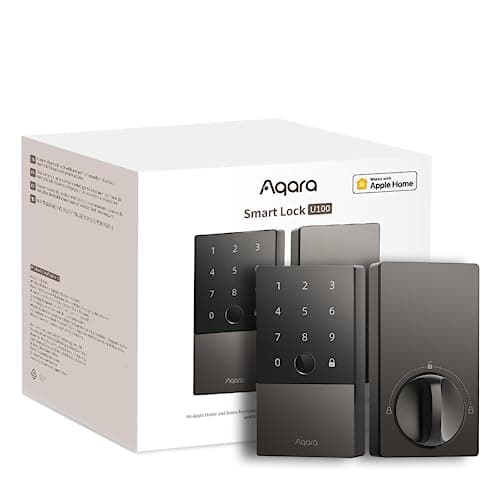
Best for Apple Home
Aqara Smart Lock U100
The Apple-household pick that is not a Schlage price. Home Key tap-to-unlock, a fingerprint reader, a keypad and a mechanical key, and it speaks to Apple Home, Google Home and Alexa out of the box.
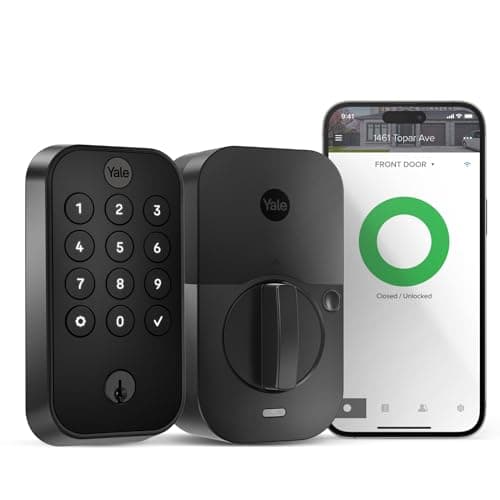
Best overall smart lock
Yale Assure Lock 2 (Wi-Fi, keyed)
The modular one. Yale sells the same lock body in keyed and key-free, touchscreen and keypad, with the radio as a swappable module — so you buy the connectivity you want instead of the connectivity that shipped.
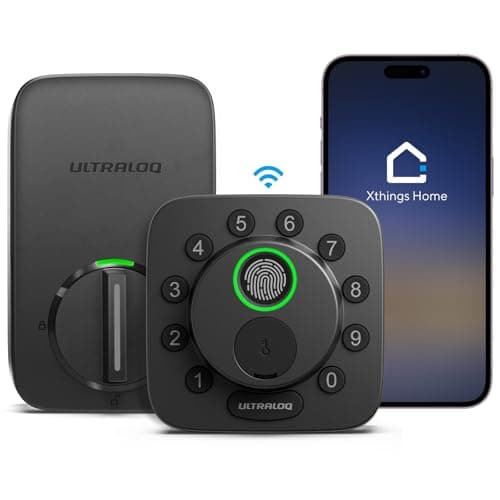
Cheapest way into Matter
ULTRALOQ Bolt SE (Matter over Thread)
The cheapest genuine route into Matter, and it still has a fingerprint reader. One box, two personalities: ULTRALOQ ships it in Matter-over-Thread mode and lets you switch it to Wi-Fi in the app.
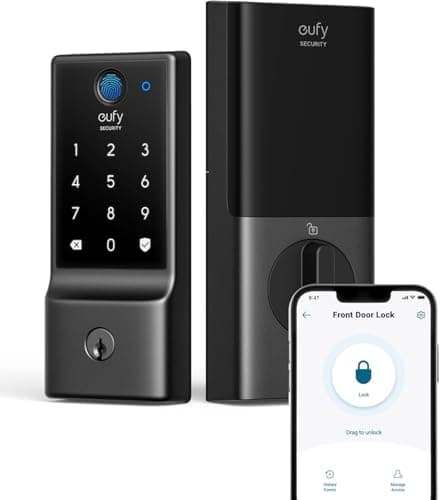
Best budget fingerprint lock
eufy Smart Lock C220
Fingerprint plus built-in Wi-Fi at the bottom of the price band that includes both. eufy's whole pitch is no monthly fee, and the lock line holds to it.
Best Matter smart lock
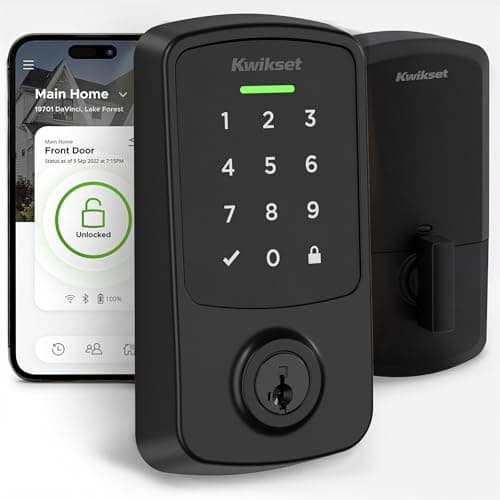
Kwikset Aura Reach (Matter over Thread)
Native Matter over Thread in a deadbolt with a published ANSI/BHMA grade — a combination almost nothing else in this category offers. It is the Matter lock to buy if you want the door hardware to be as serious as the protocol.
Best build quality
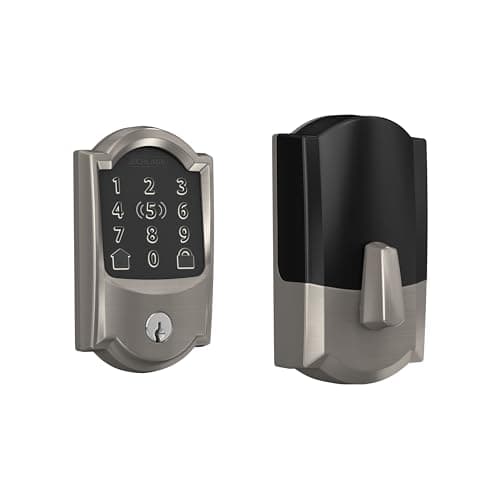
Schlage Encode Plus Wi-Fi Deadbolt
The one with the strongest published hardware pedigree. Schlage's deadbolt line is the reference point for BHMA Grade 1 in residential locks, and the Plus adds Apple Home Key so you tap a phone or watch instead of typing.
Best anti-surveillance keypad
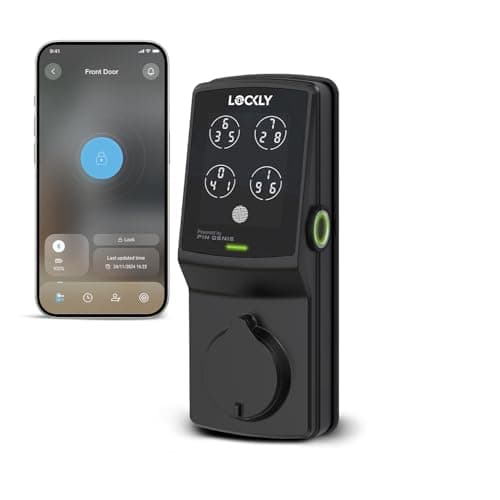
Lockly Secure Plus
The keypad that scrambles. Lockly's PIN Genie pad reshuffles the digit positions on every use, so a shoulder-surfer or a smudge pattern on the glass tells an observer nothing.
#ad · As an Amazon Associate we earn from qualifying purchases.
Questions
Frequently asked
Are smart locks waterproof?
Can I put a smart lock on a gate?
What IP rating does a smart lock need?
Why does my smart lock stop working in winter?
Does a fingerprint lock work in the cold?
Should I use a weatherproof cover over the keypad?
Keep reading
Related
- Best smart deadboltsThe full ranking, once the door and the exposure are settled.
- How long smart lock batteries lastThe arithmetic behind the cold-weather battery section.
- Smart locks for storm doorsThe best-protected door there is, and why the lock never goes on the storm door.
- Will a smart lock fit my door?Measure first. Weather is the second question, not the first.
Receipts
Sources
- Aqara — Smart Lock U100 specifications: IP65 (keypad), operating temperature and humidity
- Yale Home — Assure Lock 2: IPx5 rating, outside and inside temperature ranges, gate exclusion
- ULTRALOQ — Bolt SE product page: IP54 weather protection, exterior and interior assembly temperature ranges
- eufy — Smart Lock C220 product page: IP53, operating temperature, BHMA Grade 3
- Kwikset — Is Aura and Aura Reach weatherproof? Exterior and interior temperature and humidity ranges
- Schlage — How Schlage smart locks stand up to Mother Nature (temperature, rain, coastal testing; gate exclusion)
- Lockly support — Is Lockly waterproof/weatherproof? IPX4, temperature range, direct-rain advice
- IEC — IEC 60529, degrees of protection provided by enclosures (IP code)
- Energizer — L91 Ultimate Lithium AA product datasheet (operating temperature)
We do not run a testing lab and we do not pretend to. Specifications come from the manufacturer's own published documents and from published standards; prices come from the live Amazon API. Where a figure is not published, the page says “not published” rather than guessing. Read the full method.