HUB 06 · Guides
Retrofit vs replacement smart locks: which one fits your door
One mounts on the inside of the deadbolt you already own. The other replaces the whole thing. The right answer depends on your lease, your keys and your keypad.
We earn a commission if you buy through our links. It does not change the price you pay, and it does not decide our picks — our selection criteria are published in full. How this works.
Retrofit or replacement: what is the difference?
A retrofit smart lock mounts on the insideof the deadbolt you already own and turns the thumbturn for you. The outside of the door is untouched and every existing key still works. A replacement swaps the whole deadbolt — interior and exterior — which is what lets it add a keypad or a fingerprint reader, and what makes it a change your landlord can see.
The short version. Rent? Retrofit. Want a keypad so nobody carries a key? Replacement. Everything below is the detail behind those two sentences, including the three conditions that quietly disqualify a retrofit even when the rest of the argument favors it.
How a retrofit actually works
A retrofit is a motor, a battery and a radio in a housing that clamps over the interior side of your existing deadbolt. Where your thumbturn used to be, the retrofit's mechanism now grips it and rotates it on command. That is the whole mechanism, and it explains every property of the category. The exterior is unchanged, so the door looks the same from the street and the keyway is the one you have always used. Your existing keys keep working, which matters more than people expect — nobody has to be re-issued anything, and the spare with a neighbor is still valid.
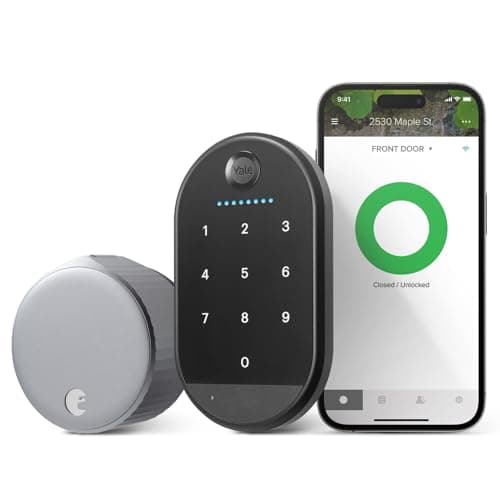
It also explains the limitations. A retrofit inherits your deadbolt: if the bolt is stiff, misaligned, or needs a shove to throw properly, the retrofit inherits that too, and a small motor is less forgiving than a wrist. And because nothing changes outside, there is nowhere to put a keypad on the door itself. Retrofits that offer code entry do it with a separate keypad stuck beside the door, which works well but is a second device with its own battery — the Yale Keypad, which ships in the August bundle, is the usual pairing.
How a replacement works
A replacement smart lock is a complete deadbolt. The old one comes out, the new one goes in, and everything — cylinder, bolt, interior, exterior — is new. That is more work, and it is what buys the features people actually want: a touchscreen or physical keypad on the outside of the door, often a fingerprint reader, and a published BHMA grade for the whole assembly rather than a smart housing bolted to an ungraded unknown.
It also resets the condition of your hardware. If your existing deadbolt is twenty years old and rough, a replacement fixes the underlying problem rather than motorizing it. And because the manufacturer designed the bolt and the motor together, the mechanism is matched — there is no question of whether the motor has enough torque for this particular bolt, because it was built for it.
| Retrofit | Replacement | |
|---|---|---|
| Exterior of the door | Unchanged | New hardware, visible |
| Existing keys | Still work | Replaced by new keys or none |
| Keypad on the door | No — separate keypad accessory | Yes, built in |
| Install | Screwdriver, 15 minutes | Full deadbolt swap, 30–60 minutes |
| Depends on your old lock's condition | Yes, completely | No |
| Reversible when you move | Entirely | Only if you kept the old lock |
| Published BHMA grade | Belongs to your existing lock | Published for the whole unit |
Three things that disqualify a retrofit
The retrofit case is attractive enough that people talk themselves into it past the conditions it depends on. Check these three before you order.
- The deadbolt must throw smoothly by hand.Stand at the door and turn the thumbturn with one finger. If it needs more than that — if you lift the door, lean on it, or jiggle the key — the strike plate is misaligned or the bolt is binding, and a small motor will fail where your wrist succeeded. Fix the alignment first, which is usually a matter of filing or repositioning the strike plate, or buy a replacement lock instead.
- There must be clearance around the thumbturn. Retrofit housings are bulkier than a thumbturn and need room. A deadbolt close to a door frame, a security chain, a storm door, or a decorative escutcheon can leave too little space. Measure before you buy; manufacturers publish the clearance requirement.
- Your deadbolt must be a supported type. Retrofits are designed for standard single-cylinder deadbolts with a rotating thumbturn. A double-cylinder deadbolt keyed on both sides, a mortice lock, a multipoint lock on a patio door, or anything European-profile is a different mechanism and generally not supported.
Which one your situation points to
Rent your home. Retrofit, almost always. Nothing changes outside, nothing is drilled, the original hardware is untouched, and the whole thing comes off in ten minutes when you leave. This is the argument made at length in our renters and no-drilling roundup. The August Wi-Fi Smart Lock is the standard answer here, and the SwitchBot Lock Ultra is the alternative for anyone who wants local Bluetooth control rather than a cloud account.
Want to stop carrying keys. Replacement. A keypad on the door is the whole point, and a retrofit cannot put one there without a second device. The keypad lock roundup covers the field, and the Yale Assure Lock 2 is our overall pick in the main ranking.
Share the door with many people.Replacement, for code management. Guests, cleaners, dog walkers and contractors are far better served by codes that can be issued and revoked than by keys that have to be handed over and hopefully returned — the entire argument of our short-let lock roundup.
Have a beautiful old door. Retrofit. Period hardware, an unusual finish, or a door you would rather not cut into all point the same way: leave the outside alone and put the technology on the inside.
Have a lock that is worn out. Replacement. Motorizing a tired deadbolt gives you a tired deadbolt that now has a battery. Replace the mechanism.
What each one is like to live with
The install is a single afternoon; the ownership is years, and the two designs differ there in ways the specification sheets do not capture.
A retrofit is quiet about itself. From the street the door looks exactly as it always did, which is worth something both aesthetically and practically — nothing announces that there is a battery-powered device on this particular door. Household members who never engage with any of it carry on using their keys and never notice a change. The maintenance is a battery change and, occasionally, a re-alignment when the door moves with the seasons, because the retrofit is only as reliable as the deadbolt underneath it.
A replacement changes the daily ritual for everyone. The keypad becomes the normal way in, keys become the backup, and after a few weeks most households stop carrying them for local trips at all. That is genuinely the appeal, and it is also the adjustment: codes need managing, someone has to be told when a code changes, and a keypad in direct weather collects grime that eventually affects how reliably it reads a press. Both designs run on batteries and both need the same alignment check; the difference is that a replacement starts with hardware you chose rather than hardware you inherited.
Cost tracks the same split. A retrofit is generally the cheaper purchase and leaves your existing lock's eventual replacement still ahead of you; a replacement costs more up front and resolves the old mechanism at the same time. Neither carries a subscription: every function described on this page — codes, app unlock, remote access, notifications — works with no monthly fee on the locks we recommend, and the budget end of both designs is covered in our budget lock roundup.
What neither design changes
Both retrofits and replacements leave the door, the frame and the strike plate exactly as they were, and those are the parts that actually resist force. A smart lock of either kind is a change to how the bolt is operated, not to how hard it is to kick in a door — a distinction covered properly in our smart lock security guide. If the frame is soft or the strike plate is held by half-inch screws into trim, three-inch screws into the stud will improve your security more than any lock on this site, and they cost almost nothing.
Both also run on batteries, and both keep working when your Wi-Fi does not: the radio in a smart lock generally carries remote access and notifications, not the basic act of locking. That is explained in do smart locks need wifi, and the outage behavior specifically in do smart locks work in a power outage.
Before you order either kind
Spend ten minutes with a tape measure. A replacement lock has to match your door's backset (the distance from the edge of the door to the center of the bore), the cross-bore diameter, and the door thickness — and a lock that does not match will not fit, no matter how good it is. That measurement routine is set out step by step in will a smart lock fit my door, and it is the single most common reason a smart lock goes back in its box. A retrofit sidesteps the backset question entirely but adds the clearance question above, so neither design lets you skip the tape measure.
One consequence of this split that catches people out has nothing to do with measurement: the keys already in the household. A retrofit leaves the exterior cylinder untouched, so every key keeps working; a replacement removes the cylinder and ships its own, so they all stop. Can you use your existing key with a smart lock sets that out and gives the three routes back to a single key — a re-keyable cylinder, keyed-alike ordering, or a locksmith re-pin — plus the case where a retrofit is the wrong answer entirely, which is a key that has already gone missing.
Then decide how the lock will be controlled day to day by the people who are not you. The household member who never opens an app, the child without a phone, the neighbor with the spare: each of them needs a key, a code, or somebody to let them in. Retrofits answer that with your existing keys; replacements answer it with codes. Both are fine answers. Choosing without deciding which one you meant is how people end up disappointed by a perfectly good lock. The whole field is ranked at the smart locks hub, and the general framework is in how to choose a smart lock.
The hardware
The hardware this guide is about
The products this guide refers to, with prices pulled live from Amazon and dated on every card. Full rankings live in the roundups linked above.
Best for renters
August Wi-Fi Smart Lock (with Yale Keypad)
The retrofit that started the category. It clamps onto the inside of your existing deadbolt and turns the thumbturn — the outside of the door does not change at all, which is why it is the default answer for renters. The listing we link is the bundle, so the Yale Keypad that gives it code entry is in the same box.
- ProductNo image
Best no-drill retrofit
SwitchBot Lock Ultra Touch Combo (with Hub Mini)
The credible way to make a rented door smart without drilling a hole. It mounts over the existing thumbturn, keeps your key, and this bundle puts the fingerprint keypad and the hub in the same box — so codes and remote access both work the day it arrives.
Best overall smart lock
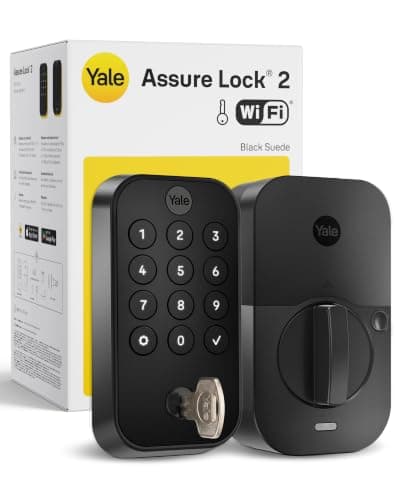
Yale Assure Lock 2 (Wi-Fi, keyed)
The modular one. Yale sells the same lock body in keyed and key-free, touchscreen and keypad, with the radio as a swappable module — so you buy the connectivity you want instead of the connectivity that shipped.
#ad · As an Amazon Associate we earn from qualifying purchases.
Questions
Frequently asked
What is a smart deadbolt retrofit?
Can a retrofit smart lock have a keypad?
Will a retrofit work on any deadbolt?
Do I need a locksmith to fit a replacement smart lock?
Is a retrofit less secure than a replacement?
Keep reading
Related
- Best smart locks for rentersEvery retrofit worth buying, ranked, for doors you cannot modify.
- Best smart locksThe full ranking, including the replacement deadbolts named here.
- Will a smart lock fit my door?Backset, cross-bore and thickness, measured before you order.
- How to install a smart lockThe replacement job, step by step, with the tools named.
Receipts
Sources
- August — retrofit lock compatibility, clearance requirements and installation documentation
- SwitchBot — Lock Ultra fitment guidance and supported deadbolt types
- Yale — Assure Lock 2 specifications and installation documentation
- Builders Hardware Manufacturers Association — ANSI/BHMA grading for locks
We do not run a testing lab and we do not pretend to. Specifications come from the manufacturer's own published documents and from published standards; prices come from the live Amazon API. Where a figure is not published, the page says “not published” rather than guessing. Read the full method.