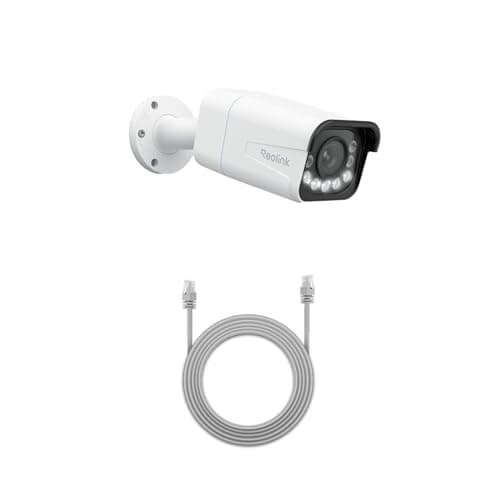
The Reolink RLC-811A is the camera to buy when the thing you need to see is far enough away that resolution alone will not solve it. Reolink publishes 3840 x 2160 at 8 megapixels on a motorized f=2.7-13.5mm lens — a real 5x optical zoom — powered and networked by a single Ethernet cable, recording continuously to a microSD card or an NVR with no plan at any tier. The disqualifier is in that same sentence: it is a PoE camera, there is no battery version, and if pulling Cat6 to the mounting point is not going to happen, this is not your camera.
Optical zoom is the reason this camera exists
Almost every consumer camera that advertises zoom is cropping. It takes the sensor it has, throws away the outer pixels and enlarges what is left, which is why the number looks impressive and the image falls apart when you use it. The RLC-811A moves glass instead. Reolink publishes the focal range as 2.7-13.5mm, which translates to a horizontal field of view that travels from about 105 degrees down to about 31 degrees, and a vertical field from roughly 55 degrees to 17 degrees. At the long end you are putting the full 8 megapixels onto a narrow slice of the scene rather than onto the whole garden.
That is the difference between a plate or a face being legible at distance and being a gray smear. It is also why this camera appears first in our driveway camera rankings rather than in the general outdoor list: a long driveway, a gate at the end of a plot or a yard entrance 20 meters out is exactly the geometry optical zoom was made for. The trade-off is honest and worth stating — zoomed in, you have given up the wide view. One camera cannot cover a whole frontage and read a plate at the end of it, and anybody selling you that is selling a crop.
Set the zoom once, at the mounting point, with the image in front of you. The lens is motorized and adjusted from the app, which sounds like a feature you will keep using and is really a commissioning step. Decide what the camera is for before you tighten the bracket, because the optimal zoom for a face at the door and for a vehicle at the gate are not the same setting, and no amount of software fixes the wrong one.
One cable, and the install is the product
Reolink publishes IEEE 802.3af at 48V for the PoE feed, with an optional DC 12V adapter. With a PoE switch or injector that means one Cat5e or Cat6 run carries both power and data, the camera never needs charging, and it is awake continuously — which is the real reason to choose a wired camera. Continuous recording is a physical property of a camera that is always powered on, not a feature tier; a battery camera sleeps to survive and therefore records events rather than time. If you want to scrub back through an hour nobody triggered, you want this class of camera.
The cost of that is the cable, and it is not a small cost in effort. You are drilling an exterior wall, pulling cable to a loft, attic or cabinet, and buying a PoE switch or injector that did not come in the box. Everything that makes the run survive a decade — a drip loop at the entry point, direct-burial cable between buildings, pulling a spare — is covered in how to power an outdoor security camera, and the networking framing of the same choice is in PoE vs Wi-Fi security cameras.
Where the footage goes, and what it costs to keep
Three published destinations: a microSD card inside the camera, rated by Reolink to 512GB; a Reolink NVR; or an FTP server you run. There is no subscription for recording, playback, detection or notifications. Reolink sells optional cloud services and none of the core functions depends on them.
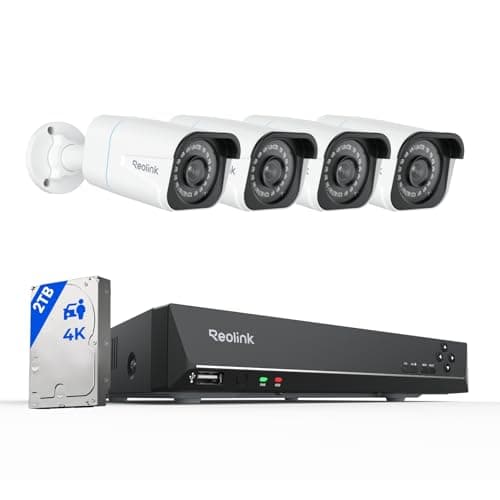
The number that surprises people is retention. 4K at 25 frames per second is a lot of data per hour, so a card that sounds generous holds days rather than weeks of continuous footage, and the camera overwrites the oldest first. If the plan is weeks of 24/7 history across several cameras, the card is a buffer and the recorder is the actual storage — which is the argument for the NVR-based systems we rank separately. The arithmetic for both is in how much data security cameras use and do security cameras record all the time.
Night, detection and audio
Reolink publishes four 850nm infrared LEDs rated to about 30 meters for monochrome night vision, plus five spotlights rated at 4W, 6500K and 450 lumens for color night footage. The two modes are a real choice rather than a gimmick: infrared is covert and renders a usable monochrome image, while the spotlights give you clothing and vehicle color at the cost of announcing the camera and drawing insects across the lens on summer nights.
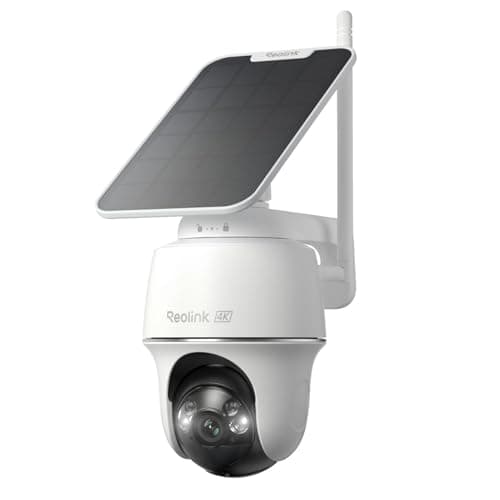
Detection is published as person, vehicle and pet classification running on the camera, which is what keeps notifications usable — a motion-only camera pointed at a street generates alerts until you mute it. There is two-way audio with a built-in microphone and speaker. None of these is behind a plan. What the camera does not do is pan or tilt: it is a fixed-direction bullet with a zoom, so the zoom chooses your field once and that is the view you get. If you want the camera to look around, that is a different product — our review of the Reolink Argus PT Ultra covers the pan-tilt solar alternative.
The specification people should read before ordering
Reolink publishes an operating range of -10°C to +55°C, which is 14°F to 131°F, and IP67 weather protection. IP67 means the housing is the least of your worries in rain. The temperature figure is the one to check against where you live: a soffit on a house is comfortably inside that band almost everywhere in the US, while an unheated outbuilding in a northern winter can sit below it for days. That is not a reliability complaint — it is the published range, and a camera operated outside its published range is being used outside its design.
The other published interface worth knowing about is the standards support. Reolink documents RTSP across much of its range, which is the standard stream any compatible software can open, so the camera can be recorded by Frigate or Blue Iris on a machine you own and appear in Home Assistant alongside everything else. For a technical buyer that is often the deciding feature, and it is the thing the marketing undersells. Our brand-level read on that trade is eufy vs Reolink, and the closest like-for-like wired rival is covered in Reolink vs Amcrest.
Who should buy something else
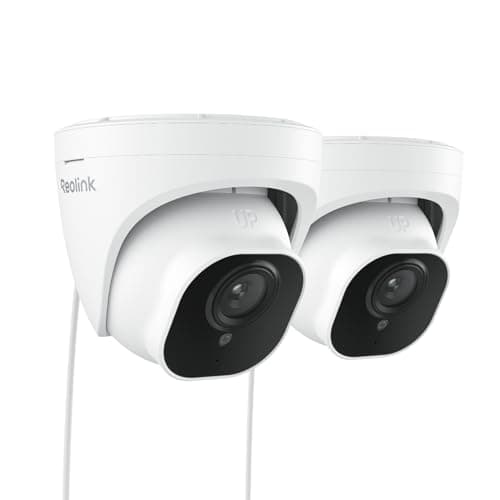
Skip it if you are not running a cable. That is a physical requirement, not a preference, and the honest alternative is a solar camera: the Argus PT Ultra gives up optical reach and continuous recording and gains an install you can do with a drill and a ladder. Skip it if you need one camera to cover a wide area, because at useful zoom levels the field is narrow and two cheaper fixed cameras will beat one zoom camera at that job — the PoE field is ranked here and the two-pack dome is the usual answer. Skip it if your mounting point sits outside the published temperature band for part of the year.
For everyone else — a wired install, a long sightline, no interest in a monthly bill, and a willingness to spend a Saturday with a cable — this is the camera in our coverage that sees furthest for the money, which is why it carries our optical zoom pick. How we reach a rating without a test lab is set out at our methodology, and the rest of the category is on the cameras hub.