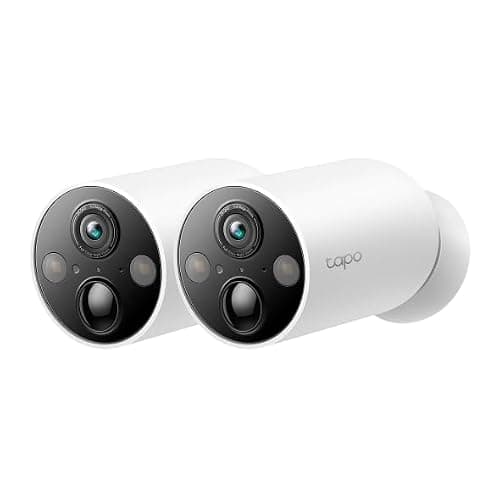
Renting changes three things about buying a security camera, and only one of them is the mount. You cannot make permanent holes in a wall you do not own. You cannot add wiring or an outdoor socket. And the footage has to be portable, because a camera tied to a subscription leaves its recordings behind the moment you stop paying — which, for most people, is around the time they move.
What makes a camera renter-friendly
Almost every camera buying guide assumes a homeowner with a drill, a ladder and permission. Strip those three assumptions out and the field narrows fast. A wired camera needs an outdoor supply; a bracket-mounted camera needs anchors in brick or siding; and a cloud-only camera needs a card on file forever. What is left is a small group of cameras that attach reversibly, power themselves, and write to storage you own.
The reversibility question is worth being specific about, because “no drilling” is used loosely in this category. A magnetic mount is genuinely reversible. A heavy-duty adhesive pad is reversible with care and a hairdryer. A free-standing camera on a shelf leaves nothing at all. A bracket with three wall plugs is not reversible, no matter how small the holes are — which is the same distinction we draw on the lock side in our no-drilling smart lock roundup.
Check the lease before you check the specs.Many leases are silent on cameras and explicit about fixings, which is why the mount matters more than the sensor here. Where a camera overlooks a shared hallway, a path or a neighbor's window, narrow the detection zones and angle it at your own threshold — the same discipline we set out for apartment doorbells.
How we ranked them
Reversibility of the mount first. Then power: battery or solar beats a mains lead, and a mains lead to an indoor socket beats one that needs an outdoor supply installed. Then where the footage lands, because storage you own is storage that moves house with you. Then image quality, which is the specification buyers over-weight and the one that matters least at the short distances a flat or a rented terrace actually involves. The rubric is published in full at our methodology, and it is compiled from manufacturer specifications rather than from testing.
Compiled from manufacturer specifications, October 2026. “What you leave behind” assumes the mounting method the maker ships in the box.| Camera | Power | Mount in the box | Where footage lands | What you leave behind |
|---|
| TP-Link Tapo MagCam 2K+ | Rechargeable battery | Magnetic | microSD in the camera | Nothing |
|---|
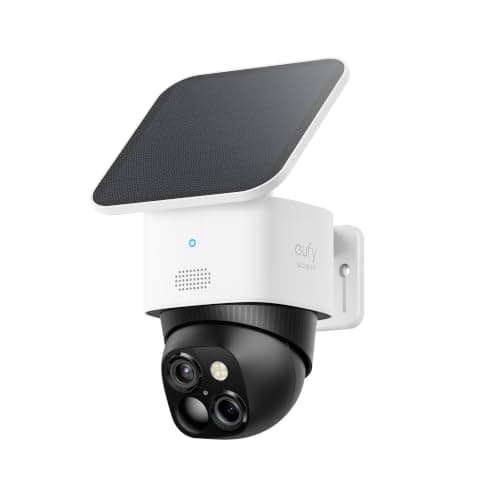
| eufy SoloCam S340 | Integrated solar | Wall bracket | Onboard, in the camera | Bracket holes |
|---|
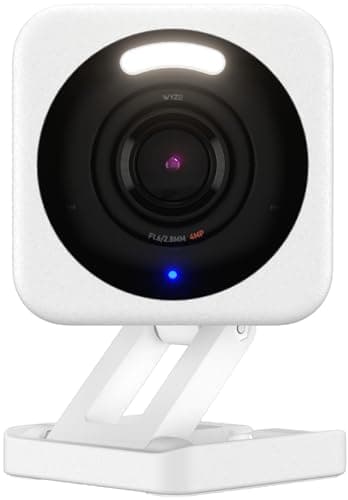
| Wyze Cam v4 | Mains (indoor socket) | Free-standing base | microSD in the camera | Nothing |
|---|
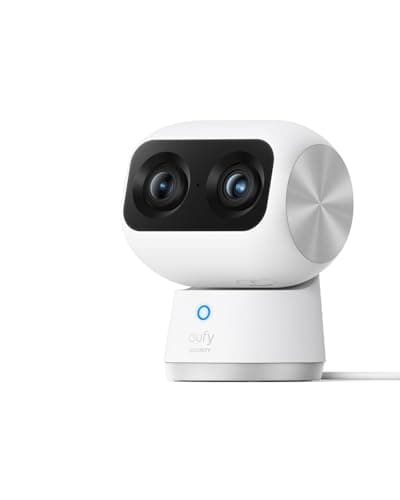
| eufy Indoor Cam S350 | Mains (indoor socket) | Free-standing, indoor only | microSD in the camera | Nothing |
|---|
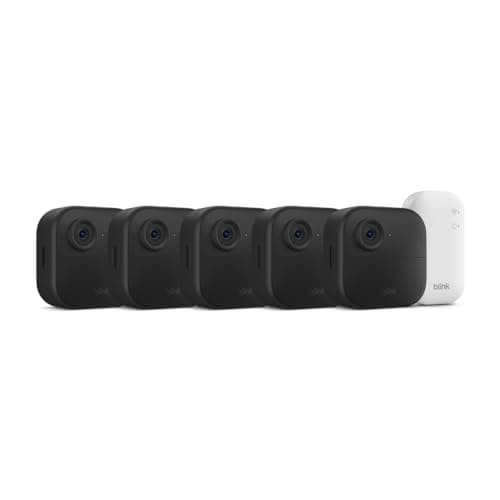
| Blink Outdoor 4 | 2x AA lithium | Small bracket | Cloud on a plan; USB only via Sync Module 2 | Bracket holes |
|---|
TP-Link Tapo MagCam 2K+ — the mount is the product
Everything that makes this the renter's pick is in the fixing. A magnet means you can live with a view for a week and then change it, which is the thing almost nobody does with a drilled bracket, and it means the install leaves no trace. It is wire-free, so there is no outdoor socket to argue about, and it records 2K+ to a microSD card in the camera with no plan of any kind — the card comes out and goes in a drawer when you move.
The honest limitation is the same magnet. A camera within arm's reach held on by magnetism is a camera that can be removed by anyone, and because the recording is inside the camera, removing it removes the evidence. Mount it high. If the only available position is at head height by a path, the trade-off flips and a bolted camera — with the landlord's written consent — is the better answer.
eufy SoloCam S340 — for a balcony or a patio with sun
The S340 is the strongest camera on this page by some distance: 3K with a second zoomed lens, pan and tilt, storage inside the camera and no subscription for anything, including playback. Integrated solar means it is install-once, with no ladder every few months and no cable at all.
Two renter caveats, and they both matter. It ships with a wall bracket, so this is the one pick here that does make holes — small ones, patchable, but holes. And the solar panel only works in real sun: on a shaded north-facing balcony or under a deep overhang you have bought an expensive battery camera you now have to take down to charge. If the balcony gets direct sun for part of the day and the landlord is relaxed about four small anchors, this is the best camera here. The wider solar field is in our solar camera roundup.
Wyze Cam v4 — the cheapest way to cover an inside door
A 2.5K camera that sits on a shelf, plugs into an ordinary socket and records to a card without a plan, for less than the cost of a takeaway for two. For a rented flat where the job is “see the inside of the front door and the window above the fire escape,” nothing else is close on price.
Two things to weigh. Wyze has publicly disclosed security incidents; that is a documented fact rather than a rumor, and it is a reason to think about what the camera is pointed at before you buy several. And several of the smarter detection features sit behind the Cam Plus plan, so the free experience is more basic than the box suggests. For a hallway or a back door it is an easy yes. For a bedroom, buy something else.
eufy Indoor Cam S350 — indoor coverage without a plan
If the camera is going inside anyway, this is the one to put there: 4K with a telephoto second lens and 8x zoom, full 360-degree pan and tilt, and local card recording with no subscription for playback. It stands on a shelf, so there is nothing to fix to anything, and one camera in the right indoor corner covers a hallway, a door and a window.
It is indoor only — there is no outdoor variant of this model — and it has no physical lens shutter, so privacy is a matter of pointing it at the wall rather than closing a cover. If a hardware shutter is your requirement, this is not the camera. The rest of the indoor field is in our indoor camera roundup.
Blink Outdoor 4 — the battery champion, with a storage catch
Blink publishes a two-year battery life on a pair of AA lithium cells, and nothing else here is close. For a rented house where you want a camera on the side passage and you do not want to think about it again until you move, that is a genuinely compelling specification.
It is last on this page for one reason, and it is the reason this site exists. Blink now ships the Sync Module Core with these kits, and Blink's own support documentation states that the Core does not support local storage or clip backup — it has no USB port. So out of the box, saved clips go to Blink's cloud on a plan, and the plan-free path means buying a Sync Module 2 and a USB stick on top. It is also 1080p in a field that has moved to 2K and 4K. Buy it for the battery life with the extra module budgeted, or do not buy it.
The window shortcut, and why it usually fails
The obvious renter move is to stand an indoor camera on a windowsill pointing out. It mostly does not work, and the reason is infrared. At night the camera's own IR illuminators bounce off the glass directly back into the lens, and the image becomes a white haze with your own reflection in it. Cameras that can have night vision disabled, in a window with external lighting, can work — which is a narrow enough case that it has its own page in our window camera roundup. By day, reflections and the frame itself still cost you most of the field of view.