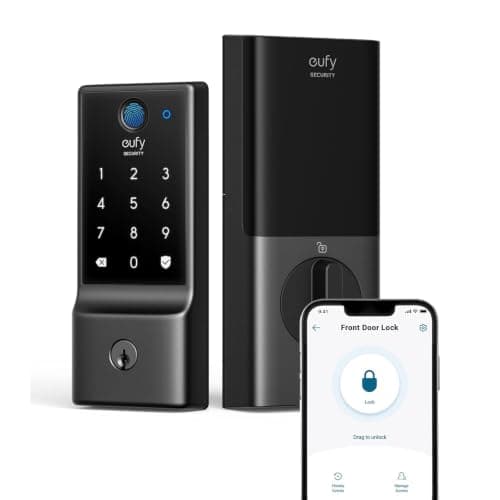
The best budget smart lock for most people is the eufy Smart Lock C220. It keeps the two features buyers actually miss when they go cheap — a fingerprint reader and built-in Wi-Fi for remote access — and it charges no monthly fee for any of it. What it gives up for the price is battery life and a published grade, and we will be specific about both below.
A budget smart lock is not a scam and it is not a lesser idea; it is a set of deliberate omissions. Every lock in this price band works — the keypad accepts a code, the bolt throws, the door opens — and the interesting question is which corners the maker cut to hit the number, because those cuts are not printed on the box. Three of them recur, and the whole page is organized around spotting them: a missing published grade, remote access that quietly needs a hub, and lighter internals that show up as shorter battery life or a stiffer motor. Read what each lock keeps and what it drops, then buy the one whose omissions you can live with.
The three cuts to look for.First, most cheap locks do not publish a BHMA grade — not because they are weak, but because grading costs money the price cannot absorb, so you are trusting the maker rather than a standard. Second, some are Bluetooth only, so “smart” means at the door, and remote control needs a separate hub you buy on top. Third, the internals are lighter, which usually surfaces as battery life rather than as anything you can see. None of these is disqualifying. All three are worth knowing before you buy.
The best budget smart locks, compared
Compiled from manufacturer specifications, August 2026. Grade information reflects what each maker publishes; “not published” means we could not locate a stated BHMA grade, not that the lock is ungraded in use.| Model | Entry methods | Connectivity | BHMA / grade | Power | Works offline |
|---|
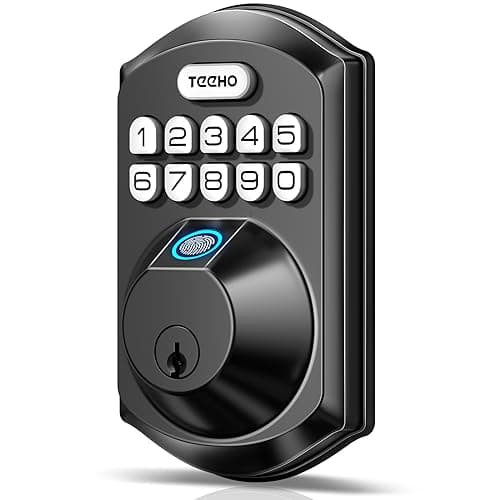
| eufy Smart Lock C220 | Fingerprint, code, app, key | Built-in Wi-Fi, no hub | Not published | 4x AA | Yes — fingerprint, code and key are local |
|---|
| TEEHO TE002 | Fingerprint, code, key | None — no wireless radio | Not published | 4x AA | Fully — there is no radio to lose |
|---|
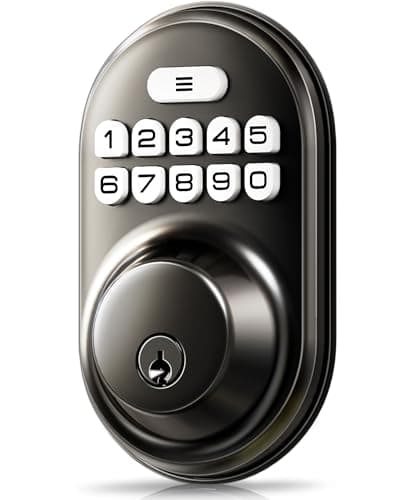
| Veise Keypad Deadbolt | Code, key | None — no wireless radio | Not published | 4x AA | Fully — there is no radio to lose |
|---|
| SwitchBot Lock Ultra | App, thumbturn; fingerprint and code on the keypad in the bundle | Bluetooth; hub required for remote | Not published (retrofit — grade is your deadbolt's) | Rechargeable pack | Bluetooth at the door; remote needs the hub |
|---|
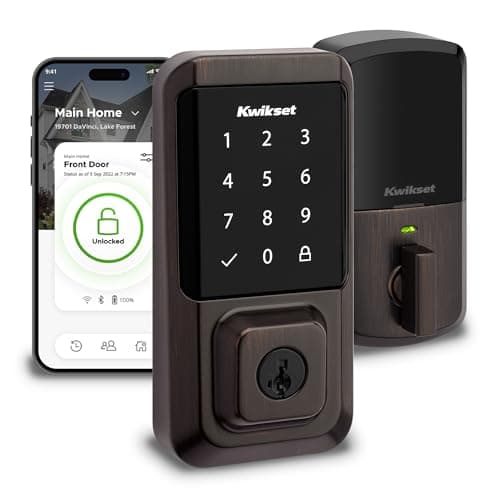
| Kwikset Halo | Code, app, key (touchscreen) | Built-in Wi-Fi, no hub | Published grade for the Halo line | 4x AA | Yes — touchscreen codes are local |
|---|
What you keep at a budget price
The good news is how much survives the price cut. Every lock here does the core job: keyless entry that actually works, an auto-lock option so the door secures itself behind you, and — crucially — no subscription for anything. That last point is the one worth dwelling on, because in cameras and doorbells a cheap price is often the hook for a monthly plan, and in smart locks it usually is not. None of these five gates a feature behind a fee.
You also keep more entry variety than the price suggests. The eufy C220 and the TEEHO carry a fingerprint reader, which is the single feature most people are surprised to find at the bottom of the market, and all five keep a real mechanical key as a fallback except where a retrofit leaves your existing cylinder in place. If keyless entry is the whole reason you are shopping, you do not have to spend up to get it. The wider fingerprint field, budget and otherwise, is at best fingerprint door locks, and the keypad-only field is at best keypad door locks.
What you give up, honestly
A published grade, most of the time
BHMA, the residential lock grading scheme, rates a deadbolt's resistance to force, wear and manipulation on a three-grade scale. Testing to it costs money, so most budget makers simply do not publish a grade — and four of the five here do not. That is not proof a lock is weak; it is an absence of independent evidence that it is strong, which for a front door is a real gap. The exception on this page is the Kwikset Halo, which publishes a grade for its line, and it is why the Halo sits here as the “spend a little more for a known number” option rather than as the value pick. If a published grade is non-negotiable on your main entrance, that is the lock, or you step up out of the budget band entirely. The grading system itself is explained in the context of are smart locks safe.
Remote access, unless it is built in
“Smart” means two different things in this group. The eufy and the Kwikset have built-in Wi-Fi, so they reach your phone from anywhere with nothing extra to buy. The TEEHO and the Veise have no radio at all — they are keyless, not connected, so there is no app, no notification and no remote unlock, by design. The SwitchBot Lock Ultra sits in between: it is Bluetooth, so it is smart at the door, and remote access and voice control run through a SwitchBot hub. The bundle we link includes that hub, but SwitchBot also sells the lock on its own, and on that version the hub is a second purchase and a second thing to power. That is not a subscription, but it is a cost, and it narrows the price gap to a built-in-Wi-Fi lock. Budget shoppers get caught here more than anywhere else, so read the connectivity column before the price.
Battery life and lighter internals
The cheapest way to make a connected lock is to accept a heavier power draw and lighter mechanicals, and both show up after you own it. Built-in Wi-Fi in a battery lock is the heaviest possible draw — the radio holds an association with your access point around the clock — so the eufy C220 and the Kwikset Halo, both Wi-Fi, will empty their four AA cells faster than the radio-free TEEHO and Veise, which sip power because there is nothing continuously transmitting. The SwitchBot sidesteps disposable cells with a rechargeable pack, but a retrofit motor is only ever as reliable as the deadbolt it drives, so a stiff or misaligned bolt underneath it will jam and drain regardless. The mechanism behind all of this is set out in how long do smart lock batteries last.
Why the eufy C220 wins
Because it gives up the least of what people actually notice. It keeps fingerprint entry, it keeps built-in Wi-Fi so remote access needs no hub, it keeps a mechanical key, and it charges nothing monthly for any of it — that combination usually costs more than the C220 asks. The two things it trades are honest and stated: a heavier battery draw from that always-on Wi-Fi, and no published BHMA grade. For a household that wants fingerprint-plus-app convenience at the bottom of the price band and can live with changing cells a little more often, that is the right trade. If you want the published grade instead, step to the Kwikset Halo; if you want the longest battery life and do not care about an app at all, the radio-free TEEHO is the most honest cheap deadbolt here. The two eufy-and-Ultraloq value positions are weighed directly in Ultraloq vs eufy.
Which one to buy
- You want fingerprint and remote access for the lowest outlay. eufy Smart Lock C220. Accept a shorter battery run and no published grade.
- You want the longest battery life and no account, app or radio. TEEHO TE002. Fingerprint and code, fully offline, ideal on an interior, garage or side door.
- You want the cheapest honest keypad on a door that only takes a key today. Veise Keypad Deadbolt. Code and key, auto-lock, nothing to pair or update.
- You rent and cannot change the deadbolt.SwitchBot Lock Ultra Touch Combo — the bundle that already carries the hub and the fingerprint pad, and only over a bolt that already throws smoothly.
- You want a published grade without leaving the budget entirely. Kwikset Halo. The step-up pick, with built-in Wi-Fi and SmartKey re-keying.
How we picked
Products we claim to have tested: zero. We compile the published specification, the manufacturer's own documentation, and the BHMA grade where one exists, then rank on entry methods, connectivity, published grade, power and offline behavior — the exact columns above. Every pick carries a specific reason to skip it, and we say plainly when a grade is simply not published rather than implying one. The rubric is at methodology, the full field is on the smart locks hub, and the unfiltered rankings are at best smart locks.
How to buy a smart lock on a budget without regretting it
Decide which of the three cuts you can accept
Every cheap lock trades away at least one of a published grade, built-in remote access, and heavier internals. You cannot avoid all three at this price, so the skill is choosing which you can live without. A published grade matters most on a sole front entrance and least on an interior or garage door. Built-in remote access matters if you want to check or grant access from away, and not at all if you just want to stop carrying a key. Battery life matters if the door sees heavy traffic. Rank those three for your own door before you rank the locks.
What actually decides the price
Working down from most to least expensive: a published BHMA grade, built-in Wi-Fi versus Bluetooth-plus-hub versus no radio, a fingerprint reader, and a touchscreen versus a physical keypad. Notice what is not on that list: a monthly plan. Unlike cameras, budget smart locks generally do not move the cost into a subscription, which is why the honest five-year cost of everything here is hardware plus batteries. If a cheap lock does ask for a fee to unlock remote features, treat that as the red flag it is and look at the built-in-Wi-Fi options instead.
The mistake budget buyers make
Buying a Bluetooth lock expecting to control it from work. Bluetooth reaches about as far as the next room, so “smart” on a Bluetooth-only lock means at the door unless you add a hub — and the hub's cost is what turns a bargain into a wash. The second mistake is putting an ungraded lock on a sole front entrance and treating the low price as if it bought the same security as a graded deadbolt; it may be perfectly adequate, but you are trusting the maker, not a standard. The third is ignoring the strike: a retrofit like the SwitchBot inherits every mechanical fault of the bolt beneath it, so a door that already needs a shove to lock will defeat a cheap motor and drain its battery doing so.
Where a budget lock genuinely shines
On a second door. An interior door, a garage-to-house door, a home-office door, a side entrance — these are exactly where an offline keypad deadbolt like the TEEHO or Veise is the right answer, because you get keyless convenience with no account, no firmware and nothing to be reached from outside, and the missing grade and missing radio stop being drawbacks. Do not think of budget locks only as a compromised front door; think of them as the correct lock for the four other doors a premium lock is overkill on.
What no lock at this price can tell you
Whether the door is shut. A lock reports its bolt, and a bolt thrown into an open doorway reads as locked. A contact sensor on the frame reports the door itself for a few dollars a point, and pairing a cheap keypad deadbolt with a couple of contact sensors is a more complete — and still inexpensive — picture than spending the same money on one fancier lock. The ranked sensors are at best door and window sensors, the same buyer served from the other side.