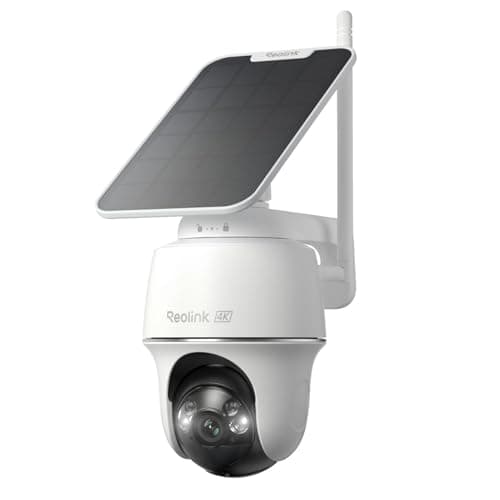
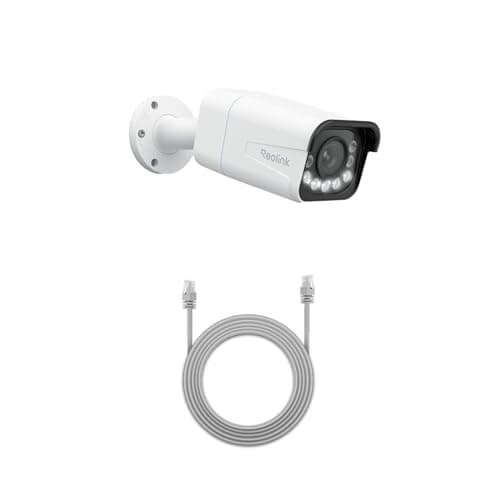
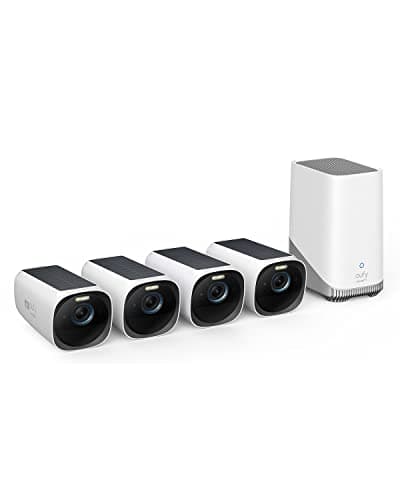
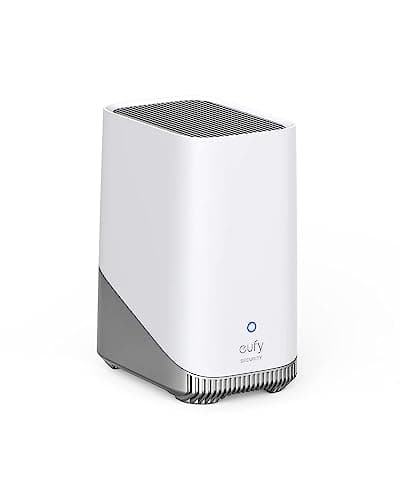
Most camera comparisons on this site resolve on the subscription question, because most of this category is built to bill you. eufy against Reolink does not, because neither brand charges for the core function: both record locally, both give you full playback, and both will still be doing it in five years with nothing on your card statement. That removes the usual axis and exposes a more interesting one — integration philosophy. Reolink publishes RTSP and ONVIF across much of its range, which makes its cameras components you can build with. eufy does not, which makes its cameras a more polished, more closed appliance. Neither answer is wrong; they are answers to different questions.
eufy vs Reolink: the short answer
Buy eufy if you want a finished system that works well out of the box and you will use the manufacturer's app as your interface. Buy Reolink if you want cameras that speak standard protocols and will drop into Home Assistant, Frigate, Blue Iris or any ONVIF recorder — or if you want wired PoE and genuine continuous recording, which is Reolink's territory and not eufy's.
The decision rule in one line: appliance or component. If the camera is the product, buy eufy. If the camera is an input to something else you are building, buy Reolink.
If openness is not what is driving your shortlist and the real question is how much to spend, the other plan-free pairing worth reading is eufy vs Tapo — the same eufy system against the cheapest standalone cameras that still record to a card you own.
Head to head
Six models spanning both brands' two ends: solar-wireless convenience at one end, wired PoE and a recorder at the other, with each brand's storage architecture in between.
Compiled from manufacturer specifications and published support documentation, July 2026.| Model | Storage architecture | Open protocols | Power | Continuous recording |
|---|
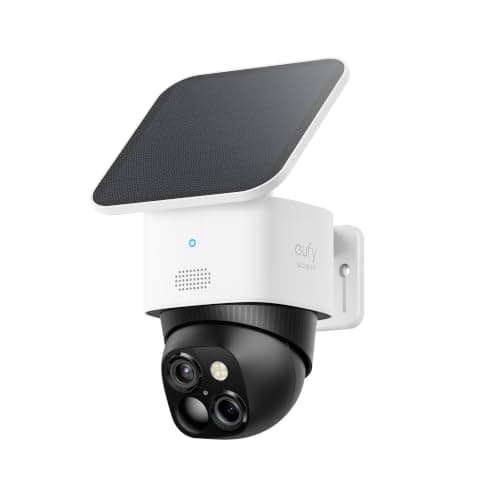
| eufy SoloCam S340 | Onboard, or a paired HomeBase | No published RTSP or ONVIF | Integrated solar | No — event recording only |
|---|
| Reolink Argus PT Ultra | microSD in the camera | RTSP and ONVIF across much of the range | Solar | No — event recording only |
|---|
| Reolink RLC-811A | microSD, or any ONVIF NVR | RTSP and ONVIF | PoE, one cable | Yes, 24/7 |
|---|
| eufyCam 3 (S330) kit | HomeBase 3, expandable drive | No published RTSP or ONVIF | Integrated solar | No — event recording only |
|---|
| eufy HomeBase 3 | Up to 16TB, eufy cameras only | Closed to other brands | Mains | Depends on the camera feeding it |
|---|
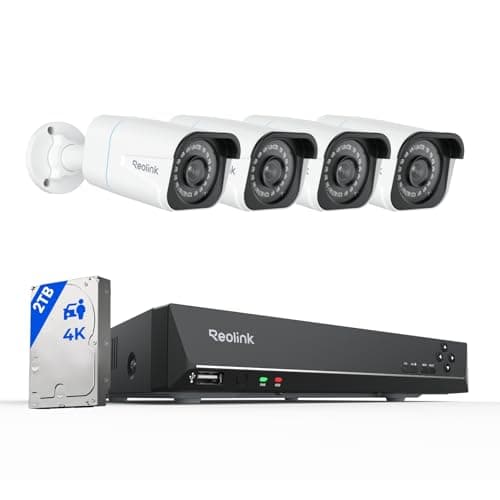
| Reolink 8CH PoE NVR system | 8-channel NVR with a 2TB drive | ONVIF recorder, open to other cameras | Mains NVR, PoE cameras | Yes, across four cameras |
|---|
RTSP and ONVIF: what the acronyms actually buy you
RTSP is the streaming protocol a camera uses to hand a raw video stream to anything that asks for it. ONVIF is the interoperability specification that lets a camera and a recorder from different manufacturers discover each other and agree on how to talk. Reolink publishes support for both across much of its range. eufy, in general, does not.
The practical consequence is not abstract. A camera with RTSP can be added to Home Assistant as a first-class entity, its stream fed to Frigate for object detection running on your own machine, or recorded by Blue Iris alongside cameras from four other brands. Your automations can then act on what the camera sees without a manufacturer's cloud in the path, and your recording retention is a decision about disk space rather than about which app you opened.
A camera without RTSP can do none of that. It can do everything the manufacturer's app allows, very well, and nothing else. That is not a defect — most people never want the extra — but it is a ceiling, and it is a ceiling you discover eighteen months in, when you want the driveway camera to trigger a light that is not the same brand.
This is the single largest reason a self-hosted household ends up on Reolink. If Home Assistant is already running in your house, or you expect it to be, the question is close to settled before the specifications are compared. Our local storage camera roundup weights open protocol support heavily for exactly this reason.
Where eufy earns its price
Openness is not the only virtue, and eufy is better than Reolink at the things that decide whether a system is still in use a year later.
The app and the setup.eufy's app is more coherent, its notifications are better tuned, and its out-of-box experience does not assume you know what a subnet is. Reolink's app is functional rather than pleasant, and its documentation assumes a slightly more technical reader. That gap is small on paper and large in a household where more than one person has to use the thing.
On-device intelligence.The HomeBase 3 runs face recognition on the box rather than in a cloud, so the processing and the footage both stay in the house. That is a genuinely unusual property and it is the technical claim behind eufy's no-subscription pitch — the AI you would normally rent is sitting on your shelf.
Solar done properly.Both brands sell solar cameras. eufy's integration is tighter: the panel is part of the camera rather than an accessory on a cable, which removes a connector, a mount and a failure mode. An install-once exterior camera is worth more than its specification suggests, because the alternative is a ladder every few months.
Wired PoE against solar wireless
This is the second real split, and it is largely a Reolink strength because eufy does not seriously compete in it.
Power over Ethernet delivers power and data down a single Cat6 run. The camera never needs charging, never runs out in a cold week with no sun, and can record continuously because it has no power budget to protect. The Reolink RLC-811A is the clearest example: 4K, a real 5x optical zoom rather than a digital crop, and 24/7 recording to a card or an NVR. If you want a license plate at the end of a drive to stay readable, optical zoom on a wired camera is the only honest answer, and no battery camera of any brand will give it to you. That camera reviewed on its own terms is the Reolink RLC-811A review.
The cost is the cable. Running Ethernet through a loft, down a cavity and out through an exterior wall is the actual project, and a PoE switch or injector is another purchase. For many houses that is a weekend or a contractor, and it is the reason solar wireless exists.
Be clear about the trade you are making: no battery camera records continuously, including eufy's and including Reolink's own Argus line. They record events. If something happens in the gap between motion triggers, it is not on the card. That is the real limitation of the entire solar-wireless category and it is stated far too rarely — which is why the outdoor camera roundup separates the two power models rather than ranking them in one list.
NVR against HomeBase: two answers to the same question
Both brands solved local storage, and they solved it differently in a way that matters more than it first appears.
The eufy HomeBase 3 is an appliance. It takes a large drive, holds footage from eufy cameras, runs the recognition, and presents everything through eufy's app. It is easy, it is tidy, and it serves eufy cameras only. If you later buy a camera from anyone else, the HomeBase does not care.
The Reolink NVR is a recorder. It ships with four 4K PoE cameras and a 2TB drive, records all four continuously, expands to eight channels, and — because it speaks ONVIF — is not restricted to Reolink cameras in the way a HomeBase is restricted to eufy ones. It is also a box that needs mains, airflow and somewhere to live, and the install involves four cable runs.
The architectural difference is what happens in year three. A HomeBase estate grows by buying more eufy. An NVR estate grows by buying whatever camera is best that year. One is simpler; the other does not have a ceiling.
The thing they genuinely share
It is worth stating plainly, because it is unusual: neither brand charges a monthly fee for the core function of its cameras. Recording, playback, notifications and detection all work on both without a plan. In a category where the two largest names by market share both gate playback behind a subscription, that shared property is more significant than everything separating them — and it is why both brands dominate our no-subscription camera roundup while the better-known names do not appear near the top.
The decision rule
One question decides this: is the camera the product, or is it an input to something else?
Buy eufy if…
- The manufacturer's app is going to be your interface, and you have no plans to run a home automation server.
- More than one person in the household has to use it, and the setup experience and notification tuning matter as much as the specification.
- You want solar cameras with the panel integrated rather than an accessory hanging off a cable, and an install you never revisit.
- You want face recognition running on hardware you own, which the HomeBase 3 does and no Reolink product does.
- You will not be running Ethernet, and you accept event-based recording as the price of a wireless install.
Buy Reolink if…
- You run Home Assistant, Frigate, Blue Iris or any ONVIF recorder — or you expect to. RTSP support settles it before anything else is compared.
- You want genuine 24/7 continuous recording, which needs a wired camera, which in practice means PoE.
- You need optical zoom rather than a digital crop, because the subject is at the end of a drive rather than on the doorstep.
- You want a recorder that is not tied to one manufacturer, so the estate can grow with whatever camera is best in three years.
- You would rather spend a weekend pulling cable once than manage batteries and charge cycles indefinitely.
If both lists describe you
They can, and the resolution is usually hybrid: Reolink PoE on the approaches that matter, where continuous recording and zoom earn the cable run, and a solar camera of either brand on the awkward corner nobody wants to wire. Because the Reolink NVR speaks ONVIF, a mixed estate is a supported configuration rather than a hack.
What decides the price
Power delivery and optics, in that order. A solar camera carries a panel, a battery and the management circuitry for both; a PoE camera carries none of that but requires a switch and a cable run, so the cost moves from the device to the install. Optics come second — a real 5x optical zoom assembly costs more than a fixed lens with a digital crop, and it is the one specification that cannot be improved by firmware.
Storage is where the two philosophies diverge on cost. A HomeBase is a fixed purchase that serves an expanding number of eufy cameras. An NVR is a larger fixed purchase that serves an expanding number of any cameras. Both beat a subscription over five years by a distance we set out in the subscription cost comparison.
The mistake buyers make
The most common mistake is buying a solar-wireless system while expecting continuous recording. It does not exist in that form, from anyone. Battery cameras record events, and the gaps between events are gaps in your footage. If continuous coverage is the requirement, the decision was made the moment you set it: you are running cable.
The second mistake is buying a closed appliance while intending to build an open system. People buy eufy, enjoy it, then start running Home Assistant a year later and discover the cameras will not join. Reversing that is expensive. If there is any chance you end up self-hosting, the RTSP question is worth answering before you buy rather than after — alongside the compatibility questions in our local storage vs cloud guide.
How we compared these
Compiled from manufacturer specifications, published support documentation, the ONVIF specification and open-source project documentation. Products we claim to have tested: 0. The scoring rubric and every source behind it are published on our methodology page, and the rest of this hub is indexed at comparisons.