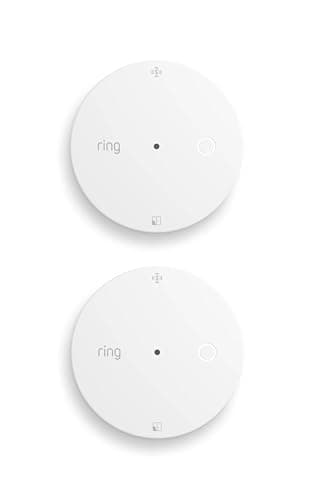
The best glass break sensor is the Ring Glass Break Sensor. It uses genuine acoustic detection rather than frame vibration, so one unit listens to a whole room instead of one pane, and it is unusual in working without an alarm base station — which is the requirement that normally forces you to buy an entire system to cover one large window. The catch is that it rides Amazon Sidewalk, so a third-party network sits in the path.
What glass break sensors are for
Almost every home security kit sold is built around contact sensors: a magnet on the sash, a sensor on the frame, and an alert when the two separate. That covers the door or window being opened. It does not cover the pane being broken while the sash stays firmly shut and latched, which is the specific failure a glass break sensor exists to catch. If your entire sensor layer is contact sensors — the ones ranked in our door and window sensor roundup— then a broken pane and an arm through the gap produces no event at all.
There are two mechanisms sold to close that gap, and they are not equivalent, however similar the product names look.
- Acoustic detectionlistens. The sensor sits in the room, not on the glass, and manufacturers describe a two-stage signature: the low thud of the impact, followed by the high-frequency sound of glass fracturing. Requiring both in sequence is what stops a dropped plate from arming the alarm. Because it is listening to the air, one sensor covers every pane it can hear — a lounge with four windows needs one device, not four.
- Vibration or shock detection feels. The sensor mounts on the pane or the frame and fires when that surface is struck hard enough. It is cheaper, it needs no line of sound, and it is completely reliable about the pane it is attached to. It is also blind to every other pane in the room, so coverage is bought one window at a time.
Neither is a scam and neither is universally right. Acoustic is the correct mechanism for a large picture window or a room of French doors. Vibration is the correct mechanism for a single vulnerable pane — a basement window, a garage side light, a shed — and for anyone who wants the sensor to also report the window being levered rather than smashed.
Read the mechanism, not the product name.“Glass break” appears in the title of devices that listen and devices that feel, and the two behave completely differently once installed. If a listing does not say the words sound, acoustic or audio, assume it is a vibration sensor and plan on one per pane.
How we ranked them
Detection mechanism first, because it decides how many units you need and what the sensor can physically catch. Then what the sensor requires to function: a base station, a hub, or nothing. Then how the alert reaches you — a siren in the room, a push notification, or an escalation to SMS — because a sensor that only makes a noise is a deterrent and a sensor that only sends a push is a record, and those are different products. Running cost comes last, and only because in this category it is refreshingly simple: none of these five charges a monthly fee for the alert itself. The full rubric is in our methodology, and it is a compilation of published specifications rather than bench measurements.
Compiled from manufacturer specifications and product documentation, August 2026. Coverage and range vary with room shape, furnishing and glass type.| Sensor | Detection | Hub or base required | Covers | How the alert reaches you |
|---|
| Ring Glass Break Sensor | Acoustic | None — runs on Amazon Sidewalk | A room | Push notification |
|---|
| Aqara Multi-State Sensor P100 | Vibration + contact | Aqara hub or Thread border router | One opening | Push, plus local automations |
|---|
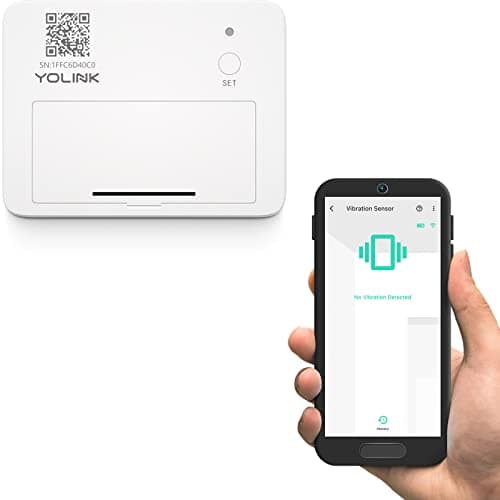
| YoLink Vibration Sensor | Vibration / shock | YoLink hub | One opening | Push, email and SMS |
|---|
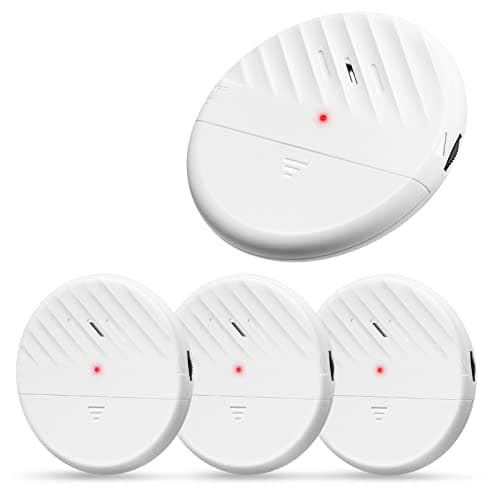
| WSDCAM Window Alarm | Vibration | None | One pane | 125dB siren only, no remote alert |
|---|
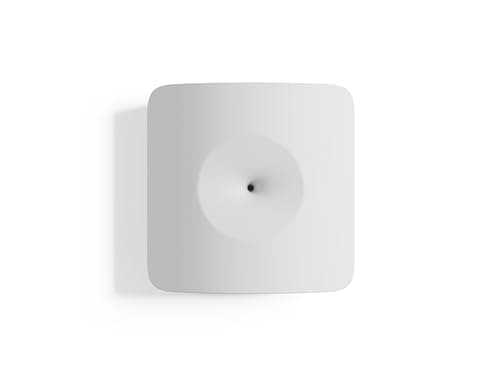
| SimpliSafe Glassbreak Sensor | Acoustic, 20 ft published range | SimpliSafe base station | A room | Through the SimpliSafe system |
|---|
Ring Glass Break Sensor — acoustic, without the base station tax
For years the honest answer to “which glass break sensor should I buy” was “whichever one matches the alarm panel you already own,” because acoustic sensors were sold only as components of a system. Ring's current sensor breaks that pattern: it runs on Amazon Sidewalk and reports without a Ring Alarm base station in the house. One device, one room covered, notifications on the phone, no panel purchase.
The trade is stated plainly in the product itself. Sidewalk is Amazon's low-bandwidth neighborhood mesh, which means your alarm traffic depends on a third-party network you do not administer. If you are building the sort of local estate this site usually recommends — Thread and Zigbee sensors reporting to a hub in your own cupboard — that dependency is a genuine objection, and it is why the Aqara below wins on local control even though it loses on mechanism. Acoustic sensors also react to sharp sounds that are not glass, so a room with a tiled floor and a habit of dropped crockery needs the placement discipline described further down.
Aqara Multi-State Sensor P100 — the local-control answer
The P100 is two sensors in one body: a contact sensor for the window being opened, and a vibration sensor with ten sensitivity levels for the window being struck. On a single opening that is a genuinely complete picture, and it is the only device here whose automations execute locally through a hub you own, over Thread or Zigbee rather than a vendor mesh. Pair it with an Aqara hub and the alert path never leaves the house, which is the same argument we make for the sensors in our no-hub door sensor roundup and in our Matter explainer.
Aqara does not claim this is acoustic detection and neither do we. Vibration on the frame is a different mechanism, and it will miss a pane broken cleanly at the far corner of a large window — the product record on this site says exactly that. What it buys instead is precision: ten sensitivity steps mean a rattly old sash can be tuned out rather than switched off, which is the most common reason a vibration sensor ends up in a drawer.
YoLink Vibration Sensor — for the window nothing else reaches
Every sensor above assumes the window is inside your Wi-Fi or Zigbee footprint. A detached garage, a basement light well, a shed at the bottom of the garden and an outbuilding are exactly the places people want covered and exactly the places those radios do not go. YoLink's LoRa radio is published at up to about a quarter of a mile in open air, and this sensor is the shock and vibration member of that family — the same reason the YoLink door sensor kit earns its place in our contact sensor ranking.
It is also the only sensor here that escalates beyond a push notification. Email and SMS alerting sounds like a small feature until you consider when glass gets broken: the alert that matters is the one that survives a phone in do-not-disturb at three in the morning. The cost of entry is a YoLink hub, so this is an easy recommendation if you are already on the platform and a considered one if you are not.
WSDCAM Window Alarm — when the noise is the whole point
This four-pack has no radio, no app and no account. Each unit sticks to the pane and sounds at 125dB when the glass is struck. Every smart feature in this roundup is absent, which is precisely the argument for it: nothing to pair, nothing to sign up for, nothing that stops working when a company changes its plans, and nothing a landlord can object to. For a rental, a dorm room or the ground-floor windows of a small house it is the cheapest useful coverage on this page by a wide margin.
Be clear about what you are buying. It alerts nobody who is not in earshot. If you are at work when the window goes, you will find out when you get home, exactly as you would have without it. Its job is deterrence at the window — and a sudden 125dB in a quiet house is a real deterrent — not evidence and not a notification.
SimpliSafe Glassbreak Sensor — only if you already own the system
Acoustic detection with a published 20-foot range and a room's worth of coverage, which on the specification sheet puts it alongside the Ring. The whole recommendation rests on one condition: it requires a SimpliSafe base station, so it is a component of that system rather than a device you can buy on its own merits. If you own SimpliSafe already, this is the correct glass-break sensor for you and there is nothing more to decide. If you do not, buying a base station to run one sensor is an expensive route into a platform whose commercial model is a monitoring plan, which is the arrangement most readers of this site are deliberately avoiding — see our subscription-free alarm systems roundup for the alternative.
Where to put an acoustic sensor
Acoustic sensors are the only devices here whose performance depends on where in the room they sit rather than which window they are attached to. Three rules do most of the work. Mount it with line of sound to the glass you care about, on the ceiling or on a wall opposite the window, not tucked behind a sofa or inside a bookcase — soft furnishing absorbs exactly the high frequencies the sensor is listening for. Keep it out of rooms with a permanent source of sharp noise: a kitchen where pans hit a tiled floor, a utility room with a laundry buzzer, a hallway with a hard-slamming door. And treat heavy or laminated glass as a special case, because laminated panes are designed not to shatter and therefore may not produce the acoustic signature at all.
Vibration sensors invert all of that. Placement barely matters as long as the sensor is firmly on the pane or the frame, and the tuning that matters is sensitivity. Start at the middle of the range, open and close the window hard a few times, and step the sensitivity down until normal use stops triggering it. A sensor that cries wolf gets disabled within a fortnight, and a disabled sensor protects nothing.
The honest verdict on this category
Glass break sensors are a second layer, not a first one. If you have no sensors at all, buy contact sensors for every ground-floor door and window first — they are cheaper, they catch the far more common entry method, and they are the foundation the rest of the layer sits on. Add motion sensing next, from our motion sensor roundup, because a person moving through the house is caught regardless of how they got in. Then, and only then, add glass break coverage to the specific rooms where a large pane is the weak point: a patio door, a bay window, a conservatory. Bought in that order, each layer covers a failure of the one before it. Bought in the reverse order, you own a clever sensor for an event rarer than the one you left uncovered.
How to choose a glass break sensor
Four questions, in this order, and the field collapses to one or two devices.
- How many panes are in the room? One or two, and a vibration sensor per pane is cheaper and more precise. Three or more, and one acoustic sensor covering the room is both cheaper and less work.
- Do you already own a system? A SimpliSafe base station, a Ring Alarm, an Aqara hub or a YoLink hub each makes one option here obviously correct and the rest irrelevant. Sensor estates reward staying on one radio.
- Do you need to know while you are out?If yes, the WSDCAM is disqualified however attractive the price is — it has no radio. If no, it is the best value on the page.
- Does a third-party network in the path bother you?If it does, the Ring is out on Sidewalk and the Aqara is the answer. If it does not, the Ring's acoustic coverage is worth more than the Aqara's local execution.
What decides the price
Acoustic sensing costs more than vibration sensing, and it should: it is a microphone plus the signal processing that separates a breaking window from a dropped glass, where a vibration sensor is a shock switch and a battery. The second thing you pay for is the alerting path. A siren-only alarm is the cheapest device on this page; adding a radio and a phone notification roughly doubles the per-window cost; adding SMS and email escalation, as YoLink does, costs more again and requires a hub. What you are not paying for, on any of these five, is a monthly fee — every alert described on this page works without one. That is unusual enough in home security to be worth stating, and the arithmetic of what the alternative costs is laid out in our subscription cost comparison.
The mistake buyers make
They buy one glass break sensor for the house. Acoustic sensors cover the room they are in and vibration sensors cover the pane they are stuck to, so a single unit protects a single space either way — and it is almost never the space someone would actually choose. Work from the outside in: which window is at ground level, out of sight from the street, and large enough to climb through? That is the one to cover, and it is usually at the back of the house rather than the front where the camera is. The same reasoning drives the placement advice in our camera placement guide, and the protocol side of building a sensor estate is worked through in our Z-Wave, Zigbee and Matter comparison. The rest of the low-cost sensor layer starts at the sensors hub.
A sensor is also the third job on a window rather than the first. The factory catch on most sashes is a convenience latch holding two frames together, not a lock resisting force, so a second fixing point and a travel stop change more than any sensor does — how to secure windows from break-ins works through the mechanical fixes in order before it reaches the sensing layer. The patio slider, which is a window-sized pane with a door's hardware and its own mounting geometry, has its own shortlist in the best sliding glass door sensors.