French doors break the assumptions a deadbolt is drawn around. There are two leaves and only one of them is meant to open. The vertical rail beside the glass is often too narrow to take a standard bore. And the leaf that does not open is held by flush bolts at the head and the sill, which no smart lock on the market operates. Get those three facts straight and the shortlist is short and obvious.
A french door is two doors, and only one of them locks
On a standard pair, one leaf is the active leaf: it has the handle, the latch and, usually, the deadbolt. The other is the inactive leaf, held shut by flush bolts or surface bolts that shoot into the head jamb and the threshold, and it is only unbolted when you want the full opening. Nothing you buy in this category changes that. Every lock below automates the active leaf; the inactive leaf stays a manual job, and a page that implied otherwise would be describing a product that does not exist.
That is not a problem so much as a thing to know. It means the smart lock is securing one leaf and the flush bolts are securing the other, and it means a sensor rather than a lock is what tells you the inactive leaf was left unbolted. A contact sensor on the second leaf costs less than a takeaway and closes that gap — the field is ranked in our door and window sensor roundup.
Stile width is the measurement that decides it
On an ordinary slab, fit comes down to backset, cross-bore and thickness, which we work through in will a smart lock fit my door. A french door adds a fourth measurement that the other three assume: the width of the stile, the solid vertical rail between the door edge and the glass. A replacement deadbolt needs a 2-1/8 in cross-bore through that rail, set back 2-3/8 in or 2-3/4 in from the edge, and the rail has to be wide enough to take the hole plus material around it. Narrow-stile french and patio doors are built below that, which is why their original hardware is a mortise case with a short backset rather than a bored deadbolt.
This produces a simple fork. If the active leaf already has a working bored deadbolt, the stile question is already answered and a retrofit— a motor over the interior thumbturn — needs no new hole at all. If it does not, you are asking a narrow rail to accept a bore it may not have room for, and that is a measurement job before it is a shopping job. The general version of that decision is in retrofit versus replacement.
If your french doors have a multipoint handle and no deadbolt, stop here. A multipoint lock throws several bolts along the edge from one handle lift and is driven by a gearbox inside the door. No lock on this page replaces one, and no retrofit turns one. That is the same honest answer we reached about storm doors: the category has nothing for it, and inventing a pick would be worse than saying so. What you can do is add a sensor so you know the doors are shut, and automate the entry door the family actually uses.
How we ranked them
Whether a new bore is needed, first and heavily — on a narrow stile that single property decides whether the purchase is possible. Then how much hardware lands on the outside face, because a french door is usually a feature of the room and because a wide exterior escutcheon on a narrow rail is both ugly and, often, physically impossible. Then whether anybody can get in without a phone, then offline behavior and battery arithmetic on the same basis as every other lock page here. The rubric is published at our methodology, compiled from manufacturer specifications and published standards rather than from testing.
Compiled from manufacturer specifications, October 2026. “New bore needed” assumes the active leaf already carries a standard bored deadbolt.| Lock | Design | New bore needed | On the outside face | Entry without a phone |
|---|
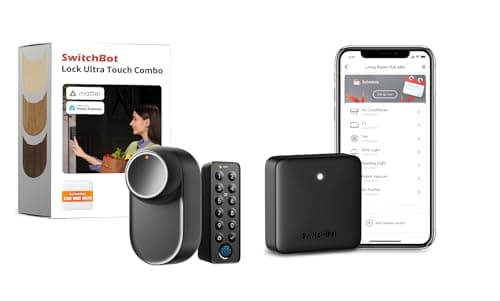
| SwitchBot Lock Ultra Touch Combo | Retrofit, interior only | No | Nothing | Fingerprint pad, code, existing key |
|---|
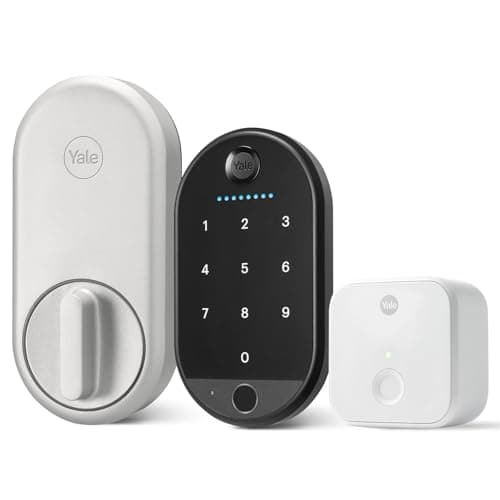
| Yale Approach Lock with Wi-Fi | Retrofit, interior only | No | Separate keypad unit | Fingerprint, code, existing key |
|---|
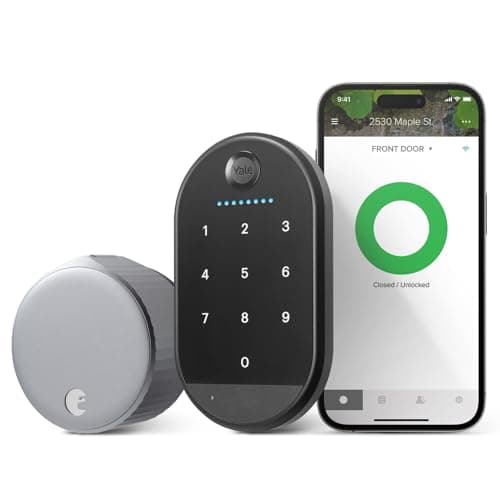
| August Wi-Fi Smart Lock | Retrofit, interior only | No | Separate keypad unit | Code, existing key |
|---|
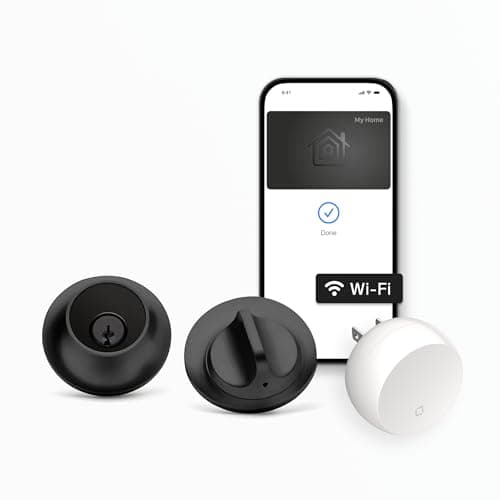
| Level Lock+ | In-door replacement | Uses the existing bore | Ordinary trim only | Key, or Apple Home Key tap |
|---|
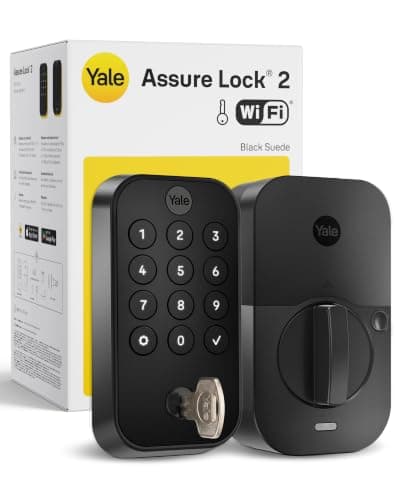
| Yale Assure Lock 2 | Full deadbolt replacement | Uses the existing bore | Touchscreen escutcheon | Code, key on the keyed version |
|---|
SwitchBot Lock Ultra — nothing on the outside face
The whole argument is geometry. The motor sits over the interior thumbturn, so the exterior of the leaf is untouched: no escutcheon on a four-inch rail, no second hole through the stile, no change to how the doors look from the garden. The bundle ships the fingerprint keypad and the Hub Mini together, so codes work at the door and remote access works from away without a second order, and the original cylinder and key keep working as the fallback.
The caveat is mechanical and it applies to every retrofit: the motor turns your existing bolt, so a deadbolt that already needs a shoulder against the door will jam, drain the pack and report failures. French doors are unusually prone to this because a pair of leaves moves seasonally and the strike in the inactive leaf is not fixed to a frame. Fix the alignment first. SwitchBot also sells an accessory kit for jimmy-proof and mortise thumbturns, which is a separate purchase.
Yale Approach Lock — the retrofit with a fingerprint pad
Same interior-only principle, with the Yale Connect Wi-Fi bridge in the box and a keypad that reads fingerprints as well as codes. On a french door the keypad placement is the thing to plan: it is a separate Bluetooth unit you stick or screw to the frame or the adjacent wall, because there is nowhere sensible to put it on a door that is mostly glass. That is a real advantage over an integrated keypad here, not a compromise.
The bridge needs a free socket within range of the door, which in a room whose doors open onto a garden is worth checking before you buy. Everything else is the general retrofit trade: fully reversible, inherits the mechanical state of the bolt underneath it.
August Wi-Fi Smart Lock — the smallest interior unit
The August is the most discreet retrofit of the three and the one we rank first for renters generally in our no-drilling roundup. On a french door it sits third only because the keypad in the bundle is code-only, with no fingerprint reader, so a household that wanted print entry has to add hardware. If you do not want print entry, treat this and the Yale as interchangeable and buy whichever is cheaper on the day.
Level Lock+ — when the doors are the feature
If the active leaf has a wide enough stile and a standard bore, and the point of the doors is how they look, the Level is the only lock here that genuinely disappears: the mechanism lives inside the bore and both faces keep ordinary deadbolt trim. On a pair of painted hardwood french doors that is a real argument.
Two honest problems. There is no keypad and no fingerprint reader, so a dog walker with an Android phone and no key has no way through the door — on a garden door that is often fine, on a side entrance it is not. And Level has replaced this generation with the Level Lock Pro, which adds Matter over Thread and door-state detection for about the same money, so paying full price for the older unit today is the wrong end of a trade. The Matter field is ranked in our Matter lock roundup.
Yale Assure Lock 2 — only on a wide stile
The modular Yale is our overall pick across the whole category in the main smart lock roundup, and it is last here for a reason that has nothing to do with the lock: the interior touchscreen escutcheon is large, and on a narrow-stile french door it has nowhere to sit. Applied molding or a glazing bead within a few inches of the bore will foul it. Measure the flat area around the existing thumbturn on the inside face before you consider it.
On a wide-stile wooden pair it is an excellent choice, and the keyed version keeps a physical cylinder, which matters on a door you may want to hand a key to a gardener for. The module system also means a protocol change later is a card swap rather than a new lock.