HUB 06 · Guides
PoE Smart Locks: What Actually Exists
Power over Ethernet at a door is real, but the device on the end of the cable is a controller, not a lock. Knowing the difference saves a wasted afternoon and an unsafe installation.
We earn a commission if you buy through our links. It does not change the price you pay, and it does not decide our picks — our selection criteria are published in full. How this works.
Is there such a thing as a PoE smart lock?
Not in the form most people are looking for. No mainstream residential smart deadbolt accepts Power over Ethernet — every consumer lock on this site runs on cells. In commercial access control, PoE is real but it powers a door controller, and the controller switches a separate 12V locking device. The network cable ends at a box on the wall or in a cabinet, not at the lock.
That one sentence resolves most of the confusion, and the rest of this page is what follows from it: what the real architecture looks like, what it costs in money and in code compliance, and what to buy instead if the thing you actually want is a door that never needs batteries.
What PoE powers at a door, specifically
Take Ubiquiti's UniFi Access Hub as a worked example, because its specifications are published in detail. The hub itself is the PoE device. It provides two lock relays, each of which can be used as a powered output rated 12V DC at up to 1A, or as a dry relay rated 30V DC at up to 1A. It has two auxiliary relays for a siren or a door opener, with the powered auxiliary output rated 12V DC at up to 0.33A. It has four general inputs intended for motion sensors, push buttons, emergency alarms and a door position sensor, and Ubiquiti recommends Belden 8760 18AWG two-conductor cable for a door position switch at runs up to about 500 feet. The smaller Door Hub Mini has a single lock terminal switchable between 12V and dry; the Enterprise Access Hub has eight lock terminals and eight door position inputs.
Read that list again and notice what is missing: a lock. Everything in the specification is about switching power to a locking device somebody else makes — an electric strike, a magnetic lock, an electrified mortise lock, an electric latch retraction device. The reader on the door frame is PoE or low-voltage; the controller is PoE; the lock is a 12V or 24V actuator on two wires. There is no network stack inside it and nothing to update.
The useful mental model: PoE at a door is plumbing for a controller, not a lock with an Ethernet port. If you were hoping to drop a Cat6 cable into a deadbolt and be done, the product does not exist. If you were hoping for a door whose access control never needs a battery change and survives a power cut on a UPS, that exists and this is the shape of it.
Fail safe, fail secure, and the part people skip
A wired locking device has a behavior on power loss, it is a choice made at install time, and getting it wrong is the difference between a legal door and a dangerous one. HES, the ASSA ABLOY electric strike brand, publishes the distinction plainly: fail safe means power is applied to lock the door, so removing power unlocks it; fail secure means power is applied to unlock the door, so removing power leaves it locked. Magnetic locks are only made in the fail-safe configuration. Electric latch retraction exit devices are only available fail secure.
Three published consequences worth carrying into any conversation with an installer. First, HES states that most electrified door hardware other than maglocks allows free egress at all times regardless of mode — which is why maglocks are the hardware that attracts the egress rules, because they are the ones that can hold a door shut against someone trying to leave. Second, on the HES 5300 series the manual states that fail-safe operation negates the fire rating of the product. Third, several HES strikes ship configured fail secure and the installation sheet says the suitability of that mode is up to the local Authority Having Jurisdiction, and that emergency exit hardware may be required.
Two things follow for a house. A fire-rated door must not be fitted with hardware that voids its listing — the same reasoning that governs the garage-to-house door in our garage entry door rankings, where the slab is code-regulated. And any wired locking device on a door people escape through is a question for the local authority rather than for a forum. That is not a liability disclaimer; it is the actual procedure, published by the manufacturer.
Why residential smart locks are battery powered
It is not an oversight. A battery deadbolt is a self-contained retrofit: it drops into an existing 2-1/8 inch cross bore, it leaves the strike and the jamb alone, it needs no electrician, no transformer, no cable through a frame, and no decision about what happens on power loss — because a motor-driven bolt simply stays where it is and the key still works. The entire reason this category exists at consumer prices is that it avoided wiring.
The cost of that is the one everybody notices: cells. Four AAs in a lock cycled ten times a day is a predictable, arithmetic problem, and it is worked through in how long smart lock batteries last. The other cost is that a battery lock is not helped by mains power during an outage, which cuts both ways and is covered in do smart locks work in a power outage. If batteries are the actual complaint behind the search that brought you here, those two pages solve more of it than a cable would.
Three honest alternatives, in the order most people should consider them
1. A battery lock, plus the PoE device that does belong at your door
The arrangement almost every household should buy. Put a well-chosen battery deadbolt on the door — the field is ranked in our best smart deadbolts and the fit and install questions are in how to install a smart lock — and spend the Ethernet run on a camera instead. A PoE camera is the device at a door that genuinely benefits from one cable carrying power and data: it is awake continuously, it never needs charging, and it records to storage you own. Aqara publishes PoE at IEEE 802.3af on the Camera Hub G5 Pro, which is also a Thread border router and a Zigbee hub, so one cable can serve the camera and the house's sensor network at once. The wider field is our PoE camera rankings, and the wired doorbell equivalent is best wired video doorbells.
2. Real access control, if the door justifies it
A home office, a workshop, a clinic room, a short-let building with a shared entrance, a garage you let trades into: these are the doors where a PoE controller and an electric strike are the right answer rather than an indulgence. What you are buying is centralized credential management, an audit trail, request-to-exit handling, door position reporting and a lock that runs from a UPS rather than from cells. What you are taking on is an installation with a cable route, a power budget, a mode decision and a conversation with your local authority. Price it as electrical work with hardware attached, not as a gadget.
3. Keep the battery lock and add what the wired install was really for
Dig into most PoE-lock searches and the underlying wish is one of three things: never changing a battery, knowing whether the door is actually shut, or having the lock keep working when the internet is down. The first is battery math. The second costs about the price of a sandwich: a contact sensor on the frame reports that the door is closed, which a lock cannot — a lock only knows that its bolt moved. The rankings are in our door and window sensor roundup, and the local-first versions are in the Home Assistant sensor rankings. The third is a protocol question, not a power one, and it is answered in do smart locks need wifi and the locks that work without wifi.
Could a PoE deadbolt exist?
Technically most of it already does: the power budget is not the obstacle, since a PoE controller delivers 12V at up to an amp and a motorized bolt draws far less than that for a fraction of a second. The obstacle is the door itself. Getting any permanent power into a moving slab means an electric power transfer — a hinge or a concealed loop that carries conductors across the gap between frame and door — which is a mortised, fitted, trade installation on a prepared door. That is routine in a commercial opening and absurd on a suburban front door that a homeowner wants to upgrade with a screwdriver on a Saturday.
Then there is the behavior question a battery lock never has to answer. A mains-powered locking device has to decide what it does when the power stops, and that decision is constrained by whether the door is a means of escape and whether it is fire rated. A battery deadbolt sidesteps the whole subject: it holds its state, the thumbturn works from inside at all times, and a key works from outside. For a house that is not a compromise — it is a better answer, which is why the market settled on it.
What to watch out for while shopping
“Hardwired” is not PoE. Some locks accept an external 9V battery or a USB power bank held against contacts as an emergency override when the cells are flat. That is a jump start, not mains power, and it does not make the lock a wired device.
A PoE reader is not a PoE lock. Keypads, card readers and face terminals with an Ethernet port are common and they are inputs to a controller. The locking device is still a separate strike or maglock on its own two wires.
Commercial networked locks are mostly wireless, not wired. Even in the commercial tier, where you might expect Ethernet, the trend is battery or low-voltage-wireless locksets talking to a panel, because running a cable through a moving door leaf requires a power transfer hinge and a willing budget. The cable goes to the frame, not the slab.
Check the power budget before you buy the strike. The UniFi figures above are 12V DC at up to 1A on a lock relay. Strikes and maglocks vary widely in inrush and holding current, and a locking device that exceeds the controller's output needs its own supply. This is the detail that turns a weekend plan into a second order.
So: what should you actually do?
If you searched for a PoE smart lock because you want one cable to solve the front door: buy a battery deadbolt and run the cable to a camera. That is the arrangement with the best ratio of capability to risk, it is reversible, and nothing about it needs an inspector.
If you searched because you are specifying access control for a door that is genuinely commercial in use: PoE controllers are mature, well documented and the right tool, and the two decisions that matter most are the mode on power loss and whether the door is fire rated. Get both in writing from whoever installs it.
And if you searched because you are tired of batteries, read the two pages linked above before spending anything. Most of the frustration in this category comes from a lock polled constantly by a Wi-Fi radio, not from the mechanism — which is a settings and protocol problem with a cheaper fix than an electrician. The protocol trade-offs are sorted by where an attacker would have to stand in smart lock security risks by protocol, and the grading question nobody explains is in what ANSI/BHMA grades mean. The whole category sits on the smart locks hub.
The hardware
The hardware this guide is about
The products this guide refers to, with prices pulled live from Amazon and dated on every card. Full rankings live in the roundups linked above.
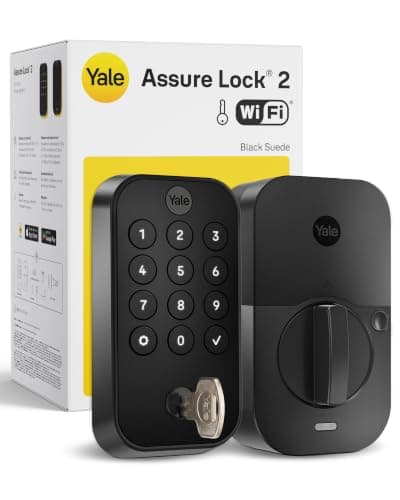
Best overall smart lock
Yale Assure Lock 2 (Wi-Fi, keyed)
The modular one. Yale sells the same lock body in keyed and key-free, touchscreen and keypad, with the radio as a swappable module — so you buy the connectivity you want instead of the connectivity that shipped.
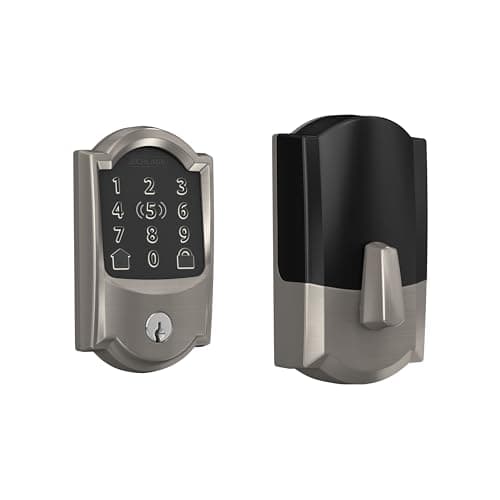
Best build quality
Schlage Encode Plus Wi-Fi Deadbolt
The one with the strongest published hardware pedigree. Schlage's deadbolt line is the reference point for BHMA Grade 1 in residential locks, and the Plus adds Apple Home Key so you tap a phone or watch instead of typing.
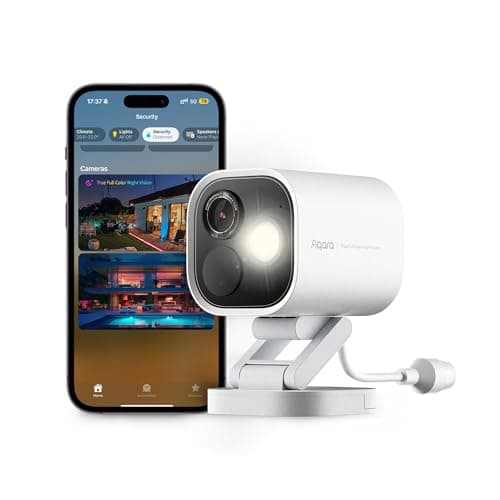
Best camera-plus-hub
Aqara Camera Hub G5 Pro (PoE)
A camera that is also a Thread border router and a Zigbee hub. If you are building a sensor estate anyway, this collapses three boxes into one and supports HomeKit Secure Video.
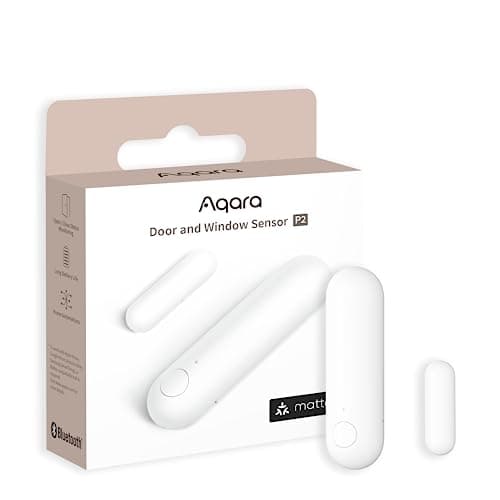
Best door and window sensor
Aqara Door and Window Sensor P2
Thread, and that is the whole point. It joins a Matter fabric directly, so it reports to Apple Home, Google Home, SmartThings or Home Assistant without Aqara's cloud anywhere in the path.
#ad · As an Amazon Associate we earn from qualifying purchases.
Questions
Frequently asked
Are there any PoE smart locks for a house?
What does a PoE access controller actually do?
Should a wired lock be fail safe or fail secure?
Is a PoE lock more secure than a battery smart lock?
Can I use PoE for a video doorbell or camera instead?
Keep reading
Related
Receipts
Sources
- Ubiquiti - UniFi Access Hub technical specifications (PoE-powered controller; two lock relays, powered 12V DC up to 1A or dry 30V DC up to 1A; auxiliary 12V DC up to 0.33A; four inputs including a door position sensor; Belden 8760 18AWG recommended for the door position switch)
- Ubiquiti - UniFi door access control hub range, including the Door Hub Mini with a single switchable 12V or dry lock terminal and the Enterprise Access Hub with eight lock terminals and eight door position inputs
- HES (ASSA ABLOY) - Fail Safe versus Fail Secure (definitions; maglocks made fail safe only; electric latch retraction exit devices fail secure only; most electrified hardware other than maglocks allows free egress at all times)
- HES - 5300 Series electric strike documentation, which states that fail-safe operation negates the fire rating of the product, and the 1500/1600 Series sheet stating that suitability of fail-secure operation is up to the local Authority Having Jurisdiction and that emergency exit hardware may be required
- Aqara - Camera Hub G5 Pro published specifications (PoE at IEEE 802.3af, 48V 0.27A, plus Zigbee and Thread radio) - the PoE device that does belong at a door today
- ASSA ABLOY - electrified door hardware product documentation and installation guidance
We do not run a testing lab and we do not pretend to. Specifications come from the manufacturer's own published documents and from published standards; prices come from the live Amazon API. Where a figure is not published, the page says “not published” rather than guessing. Read the full method.