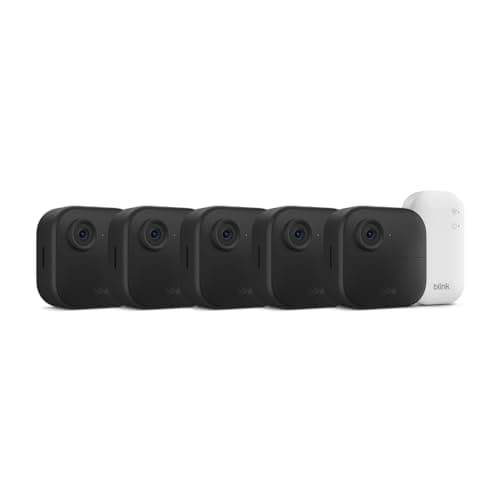
Almost every battery camera review in this category is a story about image quality. This one is not, because the Blink Outdoor 4 is not competing on image quality and does not pretend to. It is a 1080p camera in a field that has moved to 2K and 4K, and it is here because Blink publishes a battery figure — up to two years, from two AA lithium cells, with default settings — that is roughly an order of magnitude beyond what a rechargeable camera manages between charges. Every other decision in the product follows from protecting that number.
What Blink actually publishes
Everything in this table is from Blink's own Outdoor 4 technical specification page, quoted rather than inferred, because the retail listing and the specification page do not carry the same level of detail.
Blink Outdoor 4 published specifications, from Blink's support documentation, November 2026.| Specification | Published value |
|---|
| Video | 1080p HD, up to 30 fps |
|---|
| Still images | 640 x 360 |
|---|
| Field of view | 143 degrees diagonal |
|---|
| Battery | 2x AA 1.5V lithium, non-rechargeable |
|---|
| Battery life | Up to 2 years with default settings |
|---|
| Operating temperature | -4 to 113 degrees F (-20 to 45 degrees C) |
|---|
| Network | 2.4GHz 802.11b/g/n, plus a high-speed internet connection |
|---|
| Audio | Two-way |
|---|
| Storage | Via the Sync Module — compatible with all Blink Sync Modules |
|---|
| Size and weight | 2.76 x 2.76 x 1.61 in (70 x 70 x 41 mm), 5.0 oz (141 g) |
|---|
Two things are conspicuously absent from that page and both matter. There is no published IP rating — a camera called Outdoor 4 is specified by an operating temperature range and nothing else, where Reolink, eufy and TP-Link all publish an IP figure on the equivalent page. And there is no motion-detection specification: no stated range, no stated sensor type. What the page does list is the LED behavior, which is unusually candid: one blue LED to indicate the camera is active, optional, and one red LED when recording in night vision.
The battery figure, and what it costs
Two years is real, it is Blink's own published claim, and it comes with Blink's own caveat attached: with default settings, and customized settings, usage and environmental conditions may affect battery performance. That caveat is doing a lot of work. The defaults are short clips, event-only recording and modest retrigger sensitivity. Turn the clip length up, put the camera over a sidewalk, and the figure collapses the way it would on any battery camera — because the recording is what costs power, and a camera that records more records for fewer months.
Lithium AA cells are the other half of the trick. They are non-rechargeable, which reads as a downside and mostly is not: two cells every other year is less handling than a rechargeable pack you take down and charge indoors twice a season, and lithium chemistry is what makes the published cold figure of -4 degrees F plausible. The cost is that you are buying consumables, and that the cells are specified as lithium rather than alkaline — put alkalines in and you are not running the camera Blink measured.
The consequence of designing around two years is that almost nothing else can be expensive. 1080p rather than 2K, 640 x 360 stills, infrared night vision rather than a spotlight and a fast lens, no continuous recording. If any of those is the thing you actually need, this is the wrong camera and the honest alternatives are a card-slot camera in the budget rankings or, if color after dark is the point, the mechanisms explained in the color night vision rankings.
The Sync Module problem, which is the real review
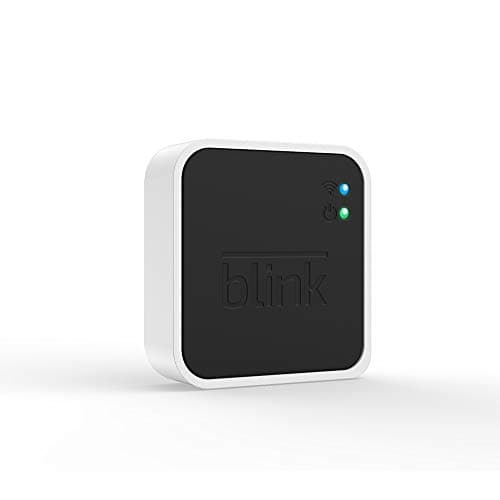
Blink's support documentation states plainly that the Sync Module Core does not support Local Storage or Clip Backup. Current Outdoor 4 kits ship the Core. That means the camera, as sold, saves clips only to Blink's cloud on a plan — and the plan-free path is a separate purchase.
This is the single most important thing to understand before buying, and it is the thing the listing is quietest about. Blink has three modules and they are not interchangeable for this purpose:
- Sync Module Core — the one in the box. Blink documents it as supporting neither Local Storage nor Clip Backup. It has no port for a drive.
- Sync Module 2 — the one that does local storage, via a Type-A USB drive. Blink specifies between 1GB and 256GB and recommends exFAT.
- Sync Module XR — the extended-range module, which does local storage by microSD card instead, in the same 1GB to 256GB range.
So a buyer who chose Blink specifically to avoid a monthly fee needs the camera, plus a Sync Module 2, plus a USB stick. That is still a cheap way to run several cameras without a plan — one module serves a system rather than a camera — but it is not what the kit price implies, and a camera with its own microSD slot gets there in one purchase. Blink also requires that every camera be on the same Wi-Fi network as its Sync Module for local storage to work, which is a genuine constraint in a long house or across a detached garage.
If the plan is the thing you are trying to avoid in general, the arithmetic is worked through properly in our subscription cost model, and the cameras that need no accessory at all to record locally are ranked in the local storage rankings.
Where this camera is the right answer
Three situations, and they are narrower than the marketing but entirely real.
A position you do not want to revisit. A side gate, the far corner of a yard, a shed wall, a cabin you visit monthly. The whole value of a two-year cell is that the camera stops being a maintenance item, and at that point 1080p on a low-traffic approach is a reasonable trade. The reasoning for that class of position is in our shed and barn rankings.
Covering several approaches cheaply. Because the ASIN we link is a five-camera system, the per-camera cost of covering a whole perimeter is among the lowest in the category. Four modest cameras that see every side of a house beat one excellent camera that sees the front, and that is a genuine argument this product wins. How many you actually need is a separate question with a smaller answer than most people expect.
A renter or a short tenancy. No wiring, no drilling if you mount to existing hardware, nothing to leave behind. It competes directly with the magnetic-mount approach reviewed in the Tapo MagCam review, which is a better camera that needs charging, against this one, which is a worse camera that does not. The rest of the renter-specific reasoning is in the renter rankings.
Where it is the wrong answer
Anywhere you need to identify a person rather than notice one. 1080p across a 143-degree diagonal field spreads pixels thin, and 143 degrees being a diagonal figure matters: the horizontal coverage is narrower than the number suggests, and faces at distance are a question of pixels on the subject rather than of resolution on paper. A driveway where you want a plate or a face needs optical reach, which is the argument of the driveway rankings.
It is also the wrong answer if you want continuous recording, a 2.4GHz-free network, or a camera that works when the internet is down. Blink's specification requires a high-speed internet connection, and the system is cloud-coordinated even when storage is local. Cameras that genuinely keep recording with the line cut are a different architecture, covered in the rankings for cameras that work without Wi-Fi.
Our ratings are judgments compiled from published specifications and manufacturer documentation rather than bench measurements, and our methodology sets out exactly what we do and what we refuse to claim. Nothing on this page was measured by us; every figure above is traceable to a source listed at the foot of the page.
How it compares
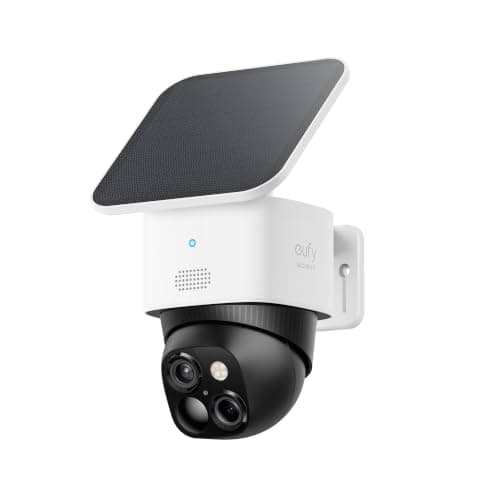
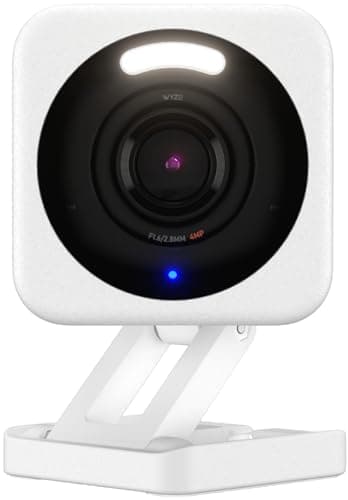
Against Ring, Blink is the cheaper half of the same corporate family and the only half with any local-storage route at all. Against eufy, Blink wins on battery and price and loses on resolution, storage and whether the plan-free path needs an accessory. Against Wyze, the trade is battery life against a card slot, and which one wins depends entirely on whether you would rather change cells every two years or swap a microSD card. The broader field is on the cameras hub, and the wire-free class specifically is in the wireless camera rankings.
The verdict
A good camera at being left alone, and an unremarkable camera at everything else. The two-year figure is Blink's own and it is the reason to buy; the Sync Module Core in the box is the reason to budget for more than the kit price if you intend never to pay a plan. Buy it for the positions you would otherwise leave uncovered, add a Sync Module 2 and a drive in the same order, and do not expect it to answer the questions a wired camera answers.