HUB 06 · Guides
Can You Install a Smart Lock in an Apartment?
Usually yes - and the thing that decides it is not the lease, it is whether your landlord's key still works afterwards. Choose a lock that does not touch the cylinder and the conversation gets much shorter.
We earn a commission if you buy through our links. It does not change the price you pay, and it does not decide our picks — our selection criteria are published in full. How this works.
Verdict
The bottom line
In most cases yes, provided you fit a retrofit lock rather than replacing the deadbolt. A retrofit clamps onto the inside of the existing lock and turns the thumbturn for you: the exterior of the door does not change, the cylinder is untouched, and your landlord's key keeps working — which is the clause that actually matters in most leases, because a landlord's legal right of access is usually what the lock-change restriction exists to protect. Replacing the deadbolt is the version that gets you in trouble: it means drilling or re-boring somebody else's door and handing over a key they did not choose. Ask in writing, choose a lock that leaves no hole bigger than a keypad's two screws, and keep the original hardware in a box until you move out. If the building uses a master-keyed system or an electronic fob entry, stop and ask before you buy anything.
This question gets answered badly in two directions. One half of the internet says “just do it, it's reversible”; the other says “never touch a rented lock.” Both skip the part that decides it, which is that there are two completely different products called a smart lock, and a lease clause written about one of them does not describe the other.
The two designs, and why only one of them is an apartment question
A replacement smart lock is a deadbolt. The old deadbolt comes out, the new one goes in, and if the bore or backset does not match you are drilling a door you do not own. It also means a new cylinder, or no cylinder at all, which is where the real problem lies: the landlord's key stops working.
A retrofit smart lock is a motor. It mounts on the interior face of the door, over the existing thumbturn, and turns it. Nothing is removed, nothing is drilled into the door slab, the existing cylinder and key are untouched, and the outside of the door looks exactly as it did. In most leases that is not a lock change at all — it is an appliance you attached to the inside of the door, in the same category as a draught excluder. The hardware ranking for this design is in our no-drilling roundup, and the design decision itself is in our retrofit versus replacement guide.
What your lease is actually protecting
Lease language varies by state, by landlord and by building, so nothing here is legal advice and your lease wins over any general statement. But the restrictions on changing locks almost always exist to protect two things, and knowing which two makes the conversation straightforward:
- Access. A landlord usually has a legal right to enter with notice, and in an emergency without it. A lock they cannot open defeats that. A retrofit does not, because their key still turns the cylinder — and that is the single sentence to lead with when you ask.
- The condition of the property. You may not permanently alter the door. A retrofit does not alter it. A keypad screwed to the frame makes two small holes in woodwork, which is the one thing on this page that genuinely needs permission or a filler and a dab of paint on the way out.
Two situations where the answer is different and you should ask first rather than afterwards. If the building is on a master-keyed system, the cylinder belongs to a scheme and is not yours to think about — a retrofit is still fine because it does not touch the cylinder, but say so explicitly. And if entry is by fob or card to a building-wide electronic system, the lock on your own door may be part of that system, and adding hardware to it can be a fire-safety or insurance issue rather than a preference.
Ask in writing, and make it easy to say yes. One short message works better than a conversation: name the product, state that it mounts on the interior only, state that the existing deadbolt and their key are untouched, offer to remove it and restore the door at the end of the tenancy, and offer them a code if they want one. Keep the reply. A landlord who has said yes in an email is not going to remember it differently in two years.
What “reversible” has to mean in practice
Three tests. If a lock passes all three, you can fit it in a rental and remove it in an afternoon:
- No new holes in the door slab. Retrofits mount on the existing deadbolt fixings. If the instructions include a drill bit size for the door, it is the wrong product for a rental.
- The original cylinder stays. Both because of the access question and because the day you move out, the original key has to work for the next tenant with no locksmith involved.
- The outside of the door is unchanged, or changed only by adhesive. The keypad is the exception and the only compromise: most keypads offer an adhesive mount and a screwed mount, and the adhesive one holds fine on a smooth frame. Use it, and keep the screws in the box.
Worth knowing what you give up by not drilling. A retrofit inherits the deadbolt underneath it, so you do not get a better cylinder, a thicker bolt or a published hardware grade — you get remote control and codes on the lock you were given. What those grades mean, and why most smart locks do not publish one, is in our ANSI/BHMA guide.
The deadbolt test you should do before ordering
This is the step that saves the most money and almost nobody does it. Stand inside, close the door, and turn the thumbturn with one finger. If it needs a shoulder against the door, a wiggle or two hands, a retrofit motor will jam on it, drain its batteries reporting failures, and eventually strip something. A motor cannot fix a misaligned strike.
In a rental that is a maintenance request, not a purchase: a strike plate 2mm out of line is the landlord's problem to fix and takes ten minutes. Get it done first, then buy the lock. If the bolt still fights you afterwards, the door needs a new deadbolt, which takes you straight back to the permission conversation — and it is a conversation worth having, because it is the landlord's hardware that is failing.
Which design fits which apartment door
Three common cases where the generic advice does not apply:
- A narrow door edge or a storm door in front. Retrofit bodies are chunky and can foul on either. Measure the clearance from the thumbturn to anything in front of it before ordering.
- A patio slider as your second door. No retrofit deadbolt exists for a slider, because a slider has no deadbolt — it has a mortise hook case. Our sliding door roundup covers the hardware that does fit, and our sliding door security guide covers the no-hardware fixes a renter can do in ten minutes.
- A door with no deadbolt at all, only a latch in the handle. There is nothing for a retrofit to turn. This is the one case where you genuinely need the landlord's agreement to fit hardware, and a deadbolt being absent is usually something they should be fixing anyway.
Moving out: the fifteen-minute version
Take the lock off, refit the original thumbturn with the screws you kept, peel the keypad off and clean the adhesive residue with isopropyl alcohol, and fill any screw holes with decorator's caulk. Delete the guest codes and remove the lock from your account before you hand the keys back, because a lock still bound to your phone is a problem for the next tenant. Then factory reset it, because the pairing data and the code list are stored in the lock, not in the cloud — the mechanism is in our guest code guide.
The best thing about the retrofit design is that the lock is yours. It comes off this door and goes onto the next one, which over three tenancies makes it considerably better value than it looks. What it will not do is come with you to a building that uses fobs, so if that is a possibility, keep the box.
The checklist, in order
- Read the lock-change clause in your lease. Note whether it says “change”, “replace” or “alter” — a retrofit does none of the three, and quoting their own wording back is the easiest route to a yes.
- Check whether the building is master-keyed or fob-entry. If either, ask before you buy anything at all.
- Test the thumbturn with one finger. Stiff bolt, maintenance request, then buy.
- Email the request. Product name, interior-only, their key unaffected, removal on move-out, code offered. Keep the reply.
- Buy a retrofit, not a replacement. And if you want codes or a fingerprint, buy the bundle with the pad in the box — buying the pad separately later costs more.
- Keep the original hardware and the screws. In a labelled bag, in the cupboard, for two years. This is the whole difference between a deposit returned and a deduction.
What this costs, honestly
A retrofit bundle costs more than a basic keypad deadbolt and less than a premium one, and you are paying for the mechanism that lets you avoid the door. There is no subscription on any of the hardware below for app unlock, codes, remote access or alerts. The running cost is cells, and a retrofit is two battery schedules rather than one, because the pad outside has its own — the arithmetic is in our battery guide.
If the answer is no
It happens, and there is a decent fallback that needs no permission at all: a keypad lock box on the railing for a spare key, plus a contact sensor on the door so you know when it opened. A sensor sticks on with adhesive, needs no hole and is not lock hardware under any lease, and our no-hub sensor roundup ranks the ones that work without a hub. The renter's version of the whole security question — cameras included — is in our camera roundup for renters.
The hardware
The hardware this guide is about
The products this guide refers to, with prices pulled live from Amazon and dated on every card. Full rankings live in the roundups linked above.
- ProductNo image
Best no-drill retrofit
SwitchBot Lock Ultra Touch Combo (with Hub Mini)
The credible way to make a rented door smart without drilling a hole. It mounts over the existing thumbturn, keeps your key, and this bundle puts the fingerprint keypad and the hub in the same box — so codes and remote access both work the day it arrives.
Best for renters
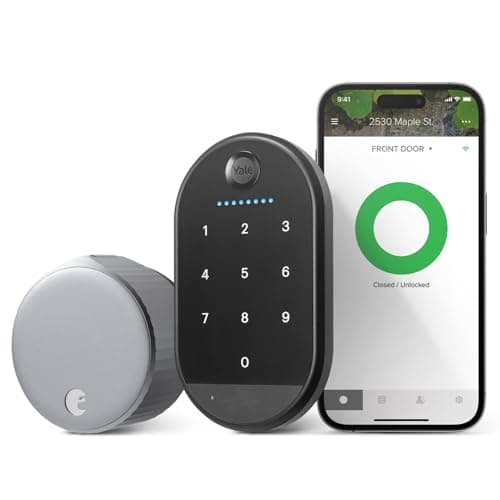
August Wi-Fi Smart Lock (with Yale Keypad)
The retrofit that started the category. It clamps onto the inside of your existing deadbolt and turns the thumbturn — the outside of the door does not change at all, which is why it is the default answer for renters. The listing we link is the bundle, so the Yale Keypad that gives it code entry is in the same box.
Best retrofit with a keypad option
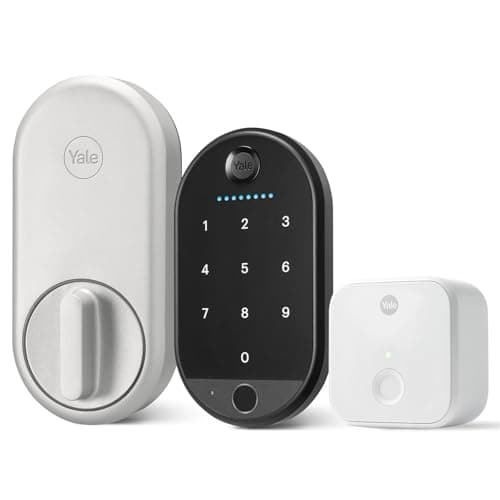
Yale Approach Lock with Wi-Fi
Yale's answer to August, built by the same parent. A retrofit that keeps the exterior and your keys, and the bundle we link ships the biometric keypad with it, so code and fingerprint entry arrive without changing anything on the door.
- ProductNo image
Best keypad add-on
Yale Keypad
The accessory that turns a retrofit lock into a keypad lock. IPX5-rated, code entry, and it sticks or screws to the wall beside the door rather than replacing anything — it is the pad inside the August bundle above, sold on its own for a lock you already own.
#ad · As an Amazon Associate we earn from qualifying purchases.
Questions
Frequently asked
Do I need my landlord's permission to install a smart lock?
Will a smart lock stop my landlord's key from working?
Can I install a smart lock without drilling?
Can I take the smart lock with me when I move?
What if my apartment door has no deadbolt?
Keep reading
Related
- Best smart locks with no drillingThe hardware, ranked, once you have the go-ahead.
- Yale Approach vs AugustThe two retrofit bundles head to head.
- Retrofit vs replacement smart locksWhy only one of the two designs is a rental question.
- Best security cameras for rentersThe same reversibility test applied to cameras.
Receipts
Sources
- August — Wi-Fi Smart Lock retrofit installation documentation and reversibility
- Yale Home — Approach Lock installation guide and keypad mounting options
- SwitchBot — Lock Ultra installation, accessory kits and supported deadbolt types
We do not run a testing lab and we do not pretend to. Specifications come from the manufacturer's own published documents and from published standards; prices come from the live Amazon API. Where a figure is not published, the page says “not published” rather than guessing. Read the full method.