HUB 06 · Guides
Smart Locks for Storm Doors: Why Nothing Fits, and What to Do
This is one of the few searches on this site where the honest answer is that the product does not exist. The reason is a tape measure, not a gap in the market.
We earn a commission if you buy through our links. It does not change the price you pay, and it does not decide our picks — our selection criteria are published in full. How this works.
Is there a smart lock for a storm door?
No — not from any mainstream manufacturer, and the reason is dimensional rather than commercial. A storm door slab is roughly 5/8 in to 1-1/4 in thick, against the 1-3/8 in minimum a residential deadbolt needs, and the hardware is a proprietary mortise handle set on a 7/8 in or 1-5/16 in backset rather than a 2-1/8 in cross-bore.
That is an unusual thing for a site like this to publish, so it is worth being specific about why we are confident rather than just asserting it. Take the two dimensions in turn.
The two measurements that end the conversation
Thickness
Every residential deadbolt on the market — Schlage, Yale, Kwikset, eufy, Aqara, Level, all of them — specifies a door thickness range that starts around 1-3/8 in and runs to about 1-3/4 in, with extension kits sold for thicker slabs. There is no equivalent kit for going the other way, because the mechanism physically needs that thickness to house the bolt and the tailpiece.
Storm doors are built the other side of that line. Manufacturers publish latch hardware for slabs from about 5/8 in to 1-1/4 in, which is where the whole category lives. A storm door is a light frame around glass or screen, designed to be light because it hangs on a lightweight jamb and gets pushed open with an elbow. Making it thick enough for a deadbolt would defeat its purpose.
Backset and bore
Thickness alone would be enough, but the second dimension is just as decisive. A deadbolt needs a 2-1/8 in cross-bore through the face of the door on a 2-3/8 in or 2-3/4 in backset. A storm door has no bore at all. It has a mortise pocket sized for a specific handle set, and storm door mortise backsets are published at 7/8 in or 1-5/16 in — a fraction of a deadbolt's.
You cannot drill your way out of this either. There is not enough stile between the mortise pocket and the glazing to take a 2-1/8 in hole, and on a glass storm door the panel is usually tempered, which cannot be cut or drilled after manufacture.
Be careful what you buy on a search result. Several keypad locks advertise very wide door-thickness ranges, and some genuinely start below an inch. They are mortise locks for sliding patio doors, and they throw a hook into a slider keeper rather than a bolt into a jamb. They will not work on a swinging storm door, whatever the thickness table says. That category is a different page: smart locks for sliding glass doors.
What a storm door is actually for
Worth stating, because it reframes the whole question. A storm door is a weather and ventilation device. It keeps rain, wind-driven grit and insects off the entry door, it lets you open the house to a screen in spring, and it adds a modest thermal buffer. It is not a security layer and it was never designed as one. The lightweight jamb, the continuous piano hinge and the glazed panel all say so.
Which means the door you actually wanted to make smart is the one behind it. The entry door is the one with the deadbolt, the reinforced strike and the framing, and it is the one that decides whether the house is secured. Almost everyone who searches for a storm door smart lock is really trying to solve one of three problems, and each has a better answer than a lock on the outer door.
The three real problems, and what actually solves them
“I want to get in without a key”
Then put a keypad or fingerprint deadbolt on the entrydoor and leave the storm door on its factory latch. The storm door does not need to lock for you to be keyless — you open it, then you enter a code. This is the answer for the large majority of people asking, and it costs nothing extra because the entry door lock is a purchase you were going to make anyway. The rankings are in the best keypad door locks, and if the storm door means your entry door is often in shade or spray, the fit and weather notes in will a smart lock fit my door are worth reading first.
One practical note specific to this arrangement: a closed storm door in front of a keypad lock traps heat in summer. Manufacturers publish operating temperature ranges for exactly this reason, and an entry door in full afternoon sun behind glass can exceed them. If your storm door has a screen insert, running it in the warm months is the free fix.
“I want the storm door to lock”
Then buy a keyed mortise handle set built for storm doors. This is real hardware that really fits, it is a like-for-like swap for the set already on the door, and it takes a screwdriver. It is mechanical — no codes, no app, no log — and there is no version of it that is not, because nobody manufactures a smart one.
It is genuinely useful on a porch: a latched storm door stays shut in wind rather than swinging on its closer, and a locked one stops someone opening it to get at the entry door handle or a parcel left in the vestibule. Just do not mistake it for security on the house.
The one thing to check before ordering: storm door hardware is not standardized the way deadbolt bores are. Mortise cutouts vary by manufacturer, series and age. Take the existing handle off, measure the cutout and the backset, and match those — the same measure-first discipline this site applies to every other door.
“I want to know if it was left open”
Then you want a contact sensor, not a lock. A storm door swinging in the wind because somebody did not pull it to is a genuinely common annoyance, and it is exactly the problem a five-dollar-class magnetic sensor solves. It reports the one fact no lock on any door can report: that the door is open right now.
Mount it on the hinge-side frame rather than the latch edge where possible, and check the published gap tolerance, because storm door frames are thin and the magnet-to-body gap can exceed the sensor's specification. The options and their gap figures are in the best door and window sensors.
Measuring your storm door in two minutes
If you want to confirm all of the above on your own door rather than take it on trust, three measurements settle it. You need a tape measure and a screwdriver.
- Slab thickness.Open the door and measure the edge. If it reads under 1-3/8 in — and on a storm door it almost always reads around an inch — no residential deadbolt on the market fits, and no extension kit exists for going thinner.
- Backset at the existing handle. From the edge of the door to the center of the handle spindle. Storm door mortise hardware is published at 7/8 in or 1-5/16 in. A deadbolt needs 2-3/8 in or 2-3/4 in. If your figure is closer to an inch than to two and a half, you are looking at a mortise set.
- Stile width beside the glazing. Measure from the door edge to where the glass or screen frame begins. A 2-1/8 in cross-bore needs meaningfully more material than that, plus clearance, and on a storm door there is rarely more than an inch or two of aluminum before you are into the panel.
Take the interior handle plate off while you are there — two screws in most designs — and photograph the mortise cutout with the tape beside it. That photograph is what you match a replacement handle set against, because cutouts vary by manufacturer, series and model year in a way deadbolt bores never do.
What about the retrofit locks that fit inside?
A reasonable question, since retrofit locks like the SwitchBot Lock Ultra and the August solve exactly this shape of problem elsewhere: they mount on the interior side and turn the thumbturn of a deadbolt that is already there. Nothing is drilled and nothing on the exterior changes.
They do not help here, for a simple reason. A retrofit drives an existing deadbolt, and a storm door does not have one — it has a mortise latch operated by a lever or a thumbpiece, with no thumbturn to grip and no bolt to turn. There is nothing for the mechanism to attach to. The retrofit route is genuinely the right answer on plenty of awkward doors, and how to tell which ones is in retrofit against full replacement. A storm door is not one of them.
The same is true of the keypad accessories sold with retrofit locks. A SwitchBot Keypad or an August Keypad is a radio device that tells a lock to unlock; it is not itself a lock, so mounting one beside a storm door achieves nothing unless there is a lock listening. If you fit one at all, fit it to operate the entry door behind the storm door — which works, and which is the arrangement this whole page keeps pointing at.
Two things not to do
Do not fit a surface-mounted keypad lock to a storm door. There are keypad rim locks that mount on the face of a door rather than through it, and on a storm door the temptation is obvious. The problem is the substrate: a storm door stile is thin aluminum or hollow vinyl, and a lock screwed to it is held by the skin rather than by a structural slab. It will loosen, and on a door with a closer slamming it twenty times a day it will loosen quickly.
Do not remove or defeat the closer to make hardware fit. The closer is what stops the door being caught by wind and torn off its hinge, which is the single most common way storm doors fail. If a lock or handle set interferes with the closer arm, the hardware is wrong for the door.
The honest summary
There is no smart lock for a storm door because a storm door cannot physically accept one, and no amount of shopping changes a dimension. Put the smart lock on the entry door, where it belongs and where it does something. Put a keyed mortise set on the storm door if you want it lockable. Put a contact sensor on it if you want to know it is open. That is the complete set of things that help, in the order they help.
If you are choosing the entry-door lock now, start at the smart locks hub— and if the entry door is a garage entry rather than a front door, that one has its own constraints, covered in smart locks for garage entry doors. The rubric behind every score on this site is at how we pick.
The hardware
The hardware this guide is about
The products this guide refers to, with prices pulled live from Amazon and dated on every card. Full rankings live in the roundups linked above.
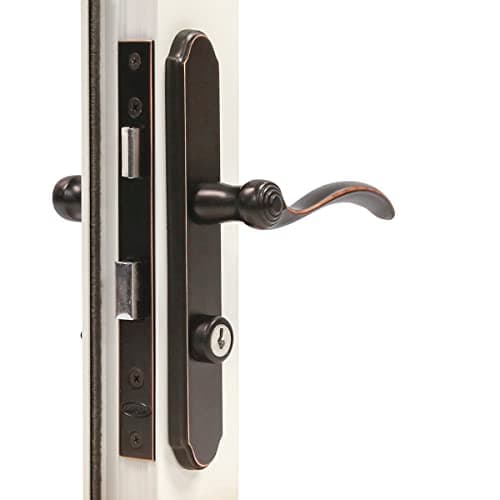
Best storm door hardware
LARSON Revere Mortise Storm Door Handle Set
Not a smart lock, and this page does not pretend otherwise. It is the keyed mortise handle set that actually fits a storm door, for anyone who wanted the storm door lockable and found that no smart lock will go on it.
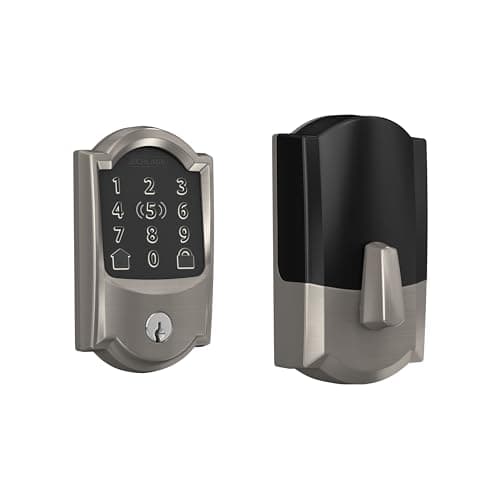
Best build quality
Schlage Encode Plus Wi-Fi Deadbolt
The one with the strongest published hardware pedigree. Schlage's deadbolt line is the reference point for BHMA Grade 1 in residential locks, and the Plus adds Apple Home Key so you tap a phone or watch instead of typing.
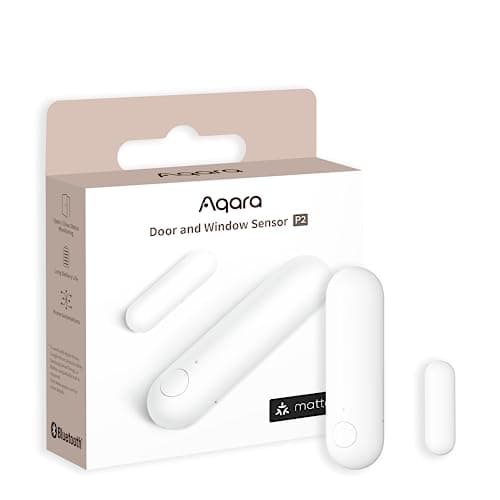
Best door and window sensor
Aqara Door and Window Sensor P2
Thread, and that is the whole point. It joins a Matter fabric directly, so it reports to Apple Home, Google Home, SmartThings or Home Assistant without Aqara's cloud anywhere in the path.
#ad · As an Amazon Associate we earn from qualifying purchases.
Questions
Frequently asked
Why will a smart lock not fit a storm door?
Can I put a keypad lock on my storm door?
What lock does fit a storm door?
Will my storm door affect the smart lock on the entry door?
Is a storm door a security upgrade at all?
Keep reading
Related
- Best keypad door locksThe entry door behind the storm door is the one to make keyless.
- Will a smart lock fit my doorThe measurements that decide fit on the door that can take a deadbolt.
- Best door and window sensorsWhat to fit if the real question was whether the storm door was left open.
- Best smart locks for sliding glass doorsThe category those very wide thickness ranges actually belong to.
- Can smart locks get wet?What each maker publishes for rain, cold and heat - and the interior half none of them rates.
Receipts
Sources
- LARSON — storm door latch and mortise handle hardware, published door thickness range and mortise backset dimensions
- Andersen — storm door mortise lock hardware for one-inch woodcore doors
- Schlage — residential deadbolt installation specifications, door thickness range, cross-bore and backset
- Builders Hardware Manufacturers Association — ANSI/BHMA standards for door hardware and bore preparation
We do not run a testing lab and we do not pretend to. Specifications come from the manufacturer's own published documents and from published standards; prices come from the live Amazon API. Where a figure is not published, the page says “not published” rather than guessing. Read the full method.