HUB 06 · Guides
Do Video Doorbells Need a Subscription? It Depends Entirely on the Brand
Local-storage doorbells record and play back with no plan at all. Cloud-only doorbells keep nothing you can watch later unless you pay. Which one you own decides everything about the running cost.
We earn a commission if you buy through our links. It does not change the price you pay, and it does not decide our picks — our selection criteria are published in full. How this works.
Do video doorbells need a subscription?
It depends entirely on the brand. Local-storage doorbells — eufy and Tapo among them — record clips and play them back with no plan. Cloud-only doorbells are the opposite: a Ring without a Ring Home plan keeps no recorded clip you can watch later, only a live view and a notification.
The subscription question is really a storage question. Where a doorbell keeps its footage decides whether it needs a plan. If the recording lives on a card or a base station in your house, it is yours and there is nothing to pay. If the recording only ever goes to the maker's cloud, the plan is the rent on your own footage. Read the storage line on the spec sheet before the resolution line and you can answer the subscription question yourself.
What a subscription actually gates
On the doorbells that offer a plan, it typically unlocks a stack of things, and it is worth knowing which of them you would actually miss. The big one is recorded clips — on a cloud-only doorbell, no plan usually means no saved video to review later at all. On top of that a plan commonly adds smarter detection (telling a person from a passing car, or flagging a package specifically), a longer history of how many days of clips are retained, and richer rich notificationswith a snapshot rather than a bare alert. The uncomfortable part is that on some hardware the very first item — keeping any recording at all — is the thing behind the paywall, not just the extras.
Local storage versus cloud: the fork in the road
Doorbells split cleanly into two designs, and the split is the whole answer. A local-storage doorbell writes its footage to a microSD card in the unit or to a base station indoors, paid for once. The eufy Video Doorbell E340 records locally with full playback and no plan — either to on-device storage or to a paired eufy HomeBase — and alerts are free too, so there is no monthly fee to keep, play back, or be notified about your video. Tapo doorbells do the same to a microSD card with person and package detection included. For these, the answer to “do I need a subscription” is simply no.
A cloud-onlydoorbell is the mirror image: the recording lives on the manufacturer's server, and you pay for as long as you own the doorbell to keep it there. That is not automatically worse — cloud storage survives a stolen doorbell, where a card inside the unit is stolen with it — but it does mean the running cost never ends. The full version of this trade-off, which applies to cameras as much as doorbells, is in local storage versus cloud security cameras.
The Ring case, stated plainly
The Ring Battery Doorbell Plusdeserves naming directly, because its hardware is good enough that people buy it without reading the storage line. It has no local storage option — none, at any price — and every recorded clip requires a Ring Home plan. Without that plan it records nothing you can watch later: you get a live view and a notification, and the clip is not retained anywhere you can open it. That is published by Ring, not a trick, and for a household that only wants to see and speak to whoever is at the door in the moment it is a legitimate product. But it is a different thing from what most people picture a doorbell being, and if never paying a subscription is your actual rule, it is the wrong pick and a local-storage doorbell is the right one.
It is worth adding that many brands sit between the two poles with a partialfree tier: a Wyze doorbell, for instance, gives free basic motion alerts but puts its better person and package detection behind a Cam Plus plan. So “works without a subscription” is not always all-or-nothing — read which specific features a brand gates, not just whether a plan exists.
| Doorbell | Where footage is stored | Records clips with no plan? | What a plan adds |
|---|---|---|---|
| eufy Video Doorbell E340 | Local (on-device or a paired HomeBase) | Yes, full playback | Nothing essential |
| Tapo video doorbells | Local microSD | Yes, full playback | Optional cloud backup only |
| Ring Battery Doorbell Plus | Cloud only | No recorded clip — live view and alert only | Recorded clips, history and smarter detection |
The five-year cost shape
Because a plan is a recurring cost, the honest way to compare doorbells is not the sticker on day one but the total after several years of ownership. A local-storage doorbell is the purchase price plus a memory card or the bundled base, and then nothing — the cost curve goes flat. A cloud-only doorbell is the purchase price plus a monthly payment that keeps running for as long as the doorbell hangs on the wall, and plan pricing in this category has moved upward more than once. Over five years the two shapes diverge sharply, and the cheaper-looking doorbell at checkout is frequently the more expensive one to own.
We keep the actual arithmetic as a maintained comparison at subscription costs compared rather than printing a figure here that would be stale within a quarter. If avoiding a plan is the whole point, the doorbells where every core function is free are gathered at best video doorbells without a subscription, and the broader case for whether a doorbell earns its place at all is in is a video doorbell worth it.
What you keep with no plan on a local doorbell
It is easy to assume a subscription-free doorbell is a stripped-down one, so it is worth being concrete about what you still get. On a local-storage doorbell with no plan you keep the live view, two-way talk, motion notifications, and — crucially — full recording and playback of events, held on hardware you own. On the better ones you also keep on-device person and package detection, because that processing happens in the doorbell rather than on a server. What you are giving up by not paying is usually off-site backup and, on some brands, cloud-based smart features — not the fundamentals. That is the reason a local-storage doorbell can be a complete product at no ongoing cost, while a cloud-only one often is not.
The short version
No, video doorbells do not universally need a subscription — but some individual models effectively do. The deciding factor is storage: local-storage doorbells from eufy and Tapo record and play back for free, while a cloud-only doorbell such as the Ring Battery Doorbell Plus keeps no reviewable footage without a plan. Decide first whether you will ever pay a monthly fee, then buy the storage design that matches that decision. The full field is ranked in the best video doorbells roundup.
How to buy a doorbell you will not resent paying for
The regret people report almost always traces to one skipped step at checkout. A short, deliberate process avoids it.
Decide up front whether you will ever pay a subscription
This is the fork everything hangs on. If you are content to pay a monthly fee for cloud convenience and off-site backup, the cloud-only doorbells with the largest ecosystems are open to you and their hardware is genuinely good. If a subscription is a hard no, you must buy a local-storage doorbell, full stop — because bolting “no plan” onto cloud-only hardware later is impossible. Make this decision before you compare any specs, not after you have fallen for a particular unit.
Read the storage line, not the resolution line
Resolution sells doorbells; storage decides their running cost. Words like microSD, local storage, on-device or base station tell you the doorbell keeps its own copy and needs no plan to record. A listing that mentions only cloud video, or quotes a monthly plan as the way to save recordings, is telling you the footage lives somewhere you do not control and the meter is running. The resolution number matters far less than which of those two descriptions applies.
Check what the free tier actually includes
“No subscription required” is not always the same as “everything works for free.” Some brands record locally with every feature open; others give free basic alerts but gate person and package detection, or longer history, behind a plan even when local recording is possible. Before buying, find the one line that says what the free tier keeps and what it withholds, so the doorbell you bring home matches the bill you expected.
The five-year number
Compare the hardware plus five years of whatever keeps it working, not the checkout price. A local-storage doorbell is the unit plus a card or bundled base and then nothing; a cloud-only doorbell is the unit plus sixty monthly payments at a rate that has risen before. We keep that comparison current at subscription costs compared so the decision is made on real, maintained arithmetic rather than a number that ages badly.
The mistake buyers make
The classic error is buying cloud-only hardware on the assumption that a “security doorbell” must record for free, then discovering after an incident that the useful clip was never saved because there was no plan. Read the storage line first, decide the subscription question before you shop, and if the answer is “no plan, ever,” start from the no-subscription doorbells rather than the general roundup.
How this guide was compiled
Products we claim to have tested: zero. This is built from each manufacturer's published product and support documentation — especially the quiet lines about what a plan gates — every one a source you can open yourself, listed below. Our rubric is at our methodology, and the rest of the doorbell and subscription questions sit across the guides hub.
The hardware
The hardware this guide is about
The products this guide refers to, with prices pulled live from Amazon and dated on every card. Full rankings live in the roundups linked above.
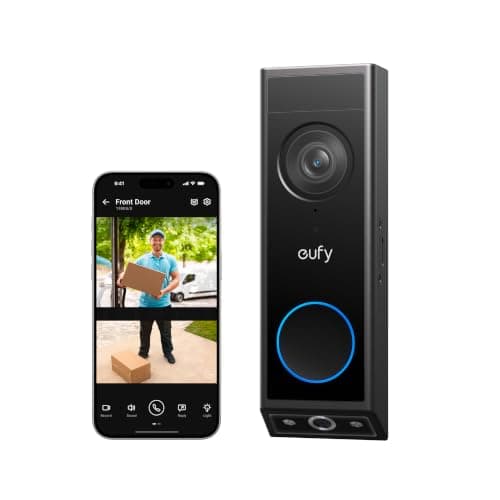
Best video doorbell
eufy Video Doorbell E340 (dual camera)
Two cameras — one on the visitor, one pointed down at the doorstep — so you see the parcel as well as the person. Records locally, wired or battery, no plan.
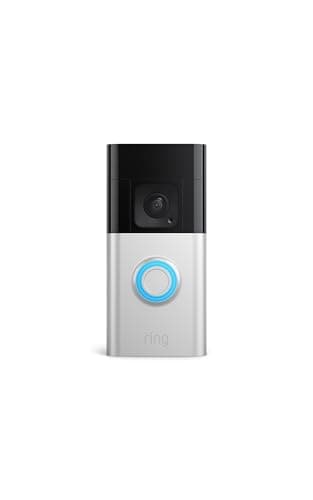
Best ecosystem and support
Ring Battery Doorbell Plus
The best-supported doorbell in the world, and the one that records nothing you can watch later unless you pay. Head-to-toe HD+ and a head-to-toe subscription requirement. Ring has since moved the line on: the Battery Doorbell 2K Plus is the current generation of this doorbell, at Retinal 2K for similar money.
#ad · As an Amazon Associate we earn from qualifying purchases.
Questions
Frequently asked
Do all video doorbells require a monthly subscription?
Does the Ring Battery Doorbell Plus work without a subscription?
Which video doorbells work without a monthly fee?
What do you lose without a doorbell subscription?
Is local storage or a cloud plan cheaper over time?
Can I add local storage to a cloud-only doorbell later?
Keep reading
Related
- Best video doorbellsThe full field, ranked, wired and battery, with the storage design flagged on each.
- Video doorbells with no subscriptionFiltered to the models where every core function works for free.
- Is a video doorbell worth it?The case for and against a doorbell before you weigh any plan.
- Local storage vs cloud camerasThe storage decision in full, which is the same fork the plan question rests on.
Receipts
Sources
- eufy Security — Video Doorbell E340 and HomeBase local-storage documentation
- Ring — Battery Doorbell Plus product page and storage specifications
- Ring Support — Ring Home plan terms and what recorded video requires a subscription
- TP-Link Tapo — video doorbell microSD recording and detection documentation
- TP-Link — power, storage and battery documentation for the Tapo doorbell line
- Wyze — video doorbell and Cam Plus feature and plan documentation
We do not run a testing lab and we do not pretend to. Specifications come from the manufacturer's own published documents and from published standards; prices come from the live Amazon API. Where a figure is not published, the page says “not published” rather than guessing. Read the full method.