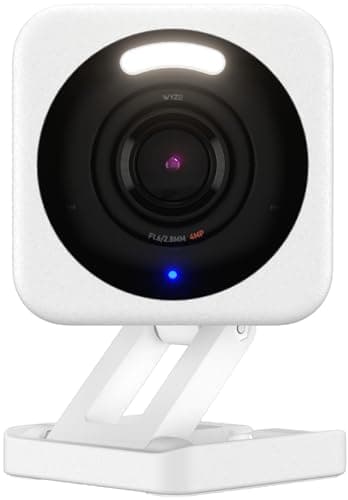
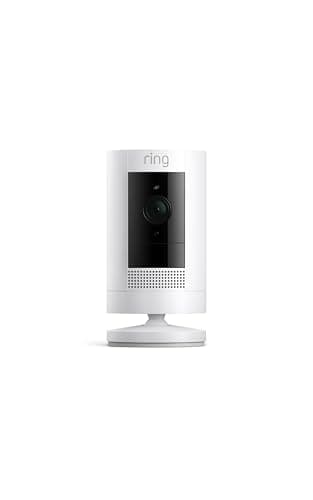
Ring makes the most polished camera in home security: the best app, the fastest notifications, the deepest accessory ecosystem. It also records nothing you can watch back without a paid plan. Wyze makes one of the cheapest competent cameras sold, and it keeps its footage on a local card with the plan optional. That is not a quality fight. It is a pay-monthly-forever question.
Ring vs Wyze: the short answer
Buy the Ring Stick Up Cam if you want the best app and the most reliable alerts in the category, you value the battery, wired and solar options and the huge mount ecosystem, and you are genuinely willing to pay a Ring Home plan as a permanent line item — because without it the camera saves nothing you can review. Buy the Wyze Cam v4 if you want to spend the least, own your footage on a local microSD card with no recurring bill, and the camera points somewhere low-stakes. The split is not really about which camera is better built. It is about whether a monthly fee is acceptable forever. Both appear, for opposite reasons, across our main camera roundup.
The decision rule in one line:if you will pay a plan for as long as you own the camera, Ring is the better product; if you will not, Ring is not a camera so much as a live-view intercom — it records nothing reviewable — and the Wyze, which keeps its footage on a card for free, is the answer.
Head to head: the split is the storage model
The columns below are the ones that decide the purchase. You will not find megapixels leading the table, because the argument here is not about image quality — it is about who holds the recording and what that costs every month.
Compiled from manufacturer specifications, August 2026.| Model | Resolution | Where recorded video lives | Plan needed to watch it back? | With the internet down |
|---|
| Ring Outdoor Cam (Stick Up Cam) | HD | Ring's cloud only — there is no local option | Yes. No plan, no saved clip | Nothing is recorded at all |
|---|
| Wyze Cam v4 | 2.5K | On a local microSD card in the camera | No for recording; Cam Plus only adds smarter alerts | Keeps recording to the card |
|---|
What Ring is genuinely better at
This site cares about storage, but it would be dishonest to pretend Ring is not the more polished product on almost every other axis. Three things in particular are not close. The app is the one other manufacturers are visibly copying: timeline scrubbing, shared users, sane defaults. The notifications arrive fast and consistently, which is the single feature the budget field most often gets wrong — an alert that lands ninety seconds late is the reason people mute a camera and stop using it. And the ecosystem is enormous: mounts, solar panels, chimes, wedge kits, Alexa integration, and a support catalog that documents its own hardware properly. The Stick Up Cam also comes in battery, wired and solar variants of the same body, so siting it is flexible in a way the mains-only Wyze is not.
None of that is marketing. It is why Ring is the default recommendation on most of the pages competing with this one. The catch is the next section.
What that polish costs, and what Wyze does instead
The Ring Stick Up Cam has no local storage option at any price. With no plan, it gives you live view and notifications and saves no clip you can watch later. That is worth saying plainly because it surprises people: you can buy the camera, mount it, use it every day, and discover only when you go looking for last Tuesday's footage that nothing was ever recorded. The plan is not an upsell on top of a working recorder — on the camera side it is the recorder.
The Wyze Cam v4 inverts that. It records 2.5K to a microSD card for free, and the plan — Cam Plus — is optional and only adds the smarter person, package and vehicle detection on top. You own the footage; it lives in the camera; and if you never pay a cent, you still have a recording to review. On resolution the Wyze is actually the higher number, at 2.5K against the Ring's HD, though image quality is the least of what separates these two. This is the exact split the local storage versus cloud guide is built around, and it is why the two cameras sit on opposite sides of the no-subscription camera roundup.
The arithmetic, without a dollar figure
Set the hardware aside, because on the camera itself the money is not the point. The point is that one of them keeps charging. A Ring camera has an up-front cost and then a recurring cost that continues for as long as you want the recordings to exist. A Wyze camera has an up-front cost and then, in the normal case, nothing. The recurring side is the number that compounds quietly across the years, and it grows with how long you keep the camera. We keep the shape of that number — how it accumulates across three and five years — in the subscription cost comparison, updated from vendor pricing pages rather than from memory, so we are not quoting a figure a vendor can change next quarter.
The honest counterweight: for some households the plan is worth it. Off-site storage survives the theft of the camera in a way a local card does not, and a support line that answers is a real thing people happily pay for. The failure is not choosing Ring. The failure is choosing Ring while believing the plan is optional, then needing footage that was never saved.
The internet-down case, and the trust caveats on both sides
If your connection is unreliable, the Wyze wins without much argument. A local-recording camera keeps writing to its card through an outage, so the footage exists once the connection returns. A cloud-only camera records nothing during the outage — the clip is not delayed, it is never created. That mechanism is covered in our guide on whether cameras work without Wi-Fi.
Neither brand is above criticism, and the caveats point in different directions. Ring's is architectural: your footage lives on Ring's servers, and you are dependent on the company and the plan for access to your own recordings. Wyze's is a record of publicly disclosed security incidents, including episodes where users briefly saw feeds that were not theirs — a reason to point the cheap camera carefully rather than a reason to avoid it outright. Weigh both facts against where the camera actually points. The wider hub is indexed at comparisons, and if the storage argument is what you are really weighing, the Ring vs eufy comparison runs it against a local brand with a more complete no-plan story than Wyze.
The decision rule
There is no flat winner, because the two answer different questions. Pick the sentence that describes you.
Buy the Ring Stick Up Cam if…
- You are comfortable with a Ring Home plan as a permanent line item, and you would rather pay it than manage storage yourself.
- You want the footage off-site by default, because the camera is in a reachable spot and theft of the hardware is the scenario you care about.
- Notification speed and app quality are how you judge a camera — Ring is the reference point everything else is measured against.
- You want placement flexibility: battery, wired or solar variants of the same camera, and an accessory for almost any awkward mount.
Buy the Wyze Cam v4 if…
- You will not pay a subscription, and you want a recording you can watch back for free, stored on a card you own.
- You want to spend the least, and the camera points somewhere low-stakes like a garage, driveway or shed.
- Your internet is unreliable and you need the camera to keep recording locally through an outage.
- You have read Wyze's published incident history and are comfortable pointing the camera accordingly.
What decides the price
On the Ring side, the hardware price is not the price. A Ring camera bought without a plan delivers live view and notifications and nothing else, so the real comparison is Ring hardware plus years of plan against Wyze hardware plus a card you buy once. On the Wyze side there is no recurring floor at all unless you decide the smarter detection in Cam Plus is worth it. Run that arithmetic before you compare shelf prices, because the shelf prices are misleading in Ring's favor — the cheaper-looking recurring model is the expensive one over time.
The mistake buyers make
The common mistake is buying the polish and assuming the recording comes with it. It does not, on the Ring camera side: the app, the alerts and the ecosystem are all excellent, and none of them save you a clip without a plan. The useful question is never “which camera is nicer” but “which specific function stops working if I never pay” — and on a Ring camera, the answer is the one function most people bought the camera for.
How we compared these
Everything above is compiled from manufacturer specifications, published support documentation and vendor pricing pages, which is the only method we use and the only one we claim. Products we claim to have tested: 0. The rubric and the sources are set out on our methodology page, and the wider camera hub is at cameras.