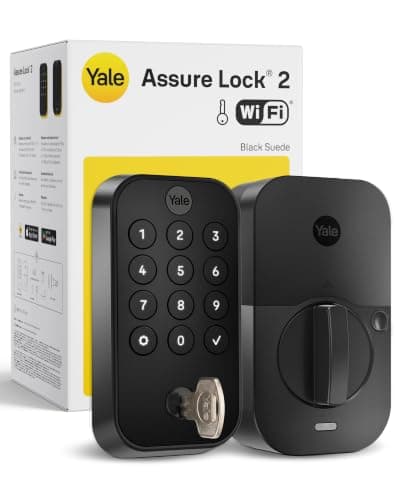
Buy the Yale Assure Lock 2. Its radio is a swappable module rather than a soldered decision, so when the protocol you need changes, you change a card instead of buying another lock. Nothing else here gives you an exit from a connectivity choice you made at checkout.
One page, two searches. If you arrived here looking for the best smart lock, or the best smart lock for a front door, you are in the right place either way. Those two queries return the same results, from the same publishers, in the same order. They are one question, so this is one page rather than two thin ones competing with each other.
What the best smart lock for a front door actually has to do
A front door lock has a shorter job description than the category's marketing suggests. It has to hold the door shut against force. It has to let the household in without a ritual. It has to keep doing both when the router reboots, when the power company has a bad afternoon, and when the manufacturer decides your model is end-of-life. Everything else - geofencing, voice control, activity feeds - is convenience layered on top of those three.
That framing produces a different ranking than the one you will find elsewhere, because it puts weight on six things that almost nobody publishes side by side:
- Published BHMA/ANSI grade. The Builders Hardware Manufacturers Association runs the residential lock grading scheme. Grade 1 is the strongest residential tier, Grade 3 the weakest. Most smart lock brands do not state a grade at all - and a lock with no published grade is not necessarily weak, it is simply unmeasured against a common yardstick.
- Entry methods. How many ways can a person get in without your help? A lock with app entry only is a lock that fails for the dog walker with an Android phone.
- Protocol. Wi-Fi, Bluetooth, Z-Wave, Thread or a mix. This decides battery life, remote access, and who owns the path between your phone and your bolt.
- Battery type and count. Four AA cells and one CR2 are not comparable reservoirs, and the marketing number of months does not tell you which you are getting.
- Behavior with the internet down.The answer is almost always “it still opens” - but how it opens differs enormously, and two locks in this list leave you with only a phone in Bluetooth range or a physical key.
- Retrofit or full replacement. This determines whether you need a screwdriver or a tape measure, and whether a landlord is going to have an opinion.
None of these need a laboratory. All of them come out of manufacturer documentation, published standards and cell datasheets, which is exactly how we compiled them. If you want the ranking rubric in full, it is on our methodology page, including the sentence that matters most: products we claim to have tested: 0. Everyone in this category says they put a dozen locks on their own front door. We have not tested any, and we say so. What we do instead is read the manual, compile the specs, do the arithmetic, and cite it.
Smart locks compared: grade, entry, protocol, power, offline behavior
Read this table before you read the write-ups. Six of these seven columns are absent from every competing page in this result set, and the first column is the one that most often changes a buyer's mind.
Compiled from manufacturer product and support documentation, July 2026. A grade is recorded only where the manufacturer publishes one; “Not published” means no grade appears in that brand's own documentation, not that the lock failed anything.| Model | Published BHMA/ANSI grade | Entry methods | Protocol | Battery | Works with the internet down? | Retrofit or full replacement |
|---|
| Yale Assure Lock 2 | Grade 2 (Yale) | Touchscreen code, app, physical key on the keyed version | Wi-Fi + Bluetooth, via a swappable module | 4x AA | Yes - code and key. Remote unlock and alerts stop | Full replacement |
|---|
| Schlage Encode Plus | Grade 1 (Schlage) | Touchscreen code, Apple Home Key tap, app, physical key | Wi-Fi + Bluetooth | 4x AA | Yes - code, Home Key tap and key. Remote unlock stops | Full replacement |
|---|
| Ultraloq U-Bolt Pro | Not published | Fingerprint, code, app, Bluetooth auto-unlock, physical key | Built-in Wi-Fi + Bluetooth | 4x AA | Yes - fingerprint, code and key all local | Full replacement |
|---|
| Aqara Smart Lock U100 | Not published | Apple Home Key tap, fingerprint, code, app, physical key | Bluetooth; hub or Home hub for remote | 8x AA | Yes - everything at the door is local anyway | Full replacement |
|---|
| August Wi-Fi Smart Lock | Not published (grade belongs to the deadbolt underneath) | App, auto-unlock, your existing physical key; codes on the bundled Yale Keypad | Wi-Fi + Bluetooth | 2x CR123A | Partly - Bluetooth app unlock in range, or the key | Retrofit, interior side only |
|---|
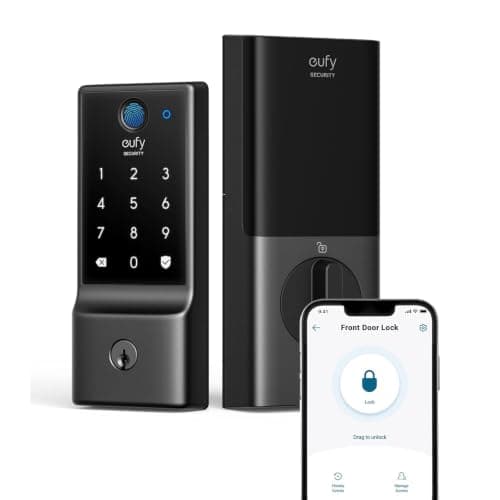
| eufy Smart Lock C220 | Not published | Fingerprint, code, app, physical key | Built-in Wi-Fi + Bluetooth | 4x AA | Yes - fingerprint, code and key | Full replacement |
|---|
| Level Lock+ | Not published | Apple Home Key tap, app, physical key. No keypad | Bluetooth + Wi-Fi | 1x CR2 | Partly - Home Key tap, Bluetooth app, or the key | In-bore replacement; existing trim and key stay |
|---|
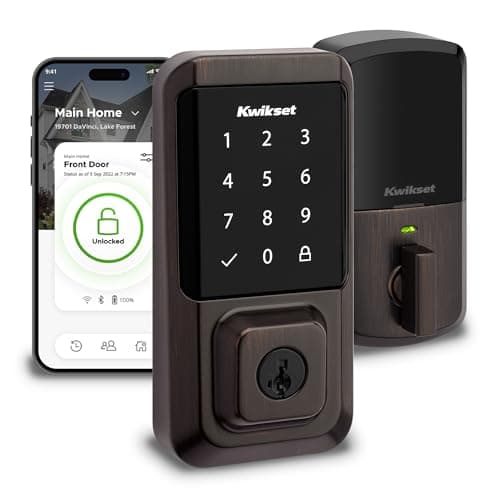
| Kwikset Halo | Grade 2 (Kwikset) | Touchscreen code, app, SmartKey physical key | Built-in Wi-Fi | 4x AA | Yes - code and key | Full replacement |
|---|
| Lockly Secure Plus | Not published | Shuffling keypad code, 3D fingerprint, app, physical key | Bluetooth; Wi-Fi hub accessory for remote | 4x AA | Yes - code, fingerprint and key | Full replacement |
|---|
Two patterns fall out of that table immediately. First, the honest answer to “does a smart lock stop working without wifi” is no - the lock keeps opening, you lose the remote half. We unpack that properly in do smart locks need wifi. Second, the two locks with no keypad on the door - August and Level - are the two where the internet going down is most felt, because what is left is a phone in Bluetooth range, a metal key, and on the August the wall-mounted Yale Keypad in its bundle.
The picks, in order
1. Yale Assure Lock 2 - the modular one
Yale sells one lock body and a small family of connectivity modules that slot into it. The same chassis becomes a Wi-Fi lock, a Z-Wave lock or a Matter-over-Thread lock depending on the card in the back. That is the single most durable thing you can buy in a category where protocol fashion changes every three years and locks last fifteen. When Matter eventually becomes the thing your house speaks - our explainer on Matter for home security covers where that currently stands - you swap a card rather than a deadbolt.
Yale publishes a BHMA Grade 2 for the Assure line. It runs on four AA cells, and the keypad and cylinder are entirely mechanical-plus-local: the radio only ever carried remote access and notifications, so an outage costs you the app, not the door. There is a full-length Yale Assure Lock 2 review if you want the install detail and the battery arithmetic.
It ranks first despite Schlage's stronger published grade because the module system removes the largest hidden cost in this category, which is buying the lock twice.
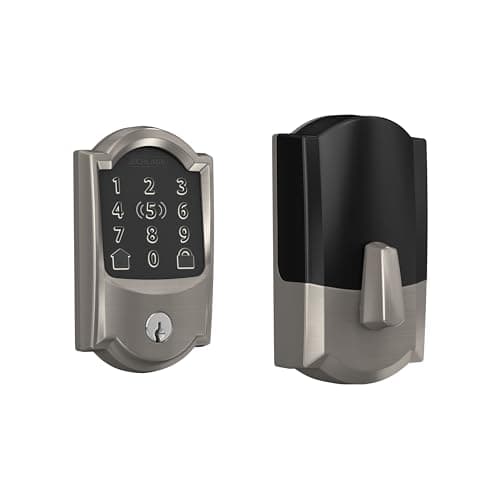
2. Schlage Encode Plus - the strongest published hardware
If the grade is the number you care about, this is the lock. Schlage publishes BHMA Grade 1 across its deadbolt line, which is the highest residential tier the standard defines, and it is one of very few smart lock makers that publishes a grade at all. Apple Home Key support means an iPhone or Apple Watch tap opens it, including on a phone that has dropped into power reserve.
The catch is precisely that Home Key premium. A large share of what you pay over the standard Encode is a feature that only functions inside Apple's ecosystem. On an Android household it is money spent on a capability nobody in the house can use, and the Yale or the Ultraloq will do the same job for less.
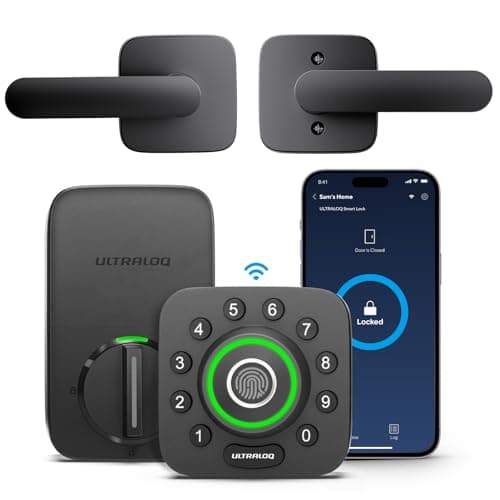
3. Ultraloq U-Bolt Pro - the most ways in for the money
Fingerprint, code, app, Bluetooth auto-unlock and a mechanical key, with the Wi-Fi radio built into the lock instead of living in a bridge you have to power and site. The fingerprint reader sits on the outside knob where your hand already is, and the anti-peep entry mode lets you pad a real code with junk digits while a delivery driver watches.
Ultraloq does not publish a BHMA grade in its own documentation, which is why it sits behind two locks that do. And no capacitive fingerprint reader of any brand is reliable with wet or cold fingers - on an exposed door with no overhang you will end up typing the code, at which point a cheaper keypad lock did the same job.
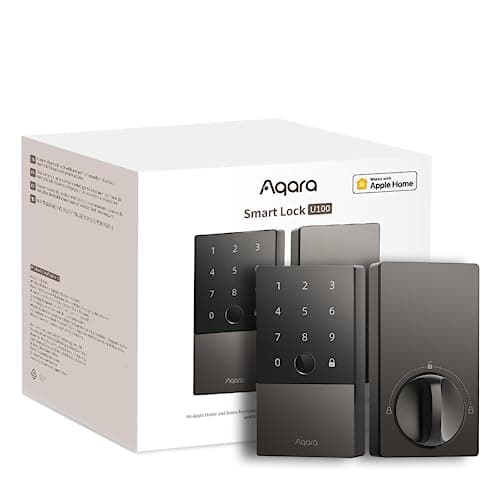
4. Aqara Smart Lock U100 - Apple Home Key without the Schlage price
Home Key tap-to-unlock from the Wallet, a fingerprint reader, a keypad and a mechanical key, speaking to Apple Home, Google Home and Alexa. Eight AA cells is the largest battery reservoir in this list by a distance, and it shows up as long intervals between changes rather than as a spec-sheet talking point.
The lock itself is Bluetooth. Remote unlock needs an Aqara hub, an Apple TV or a HomePod acting as a home hub. Without one of those this is a superb lock while you are standing in front of it and completely unreachable from the office.
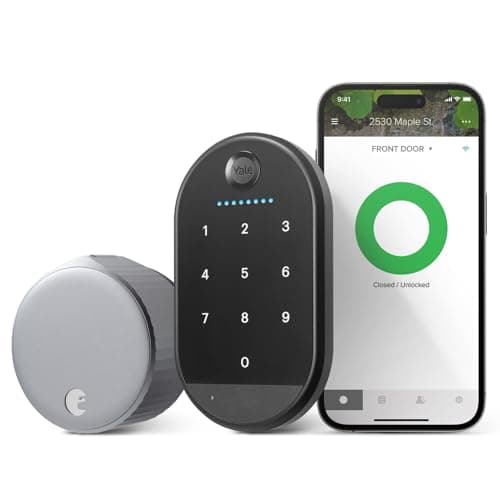
5. August Wi-Fi Smart Lock - the retrofit that defined the category
It clamps to the interior side of the deadbolt you already own and turns the thumbturn. The outside of the door does not change, your existing key keeps working, and the whole thing reverses with a screwdriver. That is why it remains the default answer for anyone renting, and why it heads our no-drilling picks for renters.
It ranks fifth here rather than higher for one reason: there is no keypad on the lock. The bundle we link includes the Yale Keypad, but that is a second device stuck to the wall beside the door with its own cells, not a pad on the door itself. If a keypad on the door is the reason you are shopping for a smart lock at all, this is the wrong lock.
6. eufy Smart Lock C220 - fingerprint and built-in Wi-Fi, cheaply
The lowest price at which you get both a fingerprint reader and a Wi-Fi radio inside the lock rather than in a bridge. eufy's whole brand position is that features do not live behind a monthly plan, and the lock line holds to it - which is the same argument we make across the subscription-free section of this site.
Built-in Wi-Fi in a battery-powered lock is the heaviest power draw available, so expect shorter runs between changes than a Bluetooth or Thread design. And there is no module system here: it is a Wi-Fi lock and will be one for its whole life, which matters if you are building a house around a Matter fabric.
7. Level Lock+ - the one nobody can see
The entire mechanism lives inside the bore of the door. From both sides it looks like an ordinary deadbolt, because the visible trim and the key are the ordinary parts - only the bolt assembly is electronic. On a period door or a front elevation you do not want to spoil, nothing else comes close.
There is no keypad and no fingerprint reader, and the whole thing runs on one CR2 lithium cell doing motor work. A dog walker with an Android phone and no key has no route through your door, and that is a permanent property of the design rather than a firmware gap.
8. Kwikset Halo - the one you can re-key yourself
Built-in Wi-Fi, a touchscreen keypad, a published BHMA Grade 2, and SmartKey re-keying, which lets you re-key the physical cylinder yourself in under a minute when a set of keys goes missing. For a household that has lent keys out over the years, that is a genuinely useful property.
SmartKey cylinders have been the subject of published bypass research. If the metal key is doing your security work rather than acting as a fallback, read that research before you buy - the convenience of self-re-keying carries a documented trade-off, which we cover in are smart locks safe.
9. Lockly Secure Plus - the keypad that scrambles
Lockly's pad reshuffles the digit positions on every use, so neither a shoulder surfer nor the smudge pattern left on the glass tells an observer anything about your code. It is the only lock here that treats the keypad itself as an attack surface, and the 3D capacitive fingerprint reader is a better sensor than the optical readers at this price.
The cost is usability, every single time. A pad whose digits move is measurably harder for a child, an older relative, or anyone with low vision. The security property and the usability penalty are the same feature, and you cannot have one without the other.
A lock tells you it locked. It does not tell you the door is shut
This is the gap that catches people about six weeks after installing a smart lock. The lock reports the state of the bolt. It cannot report the state of the door. A bolt that throws into fresh air because the door was standing open reads as “locked” in every app in this list.
The fix costs a fraction of the lock: a contact sensor on the frame, which is the single most useful pairing anyone makes with a smart lock. Our door and window sensor picks cover the options, and the wider sensors hub covers motion, glass and water. The Ultraloq is the only lock in this roundup that bundles a door sensor of its own, which is a real point in its favor and rarely mentioned.
One more axis worth naming before you buy: several locks are now sold primarily on the Matter badge, and that badge means less on its own than the packaging implies. Which locks carry Matter as their own radio, which need a Thread border router you may not own, and what a Matter controller actually lets you administer are all separated out in the best Matter smart locks.
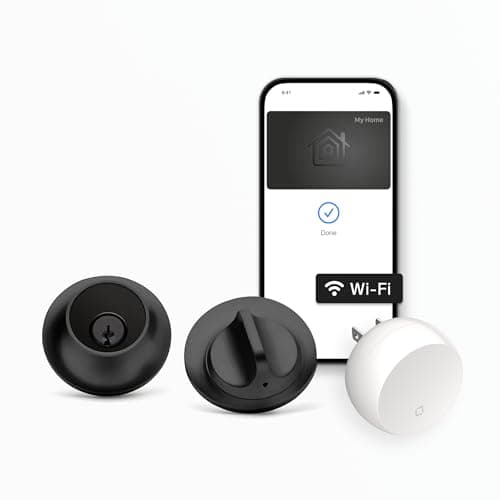
If the house already runs on Echo devices, the same ranking reorders around one specification — whether the lock reaches Amazon on its own radio or through a bridge on a socket — and around a detail most buyers meet after the purchase: Alexa locks a door on a bare command, but voice unlocking is off by default and then wants a spoken four-digit PIN every time. The best smart locks for Alexa ranks the field on both, and names the one lock here we would not buy for an Alexa house.
How to choose a smart lock
Start with the door, not the lock
More smart locks are returned for fit than for function. A full-replacement lock has to match three measurements on your existing door: the backset, the cross-bore diameter, and the door thickness. Get one of them wrong and the lock physically will not seat. Measure first, using will a smart lock fit my door, and then shop. It takes four minutes and it is the highest-value thing on this page.
If the measurements come back awkward, or you rent, or the door is a non-standard thickness, a retrofit sidesteps the whole problem by leaving the existing deadbolt exactly where it is.
Decide which entry method has to work at 3am with a flat phone
Work backwards from the worst realistic evening rather than the best. Phone dead, hands full, kid at the door before you are home, cleaner arriving Thursday. If the answer to any of those is “a code,” you need a keypad lock and you can stop considering August and Level. If the answer is “a key in my pocket,” you need a keyed model rather than key-free. If the answer is “a fingerprint,” check whether the door has an overhang, because wet sensors misread.
What actually decides the price
Three things, in order. The radio: built-in Wi-Fi costs more than Bluetooth and costs more again in batteries. The reader: fingerprint hardware and Apple Home Key silicon are each a step up in bill of materials. The published grade: brands that certify to BHMA Grade 1 are building to a heavier standard and charge for it. Almost nothing else in the spec sheet moves the number much, which is why a Grade 1 Wi-Fi lock with Home Key sits at the top of the range and a radio-free keypad deadbolt sits at the bottom.
The battery arithmetic nobody publishes
Manufacturer battery claims in this category are quoted without a stated duty cycle, so they are not comparable between brands. What is comparable is the size of the reservoir and what is drawing from it. Using published cell datasheets:
- 4x AA alkaline - roughly 2,000 to 2,900 mAh per cell at low drain, in series at about 6 volts. On the order of 15 watt-hours. Yale, Schlage, Ultraloq, eufy, Kwikset and Lockly all use this.
- 8x AA alkaline - the Aqara U100, roughly double the above, and the largest reservoir in this roundup.
- 2x CR123A lithium - roughly 1,400 mAh at 3 volts each. On the order of 8 to 9 watt-hours. The August.
- 1x CR2 lithium - roughly 800 to 900 mAh at 3 volts. On the order of 2.5 watt-hours. The Level Lock+, which is doing motor work out of the smallest reservoir here.
Now the drain side. The motor is a short, large pull a handful of times a day. The radio is a small, continuous pull every second of every day, and it is usually the dominant term. A Wi-Fi lock maintains an association with your access point around the clock; a Bluetooth or Thread lock sleeps between events. That is why the Kwikset SmartCode 916, a Z-Wave lock on the same four AAs, outlasts the Wi-Fi locks - the radio simply asks for less.
The practical conclusion: if long battery intervals matter more than remote unlocking, buy a low-power radio and put the always-on hardware somewhere it can be mains powered.
The mistake buyers make
They buy connectivity they will never use, and pay for it twice - once at checkout, and again every time the batteries run down early. Remote unlocking sounds essential and, for most households, gets used a handful of times a year. Codes get used every day. If you find yourself choosing between a lock with a keypad and a lock with a better app, the keypad is almost always the right call.
The second mistake is assuming a smart lock is a security upgrade. It is a convenience upgrade with a security profile roughly equal to the deadbolt it replaced. We lay out that argument properly in smart lock vs deadbolt, and if you have decided you want a full-replacement unit, the shortlist narrows on our best smart deadbolts page. Everything in this hub is indexed at the smart locks hub.
One specification on this page deserves its own explanation, because two different grading systems share the word. What Grade 1, Grade 2 and AAA actually certify, which standard each comes from, and why several locks here publish no grade at all is in what ANSI/BHMA grades mean for smart locks.