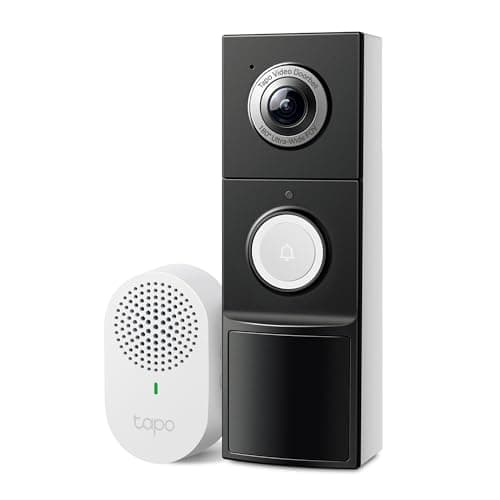
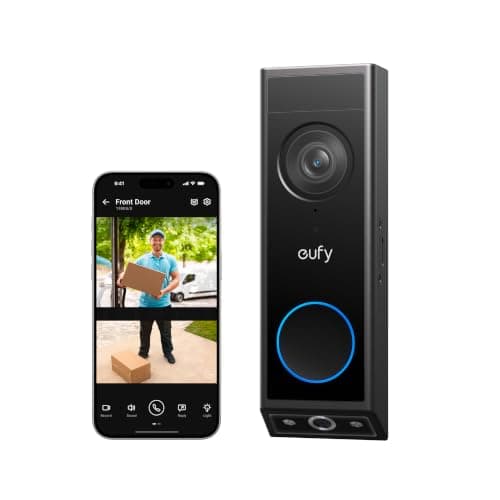
The eufy Video Doorbell E340 is the pick: two cameras, one on the visitor and one pointed down at the doorstep, recording locally with full playback and no plan. If your house has no doorbell wiring, the Tapo model runs on battery or a transformer and includes a chime, which makes it the least likely of these to be blocked by your house.
The best video doorbells without a subscription, compared
Four columns decide this purchase, and only one of them is about the camera. Where the video is stored determines whether you own your footage. Wired or battery determines whether you can install it at all. Whether a chime is in the box determines whether the doorbell rings inside the house or only on a phone — which is the detail that generates the most post-purchase regret in this category.
Compiled from manufacturer specifications and published support documentation, July 2026. Ring is included as a reference row because its storage model is the reason this page exists.| Model | Storage | Wired or battery | Chime included? | What a plan would add |
|---|
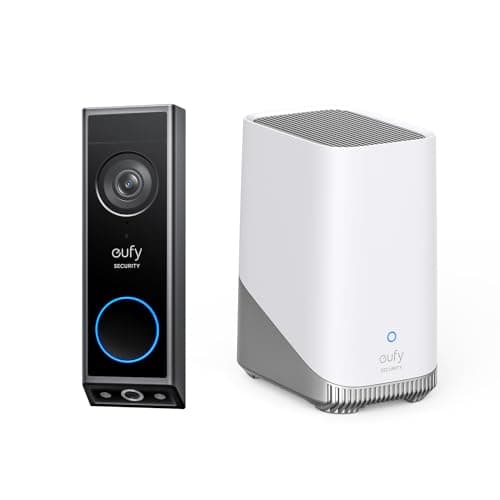
| eufy Video Doorbell E340 | Local, with full playback | Either — transformer or rechargeable battery | No; uses an existing chime when wired | Optional off-site backup only |
|---|
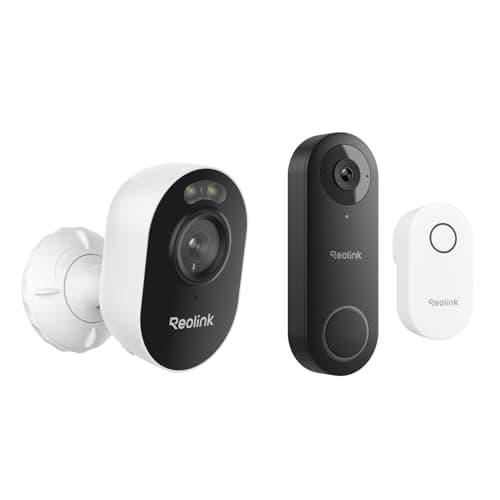
| Reolink Video Doorbell WiFi | Local, plus RTSP for your own recorder | Wired only (transformer required) | Yes, in the box | Nothing for any core function |
|---|
| TP-Link Tapo 2K+ Doorbell | Local microSD | Either — transformer or battery | Yes, in the box | Nothing; detection is included |
|---|
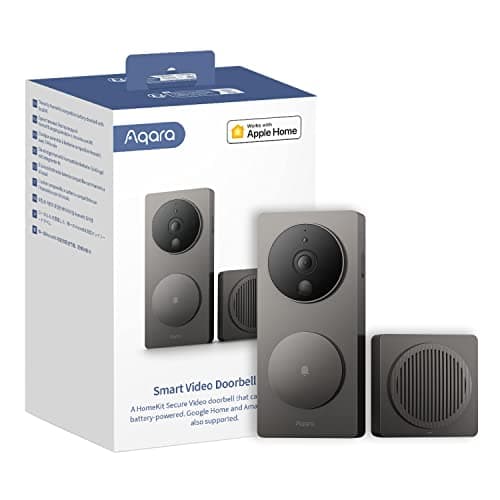
| Aqara Video Doorbell G4 | Local, plus HomeKit Secure Video to iCloud | Either — AA cells or wired | Yes; the chime doubles as the Wi-Fi bridge | HomeKit Secure Video needs an iCloud+ plan |
|---|
| eufy Doorbell E340 with HomeBase 3 | Expandable local storage on the HomeBase | Battery powered or wired | No; the HomeBase pairs as the indoor chime | Optional off-site backup only |
|---|
| Ring Battery Doorbell Plus (reference) | Cloud only — no local storage at any price | Battery, or wired for trickle charge | No; needs an existing chime or a Ring Chime | Every recorded clip. Without a plan, none are saved |
|---|
A fact about the product, stated neutrally:Ring's video doorbells have no local storage option at any price. Without a Ring plan, the doorbell gives you live view and a notification, and records nothing you can watch later. That is not a defect and it is not hidden — it is a deliberate product architecture, and for a household that wants an intercom with alerts it is perfectly serviceable. But if your reason for buying a doorbell camera is to review footage after the fact, a Ring doorbell without a plan will not do it. The arithmetic on what that plan totals over five years is on our subscription cost page.
Google's Nest doorbells sit a short step away from the same position: also no local storage at any price, but with a rolling three-hour window of free event history rather than nothing. Three hours is not retention, and the two brands are compared directly in Ring vs Nest doorbell, which ends where this page begins — if plan-free playback is the point, neither is the answer.
Why the eufy E340 wins
It solves the problem doorbells are actually bought for. A single forward-facing lens at chest height sees the person and misses the package on the step, which is the exact event most people want a recording of. The E340's second, downward-facing camera covers the doorstep directly rather than approximating it with a wide-angle lens, and the difference is not subtle. Recording is local with full playback, and there is no tier that unlocks the footage you already have.
It also runs either wired or on battery, which matters more than the spec sheet suggests. A great many houses have no doorbell transformer, and a doorbell that requires one is a doorbell you cannot fit without an electrician.
The disqualifying case: skip it if you want it to ring an existing mechanical chime and you have no transformer. In battery mode there is no chime circuit, so you get app and speaker alerts only. In a household that relies on a chime being audible upstairs, that is a real loss and the Reolink or Tapo models — both of which include a chime unit in the box — are the better answer. This is the most common reversal in the category and it is worth checking before you order rather than after.
The chime question, which nobody puts on the listing
A video doorbell replaces the button, not the bell. There are three ways the house actually rings, and only one of them is free:
An existing mechanical chime.If your house has doorbell wiring and a transformer, a wired doorbell can drive the chime that is already on your wall. This is the cleanest outcome and it costs nothing extra — but it requires wiring, and it requires the transformer to supply the voltage the doorbell specifies. Check the manufacturer's stated voltage range against what is behind your existing button before ordering.
A plug-in chime in the box. Reolink, Tapo and Aqara all include one. It plugs into a socket anywhere in the house and rings when the button is pressed. For a house with no doorbell wiring this is the practical answer, and a chime included in the box is worth more than a slightly better sensor.
Phone notifications only. This is what you get on a battery doorbell with no chime accessory, and it is the configuration people regret. A notification arrives on the phone of whoever has the app, if that phone is not silenced, if the person is not upstairs with headphones on. Delivery drivers do not wait. If anyone in the household is going to answer the door, buy a chime.
Wired or battery: pick your constraint
A wired doorbell draws from the transformer, never needs charging, and can maintain a higher standby state — which in practice means it catches the beginning of an event more reliably. A battery doorbell installs anywhere in fifteen minutes and needs recharging on a cycle that depends entirely on how busy your street is. Neither is better; they fail differently.
The Reolink is wired only, and that is its one hard constraint: no transformer, no doorbell. Check for wiring before you order, not after — our Reolink Video Doorbell review walks through that check and the rest of the model in detail. The Tapo and the eufy E340 run either way, which is why they are the safe recommendations for a reader who does not yet know what is behind their doorbell button. The Aqara G4 runs on AA cells or wired, and it is the one to buy if the house runs on Apple Home rather than on a manufacturer's app — its face recognition runs on the device, so that processing never leaves the house. Its trade-off is resolution: at 1080p it is the softest image in this group, and you are buying it for the integration rather than the picture.
When the doorbell is part of a system
The E340 is also sold with a HomeBase 3 in the box, so doorbell footage lands on expandable local storage alongside every other eufy camera in the house. Retention stops being a plan tier and becomes a drive-size decision. Buy this version if you are building the system; skip it outright if you already own a HomeBase 3, because you would be paying for a second one. The wider case for base stations and recorders is made on our local storage roundup, and the rest of the doorbell field is on the doorbells hub.
If you are still deciding whether a video doorbell earns its place at all — as against a plain peephole camera, or an outdoor camera covering the same approach — that argument is worked through in our guide on whether a video doorbell is worth it. And if you are weighing the two dominant brands in this category, the head-to-head is at Ring vs eufy.
How we picked
Every doorbell here had to record and play back footage with no plan, publish its storage mechanism in the manufacturer's documentation, and carry a specific disqualifying reason to skip it. We weighted storage freedom, no-plan value, install practicality, image specification and ecosystem openness. Scores are judgments compiled from published sources rather than bench measurements; the rubric is on our methodology page. Everything in this category ladders up to the subscription-free hub.
How to choose a video doorbell with no monthly fee
First, find out what is behind your existing button
This decides more than any spec. Take the existing button off the wall — two screws, usually — and look for two low-voltage wires. If they are there, you have a transformer somewhere and the wired options are open to you, which means no charging and a chime that already works. If there are no wires, you are buying a battery doorbell and you should filter the list to models that include a chime. Doing this before you shop takes five minutes and prevents the most common return in this category.
Check the transformer voltage, not just its existence
Every wired doorbell publishes a required voltage range in its manual. Older transformers, particularly in houses where the doorbell predates the century, sometimes sit below what a modern video doorbell needs. The symptom is a doorbell that works intermittently or fails to charge, and it looks like a faulty unit. The manual states the requirement; the retail listing usually does not.
Aspect ratio matters more than megapixels
A doorbell mounted at chest height on a normal frame sees a face well and the ground poorly. Manufacturers solve this three ways: a tall aspect ratio, an ultra-wide lens, or a dedicated second camera pointed down. The second camera is the best of the three and the wide lens is the weakest, because a wide lens buys coverage at the cost of detail at the edges — which is where the doorstep is. If package coverage is your main reason for buying, weight this above resolution — and start from the doorbells ranked on parcel coverage, which also sets out which brands charge for the package alert itself.
Work out where the footage lives, precisely
“Local storage” covers three different arrangements. A microSD card in the doorbell is self-contained and cheapest. A base station holds footage indoors, which also means the doorbell itself is worth stealing for less. HomeKit Secure Video stores in your iCloud, which is off-site and private but requires an iCloud+ plan and an Apple home hub — a subscription, if a small and probably existing one. Being precise about which of the three you are buying prevents the disappointment of discovering that “local” meant thumbnails.
The mistake buyers make
Buying on camera specification and discovering the install is impossible. The doorbell's picture is the thing reviews talk about and the thing that matters least in practice, because every model in this group produces a usable image of a person at one meter. What varies enormously is whether it fits your wiring, whether it rings inside your house, and whether you can watch last Thursday without paying. Sort on those three first and pick the best camera among what survives.
Consider the neighbors, and the angle
A doorbell camera pointed straight down your own path is a different device from one angled across a shared entrance or a neighbor's window. Most models let you mask detection zones and some let you crop the recorded field of view; both are worth setting up on the day you install rather than after a conversation. A wedge mount that angles the camera five degrees toward your own door often solves the whole problem mechanically.