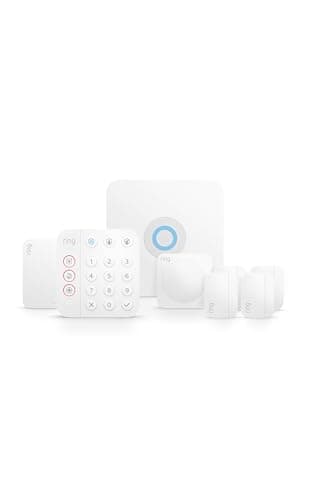
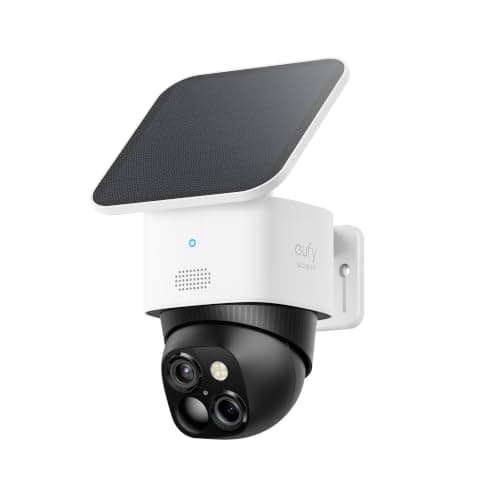
Ring and eufy are not separated by image quality, build quality or app design. They are separated by one architectural decision made years before either device reached your porch: where the video goes after the camera records it. Ring sends it to Ring. eufy keeps it on hardware sitting in your house. Almost every practical difference between the two brands — cost over five years, what happens when your internet drops, what happens when someone takes the camera off the wall — falls out of that single choice.
Ring vs eufy: the short answer
Buy Ring if you want the most reliable notifications and the most complete accessory ecosystem in home security, and you accept a recurring plan as part of the purchase. Buy eufy if you want recorded video you can watch back without a plan, stored on a device you own. Ring's cameras record nothing you can review later without a subscription. eufy's record locally with no subscription at all. That is the whole argument.
The decision rule in one line: if you are willing to pay a monthly fee forever, Ring is the better product. If you are not, Ring is not a product at all — it is a live-view intercom — and eufy is the answer.
Head to head: the six models that define the split
These are the three pairings that matter: an outdoor camera, a video doorbell, and a starter alarm kit. The columns are the ones that decide the purchase, which is why you will not find megapixels here.
Compiled from manufacturer specifications and published support documentation, July 2026.| Model | Where recorded video lives | Plan needed to watch it back? | Power | With the internet down |
|---|
| eufy SoloCam S340 | On the camera; on a HomeBase if you pair one | No | Integrated solar panel | Keeps recording locally; remote view stops |
|---|
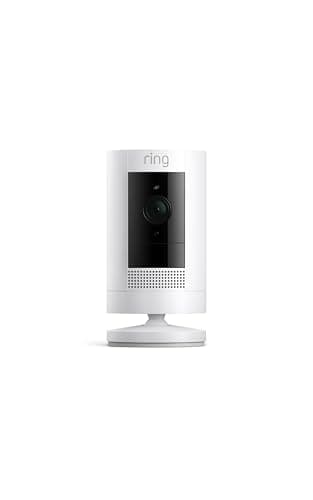
| Ring Outdoor Cam (Stick Up Cam) | Ring's cloud only — there is no local option | Yes. No plan, no saved clip | Battery, wired or solar variants | Nothing is recorded at all |
|---|
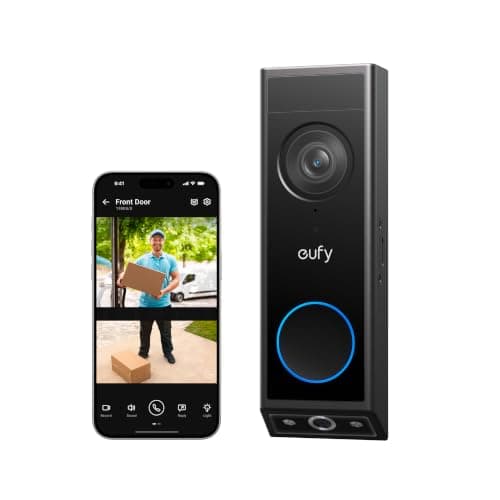
| eufy Video Doorbell E340 | On the doorbell, or on a paired HomeBase | No | Existing transformer or battery | Keeps recording locally |
|---|
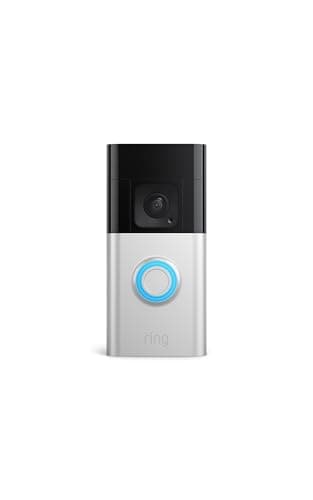
| Ring Battery Doorbell Plus | Ring's cloud only | Yes | Rechargeable battery | Nothing is recorded at all |
|---|
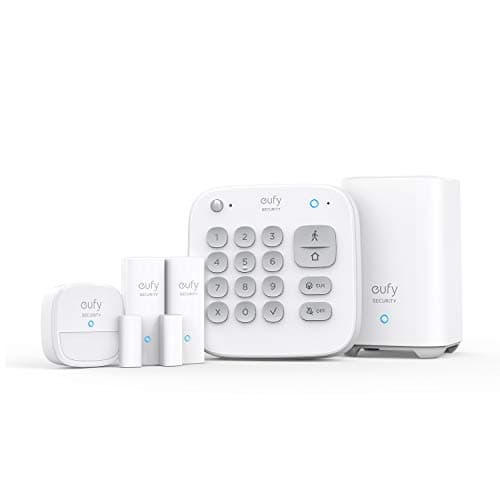
| eufy 5-Piece Home Alarm Kit | Sensor events on the HomeBase | No — there is no monitoring plan | Mains base, cells in sensors | Keypad, arming and siren keep working |
|---|
| Ring Alarm 8-Piece Kit | Sensor events in the Ring app | No for alerts and siren; yes for a professional response | Mains base, cells in sensors | Siren still fires; app alerts need the connection |
|---|
What Ring is genuinely better at
We are not here to run a brand down, and the honest position is that Ring is the best executed product in this category on almost every axis except the one this site cares most about. Three things in particular are not close.
Notification reliability.The failure that makes people abandon a camera is not a soft image, it is an alert that lands ninety seconds after the person has walked away. Ring's alerts arrive fast and they arrive consistently, and that is the single feature the budget field most often gets wrong. If you have ever muted a doorbell's notifications because they were useless, that is the problem Ring solved first.
The app.Ring's app is the one other manufacturers are visibly copying: timeline scrubbing, shared users, granular motion zones, sane defaults. eufy's app is fine. Ring's is better, and it stays better after the novelty wears off.
The ecosystem. Mounts, solar panels, chimes, wedge kits, corner brackets, Alexa integration, and a support catalog that documents its own hardware properly. If your install is awkward — a brick pier, a UPVC frame, a door that opens the wrong way — there is usually a Ring accessory that already solves it. Nothing else here has that depth.
None of that is marketing. It is why Ring is the default recommendation on most of the pages competing with this one, and it is why our main camera roundup still explains who Ring is right for rather than pretending the brand does not exist.
What eufy is genuinely better at
eufy's answer to all of the above is that a camera which will not show you last Tuesday's footage is not a security camera, however good the notification was. eufy cameras record to a microSD card in the camera, or to a HomeBase in the house, and the recording is yours: full playback, full download, no tier, no account upgrade, no feature that disappears if you stop paying.
The SoloCam S340 is the clearest expression of it. Integrated solar, 360-degree pan, two lenses covering wide context and a zoomed detail view of the same scene, onboard storage, and a running cost of nothing. Scale it up and the HomeBase 3takes a large drive, so retention becomes a decision about disk size rather than a decision about plan tier — and face recognition runs on the base rather than in somebody's data center.
The reason this matters more than it sounds is arithmetic, not principle. A camera is a one-time purchase. A plan is a purchase you make every month for as long as you own the camera, and the sum compounds quietly across five years and however many cameras you end up with. We keep the shape of that number, and how it grows per camera and per year, in the subscription cost comparison rather than repeating a figure here that a vendor can change next quarter.
The distinction almost nobody states: Ring Alarm is not Ring cameras
This is the part that gets flattened everywhere else, and it is genuinely unfair to Ring. “Ring needs a subscription” is true of Ring's cameras and doorbells. It is not true of Ring Alarm.
The Ring Alarm 8-Piece Kit arms, disarms, detects, sirens and sends app alerts with no plan at all. The keypad works. The contact sensors work. The siren fires. What the plan buys on the alarm side is professional monitoring — somebody else seeing the event and placing the call — plus cellular backup and extended event history. Those are real, separable products, and paying for a response is a different transaction from paying to see your own recording.
So the accurate sentence is narrower than the one you will read elsewhere: Ring's alarm system works unmonitored; Ring's cameras do not record unmonitored. If you want a self-monitored alarm and you like Ring's app, the 8-piece kit is a legitimate no-fee purchase, and it is on our no-subscription systems roundup for exactly that reason. The catch is architectural rather than financial: the sensors are locked to Ring's base and cannot be repurposed into another system later.
Where eufy's case gets weaker
A page that only listed eufy's advantages would be advertising. Three things count against it, and the first two are the ones a buyer should actually weigh.
eufy has publicly disclosed cloud-handling issues.In 2022 and 2023 the brand was the subject of reporting and subsequent company statements about event thumbnails being uploaded to cloud servers on cameras marketed as local-only, and about the encryption of streams served through its web portal. Anker, eufy's parent, acknowledged the behavior and published changes. We are stating that as a documented fact rather than an accusation: it is a real mark against a brand whose entire pitch is that nothing leaves your house, and if that pitch is why you are buying, you should read the company's own statements before you do.
Local storage is a single point of loss.Footage on the camera goes with the camera. Footage on a HomeBase goes with the HomeBase. Cloud storage is genuinely better at surviving the theft of the hardware, and that is not a small point on a ground-floor camera within reach of a ladder. The mitigation is to site the base somewhere unobvious and to keep the cameras high, which is a real answer but a less complete one than “it is already off-site.”
eufy is a closed appliance. The HomeBase records eufy cameras and nothing else. There is no broad RTSP or ONVIF story across the line, so a eufy estate does not drop into Home Assistant, Frigate or Blue Iris the way a Reolink one does. If open integration is your requirement rather than a nice-to-have, the comparison you actually want is eufy vs Reolink, not this one — or skip the brand argument entirely and read our Home Assistant camera roundup, which ranks on published RTSP and ONVIF support rather than on brand.
Doorbells: the same argument, at closer range
The doorbell pairing repeats the camera pairing with one twist. The Ring Battery Doorbell Plus has the head-to-toe aspect ratio that shows the doorstep as well as the visitor, the fastest alerts, and the largest mount ecosystem — and it stores every clip in Ring's cloud only. The eufy E340 solves the doorstep problem differently, with a second camera pointed down at the step, and stores locally.
The twist is chime behavior. The E340 will drive an existing mechanical chime when it is wired to a transformer, but in battery mode there is no chime circuit and you get app and speaker alerts only. In a household that relies on a chime being audible upstairs, that is a genuine loss and it is worth checking for a transformer before ordering. Both doorbells, and the rest of the field, are ranked in the video doorbell roundup.
What the difference looks like over five years
Set the hardware aside for a moment, because on price the two brands are close enough that it is not the deciding factor. The deciding factor is that one of them keeps charging.
A Ring camera has an up-front cost and then a recurring cost that continues for as long as you want the recordings to exist. A eufy camera has an up-front cost and then, in the normal case, nothing. The recurring side scales with how long you keep the system and — depending on the plan structure at the time — with how many devices you own. That is the shape of the number. We publish how it accumulates, plan by plan, in the cost comparison table, which is updated from vendor pricing pages rather than from memory.
The honest counterweight: for some households the plan is worth it. Off-site storage, multi-camera event review and a support line that answers are things people happily pay for. The failure is not choosing Ring. The failure is choosing Ring while believing the plan is optional, needing last Tuesday's footage, finding that nothing was ever saved, and only then reading the storage line on the box.
The decision rule
There is no winner here, because the two brands answer different questions. Pick the sentence below that describes you.
Buy Ring if…
- You are comfortable with a monthly plan as a permanent line item, and you would rather pay it than manage storage yourself.
- You want the footage off-site by default, because the hardware is in a reachable position and theft of the camera is the scenario you care about.
- Notification speed is the feature you judge a camera by. Ring is the reference point and everything else is measured against it.
- Your install is awkward and you want an accessory that already exists rather than a bracket you have to fabricate.
- You want a self-monitored alarm with a good app — Ring Alarm genuinely does work with no plan, and that is a different purchase from a Ring camera.
Buy eufy if…
- You want to watch back a recording without paying anything. This is the whole reason the brand exists.
- You are covering several approaches. Per-device plan structures are what make a four-camera install expensive over time, and local storage removes that variable entirely.
- Your internet is unreliable. Local recording continues through an outage; a cloud-only camera records nothing during exactly the window you would want it to.
- You want retention measured in weeks rather than in plan tier, which means a HomeBase and a large drive rather than a subscription upgrade.
- You have read Anker's published statements about the 2022-23 cloud-handling disclosures and are satisfied with the changes made. If you have not read them, read them first.
The combination almost nobody suggests
Because Ring Alarm works unmonitored and eufy cameras record locally, a genuinely coherent setup is Ring Alarm for the sensors and keypad, eufy for the cameras and doorbell, and no subscription anywhere. You run two apps, which is a real annoyance. You also get the better alarm hardware ecosystem and the better storage model at the same time, and you pay nothing monthly. Nobody sells this configuration because no manufacturer benefits from it.
What decides the price
On the eufy side, price tracks storage and power: a camera with onboard storage costs more than one without, integrated solar costs more than a bare battery, and a HomeBase is a separate purchase that pays for itself only once you have two or three cameras feeding it.
On the Ring side, the hardware price is not the price. A Ring camera bought without a plan delivers live view and notifications and nothing else, so the real comparison is Ring hardware plus five years of plan against eufy hardware plus a drive. Run that arithmetic before you compare shelf prices, because the shelf prices are misleading in Ring's favor.
The mistake buyers make
The common mistake is treating “no subscription” as a binary badge. It is not. Ring Alarm needs no plan for its core functions; Ring cameras need one for theirs. eufy needs no plan anywhere, but its optional cloud backup exists and costs money. Blink, on the same corporate family tree as Ring, sits somewhere in between: local storage is possible but only with an extra Sync Module. The useful question is never “does this brand have a subscription” but “which specific function stops working if I never pay,” and that is the question the local storage vs cloud guide is built around.
How we compared these
Everything above is compiled from manufacturer specifications, published support documentation and vendor pricing pages, which is the only method we use and the only one we claim. Products we claim to have tested: 0. Our rubric, our sources and what we refuse to assert are published in full on our methodology page, and the rest of this hub is indexed at comparisons.
Ring against the other Amazon-owned brand is a narrower question with a cleaner answer, because one of the two writes footage to hardware in your house and the other does not: Ring vs Blink.