Skip to content
SensorLatch

HUB 04 · Cameras

The Best Security Cameras for a Driveway

A driveway is a long, wide, badly lit approach with no power at the far end. That combination decides the camera, and optical zoom decides it more than resolution does.

By Stephen V.Updated How we pick
#ad

We earn a commission if you buy through our links. It does not change the price you pay, and it does not decide our picks — our selection criteria are published in full. How this works.

Verdict

The bottom line

For a driveway the camera to buy is the Reolink RLC-811A, because it is the only pick here with a real 5x optical zoom — glass that moves, rather than a crop out of a fixed frame — and because PoE gives it continuous recording that no battery camera can do. It is for someone prepared to run one Ethernet cable. If that cable is not happening, the solar Reolink Argus PT Ultra is the pick instead, and you trade continuous recording for event clips.

The short answer

Quick picks

#ProductBest forScorePrice
01
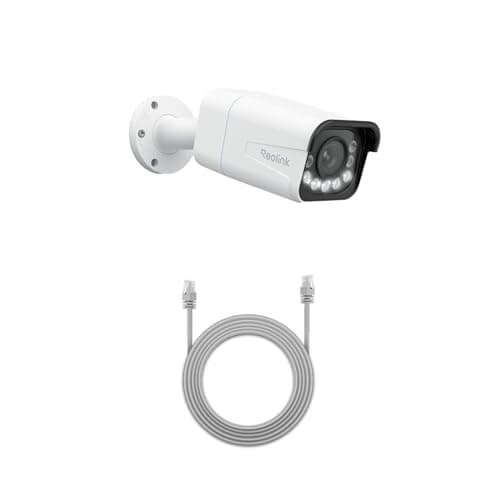
Reolink Reolink RLC-811A (4K PoE, 5x zoom)
Reolink RLC-811A (4K PoE, 5x zoom)

One cable for power and data, 4K with a real 5x optical zoom, and continuous recording to a card or an NVR. This is the camera for someone who wants a serious install rather than a convenient one.

Best wired camera
9.1
$136.83Amazon
02
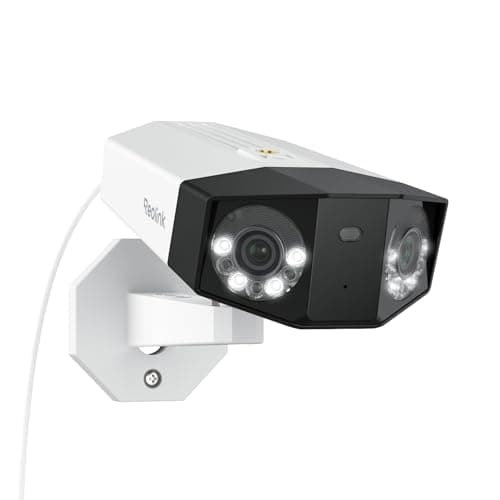
Reolink Reolink Duo 3 PoE (dual-lens, 180°)
Reolink Duo 3 PoE (dual-lens, 180°)

The highest-resolution panoramic option here, over one cable, with Reolink's usual open interfaces. If you want a single camera to own an entire elevation of the house in real detail, this is it.

Best panoramic detail
8.4
$209.99Amazon
03
Reolink Reolink Argus PT Ultra (4K solar)
Reolink Argus PT Ultra (4K solar)

4K, pan-tilt and solar with an SD card slot and no account required to record. Reolink is the brand that keeps not charging for basic functionality, and that is the entire reason it is here.

Best value 4K camera
8.9
$159.99Amazon
04
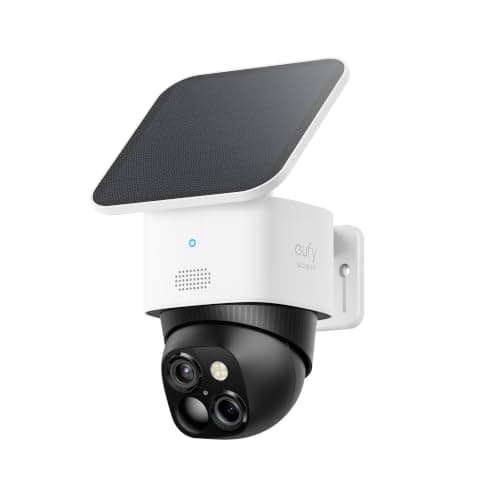
eufy eufy SoloCam S340 (solar, dual camera)
eufy SoloCam S340 (solar, dual camera)

Solar panel, pan and tilt, dual lenses and onboard storage — no wire, no monthly fee, and no recording leaving the device unless you choose to send it.

Best subscription-free outdoor camera
8.8
$139.99Amazon
05
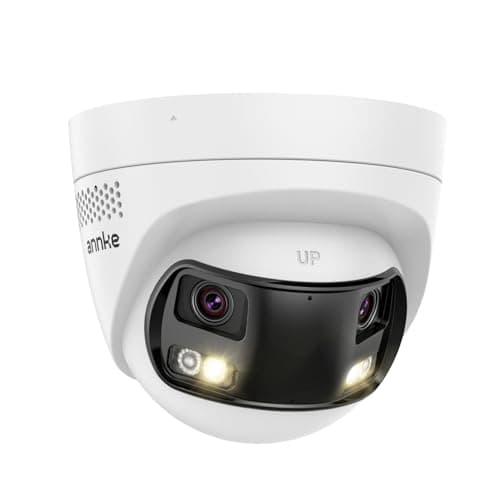
ANNKE ANNKE FCD800 PoE Dual-Lens (180°)
ANNKE FCD800 PoE Dual-Lens (180°)

Two lenses stitched into one 180-degree view, over PoE, with a card slot. One camera covers a corner of the house that would otherwise take two, and it still speaks ONVIF.

Best wide coverage
8.1
$109.99Amazon

#ad · Prices pulled live from the Amazon Product API, last checked October 5, 2026. Where we have no verified live price we show none — we would rather leave a gap than print a number that has gone stale. Scores are our own, compiled from published specs; they are not test results.

Driveway cameras get bought on resolution and regretted on distance. A 4K camera with a fixed wide lens spreads its pixels across the whole frame, so an object twenty meters away occupies a small share of them whatever the sensor says on the box. The specifications that actually decide a driveway are optical zoom, how wide the field needs to be, where the power comes from, and whether the camera records all the time or only when something moves.

Why distance breaks most cameras

Three things compound on a driveway. It is long, so the subject is small in frame. It is wide, so a narrow lens misses the far side and a wide lens makes everything smaller still. And it is lit by streetlight and headlights rather than by anything you control, which means a sensor is fighting glare at one end of the scene and darkness at the other.

Optical zoom is the only honest answer to the first problem. A motorized lens physically magnifies the scene before it reaches the sensor, so the pixels land where you need them. A digital zoom crops the image you already have — useful for looking around a recording afterwards, useless for making a small detail legible. This is why a 4K camera with a fixed lens can be less useful at the end of a drive than a lower-resolution camera with real glass.

None of these is a license plate recognition camera, and we will not imply one is.Whether a plate is readable depends on distance, angle, speed and headlight glare, not on a number in a specification. Optical zoom improves the odds substantially; a fixed wide lens at twenty meters will generally not resolve a plate at all. If reading plates is the actual requirement, that is a dedicated LPR camera and a narrow, carefully-aimed field of view — a different purchase from anything on this page.

How we ranked them

Optical reach first, because it is the specification a driveway exposes and the one no amount of resolution substitutes for. Then field width, because a single camera that covers the whole frontage saves a second cable run. Then power: PoE is one cable for power and data and never needs charging, while solar removes the cable entirely at the cost of continuous recording. Then where the footage lands and what it costs to keep. Our rubric is published at our methodology and is compiled from manufacturer specifications, not from testing.

Compiled from manufacturer specifications, October 2026. Battery and solar cameras record events, not continuously — a limitation of the power design, not of any one model.
CameraReachFieldPowerRecording mode
Reolink RLC-811A5x optical zoomStandard, zoomablePoEContinuous or event
Reolink Duo 3 PoEFixed, high pixel count180° dual lensPoEContinuous or event
Reolink Argus PT UltraPan and tilt, digital zoomSteerableSolarEvent only
eufy SoloCam S340Second telephoto lensSteerable, 360° panSolarEvent only
ANNKE FCD800Fixed180° dual lensPoEContinuous or event

Reolink RLC-811A — the only real optical zoom here

A 5x motorized optical zoom is the single most useful thing you can put at the top of a driveway. It lets you set the camera wide to see the whole approach, or zoom in on the gate and the parking space and keep that detail in every frame it records. PoE means one Cat6 run carries power and data, so the camera never needs charging and can record continuously rather than waking up when something trips a sensor.

The cost is the cable. There is no battery option, you need a PoE switch or an injector, and for most houses pulling Ethernet to a soffit is the whole project rather than an afternoon. If you are already going to the trouble, read our PoE versus Wi-Fi guide before you buy the switch, and our PoE roundup for the rest of the wired field.

Reolink Duo 3 PoE — one camera for the whole frontage

Two lenses stitched into a 180-degree panorama at a very high total pixel count. On a driveway that runs across the front of the house rather than straight at it, this is the camera that replaces two installs with one: a single mounting point and a single cable covering the gate, the parking space and the path to the door.

It is the most expensive camera on this page, and the stream is heavy — a stitched high-resolution panorama costs substantially more decode and disk than an ordinary camera, which is the wrong thing to discover after you have added three of them to a recorder. There is also no optical zoom: you get width and pixel density, not reach, so a detail at the far kerb is resolved by having more pixels there rather than by magnifying it.

Reolink Argus PT Ultra — the no-cable answer

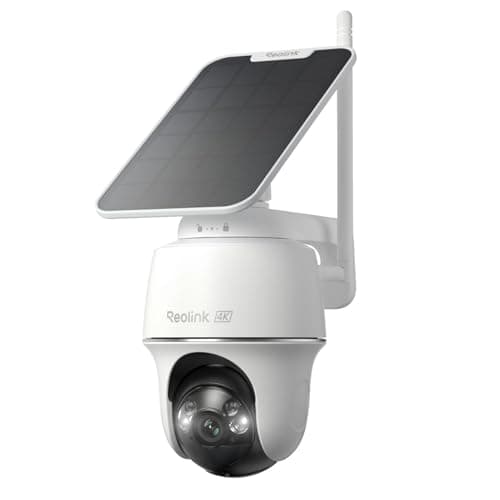
4K, pan and tilt, solar, and a card slot that records with no account tier and no feature gating. For a driveway with no realistic cable route — a detached garage, a long front garden, a wall you are not drilling through — this is the pick, and the pan and tilt partly compensates for the lack of optical zoom by letting you aim the whole sensor at what matters.

The limitation is structural and Reolink states it plainly: no battery camera records continuously. It records events. On a driveway that means a car that was already parked when the camera went to sleep may not appear in any clip, and a slow approach at the edge of the detection zone may not wake it in time. That is the trade you make for having no cable, and it is explained in full in our guide to continuous versus event recording.

eufy SoloCam S340 — solar with a second lens

The S340 answers the reach problem differently: instead of one lens that zooms, it carries two — a wide one for context and a telephoto for detail — and pans 360 degrees. Storage is onboard with no subscription for recording or playback, which on a driveway you are watching daily is a meaningful difference from a cloud plan.

Same solar caveat as everywhere else on this site: it needs genuine direct sun at the mounting point, and a north-facing wall under an eave will not keep it charged. And like every battery camera it is event-driven, not continuous. It wins the subscription-free category in our solar camera roundup.

ANNKE FCD800 — wide coverage, wired, cheap

A dual-lens 180-degree PoE camera with a card slot and ONVIF support, at roughly a third of the Duo 3. If the job is “cover the whole drive and the side path from one corner of the house” and plate-level detail is not the point, it does that job for the price of a single ordinary camera.

Two cautions. Stitched dual-lens streams are handled less gracefully by some recorder software than a single sensor — check your NVR before committing — and ANNKE's documentation is thinner than Reolink's, which matters when you are troubleshooting an ONVIF connection at ten at night.

Where to put it

Height and angle do more for a driveway camera than any upgrade. Mount high enough to be out of reach but angled down enough that faces and plates are not foreshortened into unreadability — a camera under a gutter pointing nearly straight down the drive gives you the tops of cars. Aim across the approach rather than straight along it, so a subject crosses the frame instead of walking towards it at one pixel per step. And resist the urge to cover the entire property with one camera: two cameras with narrow, deliberate jobs beat one trying to see everything. The general siting rules are in our camera placement guide, and the rest of the outdoor field is at the cameras hub.
In detail

The picks, in full

04
eufy eufy SoloCam S340 (solar, dual camera)

Best subscription-free outdoor camera

eufy SoloCam S340 (solar, dual camera)

3K dual cameraIntegrated solar360° panLocal onboard storage
No subscriptionLocal storage
8.8/10

Solar panel, pan and tilt, dual lenses and onboard storage — no wire, no monthly fee, and no recording leaving the device unless you choose to send it.

Storage
9.5
No-sub value
9.5
Image
8.5
Power
9
Ecosystem
7.5

What it gets right

  • Integrated solar means it is genuinely install-once — no ladder every three months to recharge
  • Storage is on the camera, so there is no plan gating access to your own footage
  • Dual lenses cover wide context and a zoomed detail view of the same scene

What it doesn't

  • Solar only works with real sun exposure — a north wall under an eave will not keep it charged
  • Local storage means a stolen camera takes its footage with it

What it costs to run

Solar. No subscription for local recording, live view or notifications.

Skip this if…

…the mounting spot gets no direct sun. The solar panel is the whole value proposition, and under a deep porch overhang or on a shaded north elevation you are buying an expensive battery camera you now have to climb up to charge.

$139.99on Amazon

$199.9930% off

Price last checked October 5, 2026. Prices move constantly — Amazon's at checkout is the one that counts.

#ad · we may earn a commission from this link to eufy SoloCam S340 (solar, dual camera)

05
ANNKE ANNKE FCD800 PoE Dual-Lens (180°)

Best wide coverage

ANNKE FCD800 PoE Dual-Lens (180°)

8MPDual lens, 180°PoEONVIFBuilt-in SD slot
One camera, two anglesEthernet run required
8.1/10

Two lenses stitched into one 180-degree view, over PoE, with a card slot. One camera covers a corner of the house that would otherwise take two, and it still speaks ONVIF.

Integration
8
Storage
8.5
Image
8.5
Power
7
Value
8.5

What it gets right

  • A true 180-degree field from two stitched sensors covers a driveway and a side path from a single mounting point
  • Color night vision and person/vehicle filtering without a subscription tier
  • Card slot on the camera as well as whatever recorder you point it at

What it doesn't

  • Stitched dual-lens streams are handled less gracefully by some NVR software than a single sensor — check your recorder before committing
  • ANNKE's documentation is thinner than Reolink's or Amcrest's

What it costs to run

PoE. No subscription for local recording or viewing.

Skip this if…

…your recorder or automation software struggles with stitched panoramic streams. A 180-degree dual-lens feed is not an ordinary single-sensor stream, and some setups will show you two images where you expected one.

$109.99on Amazon

$129.9915% off

Price last checked October 5, 2026. Prices move constantly — Amazon's at checkout is the one that counts.

#ad · we may earn a commission from this link to ANNKE FCD800 PoE Dual-Lens (180°)

How to choose a driveway camera

  1. Measure the distance to the far end. Under about ten meters, a good fixed lens is fine. Beyond that you want optical zoom or a very high pixel count spread over a deliberately narrow field.
  2. Decide whether you can run a cable. This is the real fork. PoE buys continuous recording and no charging; solar buys no cable and costs you continuous recording.
  3. Work out how wide the scene really is. A straight drive wants reach. A frontage wants a 180-degree camera. Buying a wide camera for a long drive is the most common mismatch in this category.
  4. Check what the recorder can take. Panoramic and 4K streams are expensive in decode and disk. Two of them on a small NVR is a different proposition from two ordinary cameras.

What decides the price

Glass and sensor count. A motorized optical zoom is a mechanical assembly and it costs money; a second stitched lens costs more again. Power design moves the price too — a solar panel and a battery pack add more than a PoE port does. What none of these prices includes is a monthly fee: every camera here records to a card, an NVR or its own onboard store with nothing subscribed, which is the whole premise of our subscription-free camera roundup.

The mistake buyers make

Buying resolution instead of reach. A 4K fixed-lens camera and a 4K camera with a 5x zoom cost similar money and are not comparable at thirty meters. The second mistake is assuming a battery camera will behave like a wired one: it will not record the car that was already there, and no amount of sensitivity tuning changes that. Decide reach and power first, and the rest of the specification sheet stops mattering much.

How we picked

Products we claim to have tested: 0

Everyone in this category says they tested a dozen locks on their own front door. We have not tested any, and we say so. Here is what we do instead: read the manufacturer's manual and spec sheet, record the published protocol, power and storage figures, check the published standard where one exists, compute what the device costs to keep running, and cite all of it so you can check the work. Prices come live from Amazon's API and disappear rather than go stale.

The scores above are judgments from that documented research — not bench measurements. The full rubric, including what disqualifies a product, is published in full.

Questions

Frequently asked

Can a security camera read a license plate on my driveway?
Sometimes, and it depends on distance, angle, speed and headlight glare rather than on resolution. A real optical zoom aimed deliberately at the gate improves the odds a great deal; a fixed wide lens at twenty meters generally will not resolve a plate at all. If plate capture is the actual requirement, that is a dedicated LPR camera with a narrow field of view, which is a different purchase from anything on this page.
Is optical zoom better than 4K for a driveway?
For distance, yes. Optical zoom magnifies the scene before it hits the sensor, so the pixels land on the subject. Digital zoom crops an image you already have and adds no detail. A 4K camera with a fixed lens spreads those pixels across the whole frame, which is why it can be less useful at the end of a drive than a camera with real glass.
Do I need a wired camera for a driveway?
Only if you want continuous recording. No battery or solar camera records all the time; they record events, so a vehicle already parked when the camera slept may appear in no clip at all. PoE gives you 24/7 capture and no charging, at the cost of running one Ethernet cable.
How high should a driveway camera be mounted?
High enough to be out of reach, but angled so faces and plates are not foreshortened. A camera tucked under a gutter pointing steeply down the drive mostly records car roofs. Aiming across the approach rather than along it also helps, because a subject crossing the frame is easier to resolve than one walking towards the lens.
Will one camera cover a whole driveway?
A 180-degree dual-lens camera such as the Duo 3 or the FCD800 will cover a wide frontage from one mounting point. A long straight drive is a different shape of problem and is better served by one camera with optical reach, or by two cameras with narrow deliberate jobs, than by one wide camera trying to see everything.

Keep reading

Receipts

Sources

We do not run a testing lab and we do not pretend to. Specifications come from the manufacturer's own published documents and from published standards; prices come from the live Amazon API. Where a figure is not published, the page says “not published” rather than guessing. Read the full method.