HUB 04
Home Security Cameras
The category everyone shops first and understands least. We rank on where the video is stored, what the plan costs over five years, and what the camera still does when you never subscribe.
We earn a commission if you buy through our links. It does not change the price you pay, and it does not decide our picks — our selection criteria are published in full. How this works.
Start here
The Best Home Security Cameras
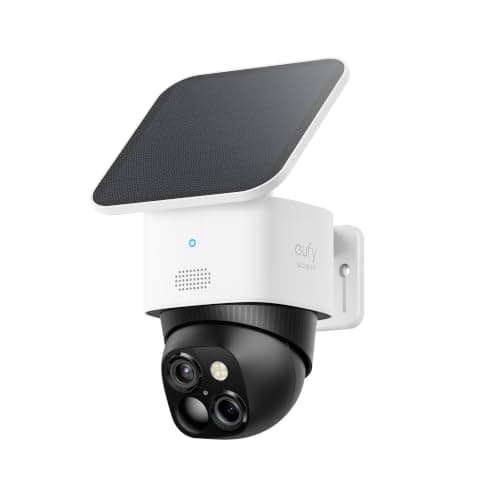
Our top pick: eufy SoloCam S340 (solar, dual camera) — Solar panel, pan and tilt, dual lenses and onboard storage — no wire, no monthly fee, and no recording leaving the device unless you choose to send it.
Cameras are the category everyone shops first and understands least. The listings compete on resolution and on the number of units in the box, which are two of the least useful things about a camera. The spec that determines what you pay every month, what happens during an outage and whether the footage survives the camera is a different one entirely: where the recording is written.
Organize by where the footage lives
Onboard storage
A microSD card or built-in flash inside the camera. Cheapest to run, nothing else to buy, works with no account in many cases. Two weaknesses: capacity is small enough that continuous recording overwrites quickly, so most onboard cameras record events rather than 24/7, and if the camera itself is removed from the wall the recording leaves with it.
A local hub or recorder
A base station with a drive, or a network video recorder with cameras wired back to it. The footage sits indoors, away from the camera, on a disk large enough for continuous recording measured in weeks. This is the strongest local answer and the one that scales past two or three cameras. It costs more up front and it is a real installation rather than a bracket and two screws.
The cloud
Off-site, so nothing physical can take it, and it is the easiest to set up by a wide margin. It is also the model that turns a camera into a recurring bill, and it is completely dependent on your upstream connection. Both routes are compared side by side in local storage versus cloud recording, and the versions of each camera that stay fully useful without a plan are in local storage cameras and recorders.
Decide the storage model before the model number. Where the video lives determines your running cost, your offline behavior and whether the evidence outlives the hardware. Every other camera spec is a preference; this one is architecture, and it is expensive to change your mind about after you have bought four cameras.
Resolution is oversold. Night and field of view are undersold.
4K on a box is a sensor claim, not an image claim. What you actually see depends on the bitrate the camera is allowed to use, the frame rate it holds at that resolution, the lens aperture and the size of the sensor pixels. A 2K camera with a bright lens and a large sensor routinely produces a more identifiable face than a 4K camera with a slow lens, because the moment that matters is nearly always at night and nearly always moving. Higher resolution also multiplies your storage consumption, which pulls straight against the local storage decision you just made.
Night performance is the spec worth reading properly. Infrared gives you a grayscale image and no clothing color. A spotlight gives you color at the cost of announcing itself and drawing current. Starlight-type sensors sit in between, producing low-light color without illumination but only down to a published lux figure that is worth checking. Also check whether the IR emitters sit next to the lens behind the same glass, because mounted behind a window they will reflect straight back and give you a white screen.
Field of view is undersold in the opposite direction. The difference between roughly 110 and 130 degrees changes how many cameras you need, but a wider lens spreads the same pixels over more scene, so detail at the edge falls off and faces get smaller. Pan-and-tilt units cover a wide area but only record where they happen to be pointing, which is a genuine trade rather than a free upgrade.
Power and mounting reality
Battery cameras install in minutes and go anywhere. They also sleep between events, and waking on a passive infrared trigger costs the first second or two of the clip - which is why battery cameras so often catch someone already halfway across the frame. Recharge cadence depends entirely on how busy the view is.
Solar is battery with a top-up, not a power source. It needs several hours of direct sun; a north-facing wall, deep eaves or a winter month in a cloudy climate all return you to a ladder and a cable. What happens over a cold winter is more specific than “less sun” - the lithium cell is not permitted to charge below freezing, which is why solar cameras in winter is its own question. The full set of power paths, including the cable run most people are trying to avoid, is ranked in how to power an outdoor camera.
Two situations break the assumptions behind this whole hub, and each has its own shortlist. A property with no broadband at all, or a household that will not put a camera on the network, needs a camera that records and plays back with nothing online - which in practice means wired cameras and a recorder, ranked in cameras that work without Wi-Fi. An outbuilding with no socket and marginal signal is the opposite problem, solved power-first, in cameras for sheds and barns. And before buying any of them, the count is worth settling: how many cameras you actually need is usually fewer than the number of walls.
Mains is reliable and constrained by where your outdoor outlets are. Power over Ethernet is the strongest option if you can run cable: one wire carries power and data, there is no battery and no Wi-Fi contention, and it pairs naturally with a recorder. The catch is pulling the cable, which is a weekend rather than an afternoon.
Two situations change this calculation enough to have pages of their own. If you do not own the wall, the fixing matters more than the sensor, and the renter rankings sort the field by what comes down without a mark. If the view is a long approach rather than a doorway, optical reach matters more than resolution, and the driveway rankings explain why a 4K camera with a fixed lens can be less useful at thirty meters than a lower-resolution one with glass that moves. The camera that wins that argument in our coverage is taken apart spec by spec in the Reolink RLC-811A review, including what the motorized zoom gives up at the wide end.
A third situation changes it again, and this one is about who is watching rather than what is watched. Cameras for checking in on a parent is ranked for the case where the person buying the camera and the person living with it are different people - so coverage of a whole room beats detail, two-way talk beats recording, and a monthly fee for looking in on your own mother is the thing to avoid. It also says plainly that none of these is a medical alert device and that the resident has to agree to it.
What most buyers get wrong
Buying camera count instead of camera placement. Two cameras covering the approach to the two doors people actually use beat six cameras looking at a fence. Sketch the approaches first.
Mounting too high. A camera at gutter height records the tops of heads. Around eight to ten feet, angled across the approach rather than straight down at it, is where faces appear at usable size.
Forgetting the upstream link. Cloud-recording cameras need to push video out of your house continuously, and a household on a thin upload connection with four cameras will drop clips. Local storage sidesteps the problem entirely.
Not asking what happens when the plan lapses. Some cameras degrade gracefully to live view and local clips; others lose the detection features that made them worth buying. That question is the whole reason the subscription-free hub exists. When you are ready for the shortlists, start with the outdoor camera rankings.
Everything in this hub
All of Cameras
Roundup
The Best Home Security Cameras
Eight cameras ranked by where the footage is stored rather than by resolution. The eufy SoloCam S340 wins on solar power plus onboard recording with no plan attached.
Top pick: eufy SoloCam S340 (solar, dual camera) · 8 ranked, 8 with live prices
$199.99on Amazon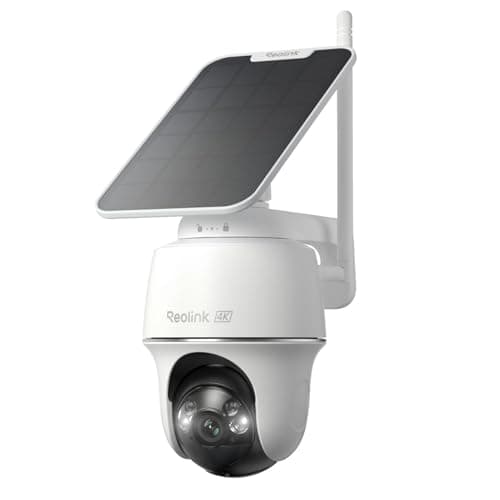
Roundup
The Best Outdoor Security Cameras
Six outdoor cameras that record with no monthly fee, ranked on power reality rather than on specification sheets. The Reolink Argus PT Ultra wins on 4K, solar and a card slot.
Top pick: Reolink Argus PT Ultra (4K solar) · 6 ranked, 6 with live prices
$134.99on Amazon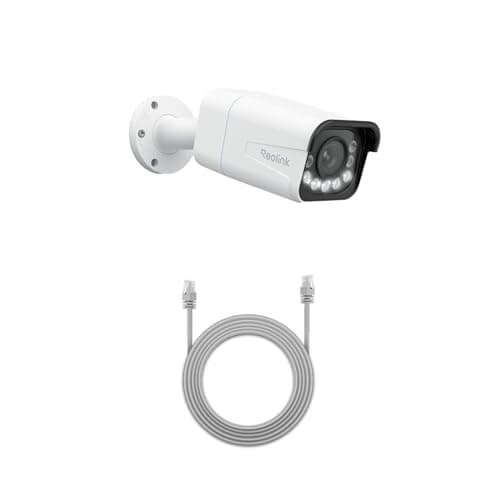
Roundup
The Best Security Cameras for Home Assistant
Seven cameras chosen for documented RTSP and ONVIF support rather than app polish, so they drop into Home Assistant, Frigate or Blue Iris. The Reolink RLC-811A wins on open interfaces plus real optical zoom.
Top pick: Reolink RLC-811A (4K PoE, 5x zoom) · 7 ranked, 7 with live prices
$136.83on Amazon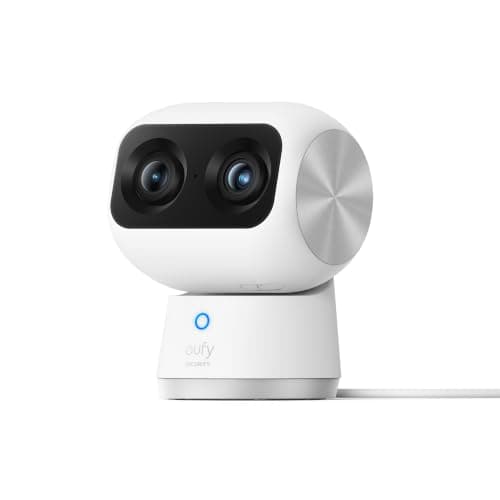
Roundup
The Best Indoor Security Cameras
Five indoor cameras ranked on storage location, plan-free recording, resolution and privacy control. The eufy Indoor Cam S350 wins on 4K dual-camera coverage that records to a local card with no plan.
Top pick: eufy Indoor Cam S350 (4K, dual camera) · 5 ranked, 5 with live prices
$139.99on AmazonRoundup
The Best Wireless Security Cameras
Five battery and solar cameras ranked on power source, where footage is stored, plan dependence and weather rating. The eufy SoloCam S340 wins on integrated solar and local recording with no monthly fee.
Top pick: eufy SoloCam S340 (solar, dual camera) · 5 ranked, 5 with live prices
$199.99on AmazonRoundup
The Best PoE Security Cameras
Five Power-over-Ethernet cameras ranked on resolution, cabling and open standards. The Reolink RLC-811A wins on 4K, a real 5x optical zoom and continuous recording to your own NVR with no plan.
Top pick: Reolink RLC-811A (4K PoE, 5x zoom) · 5 ranked, 5 with live prices
$136.83on Amazon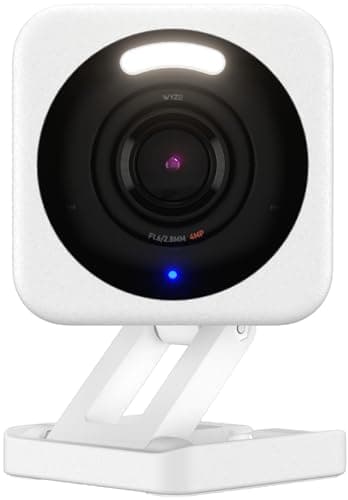
Roundup
The Best Budget Security Cameras
Five genuinely cheap cameras ranked on what the low price actually costs you. The Wyze Cam v4 wins on 2.5K to a local card with no plan, with its brand history stated plainly.
Top pick: Wyze Cam v4 (2.5K) · 5 ranked, 5 with live prices
$44.97on AmazonReview
eufy SoloCam S340 Review
The eufy SoloCam S340 charges itself from the sun, tracks with two lenses, and records to storage in your own house with no plan. Our subscription-free outdoor pick, reviewed from the published documentation.
Top pick: eufy SoloCam S340 (solar, dual camera)
$199.99on Amazon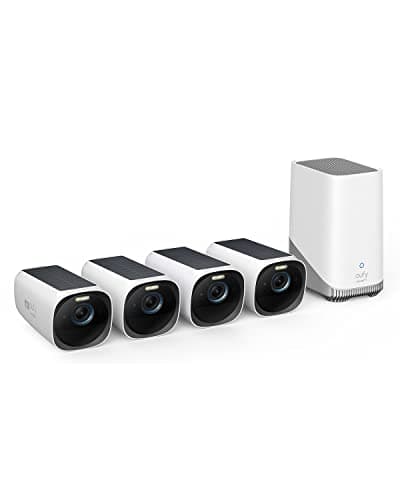
Roundup
The Best 4K Security Cameras
Four 4K and high-resolution security cameras ranked on real detail, power and where the footage lands. The eufyCam 3 (S330) wins on 4K to local HomeBase storage with no plan.
Top pick: eufyCam 3 (S330) 4-camera kit · 4 ranked, 4 with live prices
$499.99on AmazonRoundup
The Best Solar-Powered Security Cameras
Three solar security cameras ranked. The eufy SoloCam S340 wins as the all-in-one: integrated solar, 360-degree pan, dual lenses and onboard local storage with no monthly plan.
Top pick: eufy SoloCam S340 (solar, dual camera) · 3 ranked, 3 with live prices
$199.99on Amazon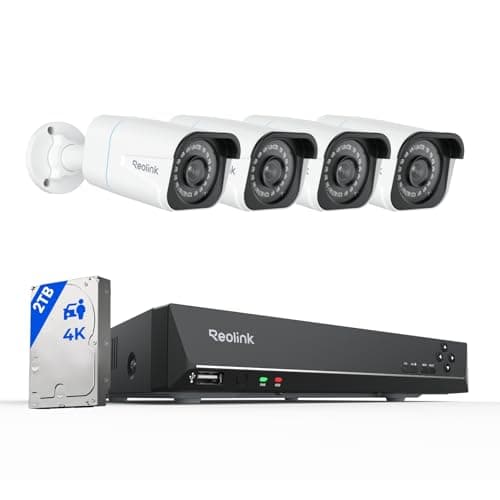
Roundup
The Best Home Security Camera Systems
Four whole-house camera systems ranked on the recorder rather than the cameras. The Reolink 8-channel 4K PoE system wins for shipping the NVR, the drive and 24/7 recording in one box, with four free channels to grow into.
Top pick: Reolink 8CH 4K PoE System with NVR + 2TB · 4 ranked, 4 with live prices
$699.99on AmazonRoundup
The Best Window Cameras for Home Security
Four cameras for a window position, ranked on the specification that decides it: whether you can turn infrared night vision off. The eufy Indoor Cam S350 wins on optical zoom and local recording behind glass.
Top pick: eufy Indoor Cam S350 (4K, dual camera) · 4 ranked, 4 with live prices
$139.99on Amazon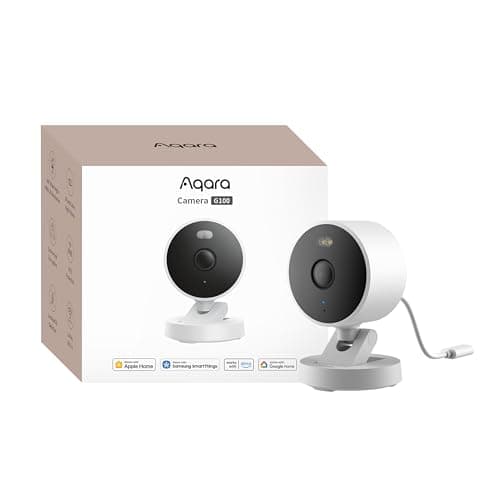
Roundup
The Best HomeKit Security Cameras
Five cameras that work in Apple Home, ranked on whether they record without an iCloud+ plan. The Aqara Camera G100 wins for being a full HomeKit Secure Video camera and a full local recorder at the same time.
Top pick: Aqara Camera G100 (2K, indoor/outdoor) · 5 ranked, 5 with live prices
$35.99on Amazon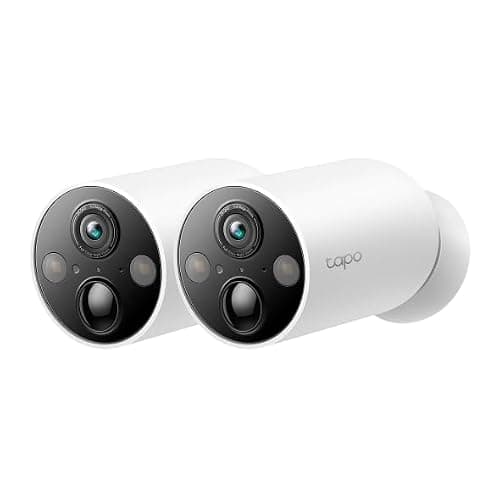
Roundup
The Best Security Cameras for Renters
Five cameras ranked for a home you do not own. The TP-Link Tapo MagCam wins because its magnetic mount is the only fixing here that goes up and comes down without leaving anything behind, and it records to a card you keep.
Top pick: TP-Link Tapo MagCam 2K+ · 5 ranked, 5 with live prices
$114.99on AmazonRoundup
The Best Security Cameras for a Driveway
Five cameras for a long approach, ranked on what is still readable at distance. The Reolink RLC-811A wins on a real 5x optical zoom, because a 4K sensor cropped digitally is not the same thing as glass that actually reaches.
Top pick: Reolink RLC-811A (4K PoE, 5x zoom) · 5 ranked, 5 with live prices
$136.83on AmazonRoundup
The Best Security Cameras Without Wi-Fi
Five cameras and one complete system for a property with no broadband, ranked on whether they record and play back with nothing online. The Reolink 8-channel PoE system wins because the recorder, the drive and the monitor are the whole product.
Top pick: Reolink 8CH 4K PoE System with NVR + 2TB · 5 ranked, 5 with live prices
$699.99on AmazonRoundup
The Best Security Cameras for Sheds and Barns
Five cameras for a shed, barn, garage or workshop with no power and marginal signal. The eufy SoloCam S340 wins on integrated solar and storage inside the camera; the Blink Outdoor 4 is the pick if the roof never sees sun.
Top pick: eufy SoloCam S340 (solar, dual camera) · 5 ranked, 5 with live prices
$199.99on AmazonReview
Reolink RLC-811A Review
The RLC-811A is a 4K PoE camera with a genuine 5x optical zoom, continuous recording to a card or NVR and no plan at any tier. Reviewed from Reolink's published specifications, including the operating range and the cable run that disqualify it for some installs.
Top pick: Reolink RLC-811A (4K PoE, 5x zoom)
$136.83on AmazonRoundup
The Best Security Cameras for Checking On Elderly Parents
Four indoor cameras for a family member checking in from elsewhere, ranked on room coverage, two-way talk and whether footage costs a monthly fee. The eufy Indoor Cam S350 wins because one camera covers a whole living room and records to its own card.
Top pick: eufy Indoor Cam S350 (4K, dual camera) · 4 ranked, 4 with live prices
$139.99on Amazon
Filed elsewhere, written for you
Also worth reading
These live under a different section of the site but answer the same question a cameras buyer is actually asking.
Comparisons
Ring vs eufy: the storage model decides it
Ring has the better app and the better ecosystem; eufy records to hardware you own and never bills you. The head-to-head table, the Ring Alarm exception almost nobody states, and a decision rule instead of a winner.
Top pick: eufy SoloCam S340 (solar, dual camera)
$199.99on Amazon
Gifts & Deals
Black Friday & Cyber Monday Smart Home Security Deals 2026
What historically discounts in November and what barely moves, sorted by product class from published deal coverage of the 2025 season - with buy-now versus wait guidance and our current top picks at live prices. Deals will be posted here when they go live.
Covered here: Yale Assure Lock 2 (Wi-Fi, keyed)
$197.00on Amazon