HUB 06 · Guides
How to Secure a Sliding Glass Door
The factory latch is a hook, not a bolt, and the panel can usually be lifted in its track. Both are cheap to address - and neither is the lock you were about to buy.
We earn a commission if you buy through our links. It does not change the price you pay, and it does not decide our picks — our selection criteria are published in full. How this works.
Verdict
The bottom line
Start with the two mechanical weaknesses, because they cost very little and nothing else you add compensates for them. A slider's factory latch is a small hook engaging a keeper in a soft aluminum frame, and the moving panel can usually be lifted in its track. A secondary bolt or pin through both frames addresses the first; set screws in the upper track close the lift gap. Then add a contact sensor so you know the door opened. A replacement smart lock is the last step, not the first, and only once you know which mortise case your door takes.
Why a sliding door's own lock is the weak part
A swinging door locks with a deadbolt: a steel bolt projecting into a strike fixed to the frame. A sliding door does not have one. It has a latch — a hook or a clip on the moving panel that catches a keeper on the fixed stile — and both parts are usually mounted in extruded aluminum rather than in timber. That is a convenience mechanism rather than a security one, and it is why this door needs attention that a front door does not.
The second structural fact is the track. A sliding panel has to lift slightly to be removed from its frame, and on many doors that clearance is larger than it needs to be — enough that the panel can be lifted and worked out of the track while still latched. Addressing the latch without addressing the lift is half a job.
The three mechanical fixes
1. A secondary bolt or pin through both frames
The most effective and least elegant fix. A foot bolt at the base of the moving panel, or a pin drilled through the moving stile into the fixed one, puts a second independent point of engagement on the door that does not depend on the factory latch or its keeper. Because it passes through both frames it also resists lifting, which the latch does not.
The usual objection is that it has to be operated by hand each time, which is true and is exactly why it works — it is a mechanical part with nothing to fail. Fit it where it can be reached without kneeling, or nobody will use it.
2. Set screws in the upper track
Partially driven screws in the upper track reduce the vertical clearance above the panel, so the panel cannot be lifted far enough to come out. They are adjusted until the door still rolls freely with the gap closed. This is a common approach and a cheap one; check your door manufacturer's guidance first, because on some units the upper track carries the weather seal or the panel's adjustment, and screws in the wrong place cause a draft rather than a fix.
3. A bar or dowel in the track — the weakest of the three
The classic broom handle in the track stops the panel sliding and does nothing about lifting, nothing about the latch, and nothing at all when somebody at home forgets to put it back. It is better than nothing and worse than either fix above. Treat it as a temporary measure rather than a solution, and note that it also blocks the door as an exit, which matters for a bedroom or a basement.
The glass is rarely the first thing to think about. Modern patio doors are usually tempered glass, which breaks loudly and completely rather than quietly. Security film is sold as a fix for this and the honest position is that it changes the failure mode rather than preventing failure, and its effectiveness depends heavily on how the film is bonded to the frame rather than just to the pane. The latch and the lift gap are cheaper and more consequential; address those first.
The sensing layer: knowing it opened
Mechanical fixes make the door harder to open. A sensor tells you that it did. These are different jobs and the second one is cheap — a contact sensor is two parts, a magnet on the moving panel and a sensor on the fixed stile, reporting the moment they separate. On a slider it is the single most useful addition after the secondary bolt, because the most common real event on a patio door is not forced entry at all: it is the door being left open.
Three options, each answering a different question. A contact sensor reports open and closed to your phone or hub, and the field is ranked in our door and window sensor roundup. A vibration sensormounts on the pane or frame and reacts to it being struck, which a contact sensor cannot — useful on a panel that is never opened. A local window alarm has no radio at all and simply makes a noise at the glass, which is the right amount of technology for a rental where you want nothing to configure. The mechanism differences are set out in our glass break sensor rankings.
One practical note for sliders specifically: the magnet and sensor have to align across a moving panel, and patio door frames are frequently too shallow for a standard pair. Measure the flat area on both the panel and the stile before ordering, and prefer the smallest sensor that will do the job.
When to replace the lock
A replacement smart lock for a slider is a real product category, and it is the right answer when you want keyless entry on a door the family actually uses — a patio that is the main route to the garden, a rear entrance used daily. It is the wrong first purchase if the panel still lifts out of its track, because the lock is fitted to the same stile the latch was.
The fit specification is the mortise case. A slider has no cross-bore and no deadbolt: it has a pocket already milled into the stile, and the case number stamped on the existing lock body — commonly 2085 or 2885 — decides which replacement will seat. The wrong case will not fit no matter how similar the lock looks. That is why our sliding patio door lock rankings lead on fitment rather than features, and it is also worth knowing that no mainstream maker publishes an ANSI/BHMA grade for this category, so there is no independent rating to compare.
If the door is a frameless glass panel, a mobile home slider or a narrow aluminum unit, check the stile width before anything else — and if the door closes on a multipoint handle, the honest answer is that this category has nothing for it, the same conclusion we reached about storm doors. The general measure-first discipline for any door is in will a smart lock fit my door.
The order to do this in
- Check the lift. Grip the moving panel and try to raise it. If it moves more than a few millimeters, the track clearance is the first thing to close.
- Look at the latch and its keeper. If either is loose in the aluminum, or the hook barely engages, tighten or replace the keeper before adding anything.
- Fit a secondary bolt or pin. One mechanical part, no power, no app, resists both sliding and lifting.
- Add a sensor. Contact for open and closed, vibration for a panel nobody opens, a local alarm if you want nothing to configure.
- Read the mortise case number before you shop for a replacement lock, and measure the stile. That number, not the feature list, decides which locks are even candidates.
What this costs
The mechanical work is the cheapest part by an order of magnitude — a bolt, a handful of screws and ten minutes. A contact sensor is a few dollars per opening with no running cost. A replacement smart lock is the largest item and the only one with batteries to think about. Nothing on this page needs a subscription, which is the standing position across this site; the arithmetic on what plans cost where they do exist is in our subscription cost comparison.
The hardware for each layer
Four products below, one per layer rather than a ranking: the sliding door lock that names its mortise case in its own listing, a contact sensor small enough for a patio frame, a vibration sensor for a panel that never opens, and a no-hub window alarm for a rental. Their prices come live from the Amazon API and were last checked October 5, 2026. The full rankings are at sensors and smart locks, and how we score anything is published at our methodology.
The hardware
The hardware this guide is about
The products this guide refers to, with prices pulled live from Amazon and dated on every card. Full rankings live in the roundups linked above.
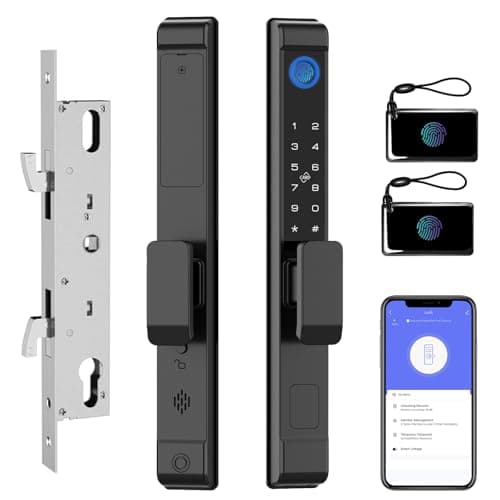
Best sliding glass door lock
eLinkSmart 2885 Slim Sliding Patio Door Lock
The one that names its mortise case in the title, which is the single most useful thing a listing in this category can do. Built-in Wi-Fi and a fingerprint reader on a lock body that drops into the pocket your slider already has.
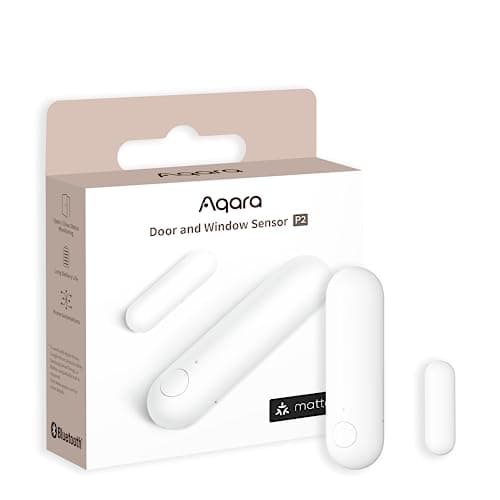
Best door and window sensor
Aqara Door and Window Sensor P2
Thread, and that is the whole point. It joins a Matter fabric directly, so it reports to Apple Home, Google Home, SmartThings or Home Assistant without Aqara's cloud anywhere in the path.
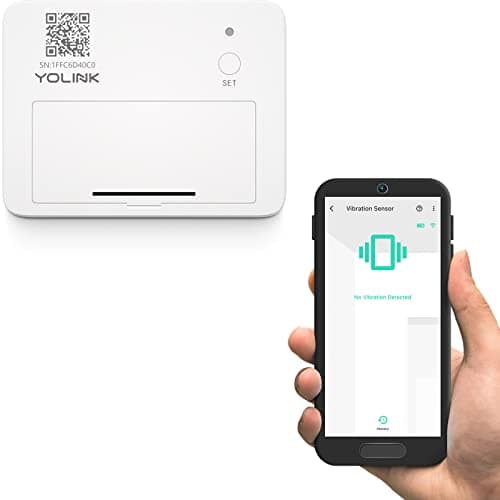
Best long-range window sensor
YoLink LoRa Smart Vibration Sensor
Shock and vibration detection on YoLink's long-range LoRa radio, escalating to email and SMS rather than app push alone — the sensor for a window at the far end of a property.
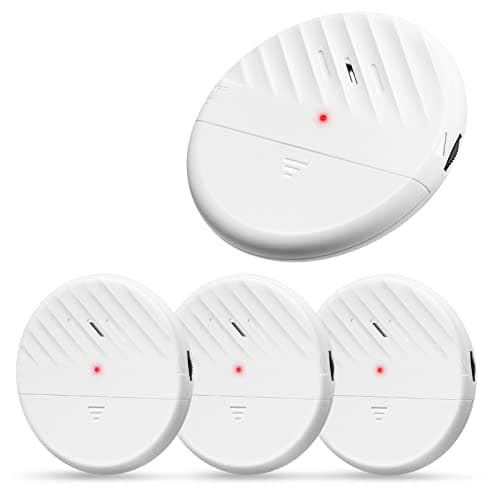
Best no-hub window alarm
WSDCAM Glass Break Window Alarm (4-pack)
No hub, no app, no account: a slim vibration alarm that sticks to the pane and sounds at 125dB if the glass is struck. The whole product is the siren, and on a rental that is often the right amount of technology.
#ad · As an Amazon Associate we earn from qualifying purchases.
Questions
Frequently asked
How do I secure a sliding glass door?
Why is a sliding door latch weaker than a deadbolt?
Does a bar in the track work?
Is security film worth it on a patio door?
Can I fit a smart lock to a sliding glass door?
Keep reading
Related
- Best smart locks for sliding glass doorsRanked on mortise case and stile width, because fit decides it.
- Best door and window sensorsThe cheapest layer, and the one that reports a door left open.
- Best glass break sensorsAcoustic against vibration, for a panel nobody opens.
- Best smart locks for french doorsThe other glass door the mainstream catalog was not drawn for.
Receipts
Sources
- AAMA / FGIA — published standards and guidance for sliding glass door assemblies
- ASTM International — F842 standard test methods for forced entry resistance of sliding door assemblies
- Aqara — Door and Window Sensor P2 specifications and mounting guidance
- YoLink — LoRa vibration sensor specifications and sensitivity documentation
We do not run a testing lab and we do not pretend to. Specifications come from the manufacturer's own published documents and from published standards; prices come from the live Amazon API. Where a figure is not published, the page says “not published” rather than guessing. Read the full method.