HUB 06
Guides
The decision-blocking questions, answered in the first sixty words and then in depth. Door measurements, protocols, storage, and the running-cost arithmetic nobody else publishes.
We earn a commission if you buy through our links. It does not change the price you pay, and it does not decide our picks — our selection criteria are published in full. How this works.
This hub is the questions that block a purchase - the ones you have to answer before a product shortlist means anything. Will this fit my door. Does it stop working when the wifi drops. Where does the footage go. What does Matter actually change. Each guide answers its question in the first sixty words and then explains the mechanism underneath, because the short answer is what you came for and the long answer is what stops you buying the wrong thing twice.
How these guides are built
Products we claim to have tested: zero. Nearly every page in this category says it spent a month with a dozen locks on its own front door. We have not done that, we are not going to say we did, and stating it plainly is the point rather than an apology. What we do instead is specific and checkable.
We work from published manufacturer specifications and installation manuals - the documents that contain the backset range, the transformer voltage window, the battery chemistry and the magnet gap tolerance, and which almost nobody quotes back to you. We work from published standards: the BHMA and ANSI A156 documents behind a lock's grade, the Matter and Thread specifications, IP ingress ratings, and what each of those actually certifies. And we show the arithmetic: battery life against cycles per day, five-year running cost against purchase price, storage capacity against bitrate. When a number comes from a manufacturer's own claim rather than a standard, we say so in the same sentence.
Where the sourcing rules and the scoring come from is set out in full on how we pick, which is the page to read first if you want to know how much weight to give anything here.
The order that saves money: constraint first, category second, product last. Measure the door, find the transformer, identify which hub you already own, decide where footage should live. Every one of those eliminates entire product families in a minute, and none of them can be undone by a better app.
Fit and installation
The most expensive mistake in this whole site is a lock that does not physically fit, and it is entirely avoidable with a tape measure. Will a smart lock fit my door walks through backset, cross-bore, edge-bore, door thickness and the obstructions that catch people out - raised panels, glass inserts, metal slabs, and a deadbolt that already needs persuading. Once you know the answer, how to install a smart lock covers the install itself, including the alignment check that decides whether auto-lock is safe to switch on.
Both of those assume a door that can take a deadbolt. Smart locks for storm doors covers the case where it cannot: a storm door slab is roughly half the thickness a deadbolt needs, so the guide explains the measurement, says plainly that no mainstream smart lock fits, and sets out the three things that do help instead. And once the lock fits, the door's exposure is the last physical question: can smart locks get wet reads what each maker actually publishes - IP ratings, temperature ranges, and the interior half that none of them rates - and explains why every one of them rules out a gate.
Two questions sit before the tape measure if the door is not yours. Can you install a smart lock in an apartment separates the two designs a lease actually treats differently - a retrofit changes nothing and keeps the landlord's key working, a replacement does neither - and sets out what to ask for in writing and how to leave the door as you found it. And what ANSI/BHMA grades mean for smart locks decodes the specification most often quoted and least often understood: two separate grading systems, numeric and lettered, from two different standards, neither of which tests the electronics - plus how to check a grade claim in BHMA's own certified product directory.
Connectivity and protocols
Protocol confusion is the second-biggest source of returns. Do smart locks need wifi separates what genuinely stops working during an outage - remote unlocking, away-from-home notifications, remote guest codes - from what keeps working, which for most locks is everything you do while standing at the door. Matter and Thread, explained deals with the other half: which devices need a border router or a coordinator, what Matter certification actually promises, and where it still falls short of the marketing.
The security half of the same question - what each radio exposes, and to whom - is separated out in smart lock security risks by protocol. It sorts Wi-Fi, Bluetooth, Zigbee, Z-Wave and Thread by where an attacker would have to be standing, which turns a vague worry into a short and mostly reassuring list.
One level up from the radio is the platform that ends up owning the devices. The best smart home ecosystem for security compares Apple Home, Google Home, Alexa, SmartThings and Home Assistant on the five things that actually differ - where a recording gets written, what still runs with the internet down, what is gated behind a plan, which radios each speaks without another box, and what each company has already done to customers who had bought the hardware.
Two questions people ask late and should ask first. Can you use your existing key with a smart lock has a mechanical answer rather than a brand one: a retrofit keeps your cylinder and therefore every key in the household, a replacement ships a new cylinder and new keys, and there are exactly three routes back to one key afterwards. And how many security cameras you need is a counting method rather than a number - entry routes rather than walls - which matters most on the brands that price cloud recording per camera, where the fourth camera is a purchase plus a recurring bill.
The third device answers the connectivity question least forgivingly, because the notification and the two-way talk are the entire product rather than a feature on top of it. Do video doorbells need wifi separates the three things buyers conflate - Wi-Fi coverage at the door, a home network, and an internet connection - because a doorbell behaves differently when each of the three goes away, and local storage is what decides whether an outage costs you notifications or evidence.
Power, weather and the physical world
Three guides deal with the part of home security that has nothing to do with software. How to power an outdoor security camera ranks the four real options - PoE, a mains spur, solar and long-life battery - and names the two improvised ones that cause most failures. Do solar security cameras work in winter answers the January question with the published charging cut-off: the camera keeps recording, but a lithium cell below freezing is not permitted to charge, which is a protection rather than a fault. And how to secure windows from break-ins is mechanism-first in the same way the sliding-door guide is: the factory catch is a convenience latch, so the fixes that matter are a second fixing point and a travel stop, long before anything with a battery.
Three more guides belong in this section. The siting half of the solar question is how much sun does a solar security camera need, which quotes what each maker publishes - eufy states two hours of direct sunlight a day, Reolink declines to give a number at all - and then explains why hours of daylight is the wrong measure. How to secure your front door is the companion to the sliding-door and window guides, and it starts at the strike plate rather than the lock, because a forced door almost always fails where three short screws meet a pine jamb. And how to secure a garage door covers the largest and least-watched opening on most houses: the emergency release, the service door, the opener's code generation, and the code-regulated door into the house.
When something already installed stops working
Two guides here are repair rather than research. Smart lock troubleshooting works the five lock failures in fix order, and three of the five turn out to be mechanical rather than electronic. Sensors that keep going offline does the same job for a perimeter: why a battery sensor drops off a Zigbee or Thread mesh, why the fix is usually a mains-powered device rather than a new sensor, and why re-pairing is the step with the lowest hit rate and the highest cost.
Storage, cost and the safety question
Local storage versus cloud recording is the guide that changes the running cost of a whole system, because it determines whether you are buying hardware once or renting retention forever. It covers what happens to each model during an internet outage, what happens if the camera is removed, and how to get a clip out as a file.
Two companion guides take the same storage question in the two directions people actually ask about. Do security cameras record all the time is the disk side: which cameras can capture continuously, why no battery camera can, and the arithmetic for how many days a drive really holds. How much data do security cameras use is the uplink side: why local recording barely touches your internet connection and cloud upload touches it constantly.
For anyone starting from nothing, what to buy first sequences the four layers - sensor, lock, doorbell, camera - in the order that makes each purchase inform the next, and says plainly why a camera is usually the wrong first device.
The two remaining guides answer the questions people ask before they will commit at all: whether a keypad or app-controlled lock is a sensible replacement for a mechanical one, and whether a doorbell earns its place as a first device. Both are written the same way as everything else here - the answer up front, the reasoning below it, and a plain statement of the case for not buying.
What most buyers get wrong
Researching the product before the constraint. Two hours comparing four locks is wasted if three of them need a bore your door does not have. Ten minutes with a tape measure comes first, always.
Reading only the guide that matches the thing they already want. The storage guide changes camera choices, the protocol guide changes sensor choices, and both change what a subscription is worth. They are not independent.
Treating a manufacturer figure as a measurement. A two-year battery rating is a claim made under stated conditions, and the conditions are in the manual. When we quote a figure like that, we name whose figure it is, so you can weight it accordingly.
Everything in this hub
All of Guides
Guide
Do Smart Locks Need Wi-Fi? What Each Protocol Costs You Offline
A protocol-by-protocol table of what keeps working with the router down, and why a Wi-Fi radio is the heaviest possible draw on a battery lock.
Covered here: Kwikset SmartCode 916 Z-Wave Touchscreen Deadbolt
$159.99on Amazon
Guide
Is a Video Doorbell Worth It?
The case for and the case against, including the households that should not buy one, and what wiring, chimes and notification fatigue actually cost you.
Covered here: eufy Video Doorbell E340 (dual camera)
$149.99on Amazon
Guide
How Long Do Smart Lock Batteries Last? The Radio Decides, Not the Motor
Why a Wi-Fi lock can drain a set of AAs in a season while a Bluetooth or Thread lock on the same door runs a year, why maker figures do not compare, and how to get the most from a set.
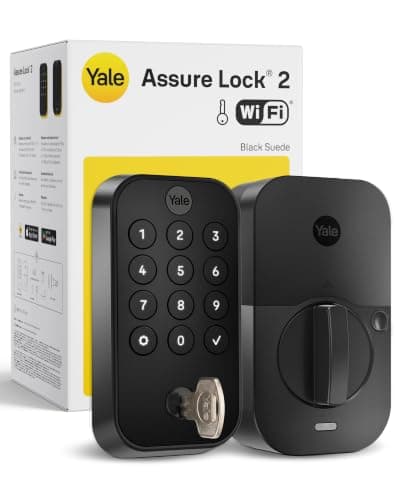
Covered here: Yale Assure Lock 2 (Wi-Fi, keyed)
$197.00on Amazon
Guide
Do Security Cameras Work Without Wi-Fi? Yes, If They Store Footage Locally
Which cameras keep recording with the internet down, which record nothing at all offline, and the difference between losing the network and losing the recording.
Covered here: Reolink RLC-811A (4K PoE, 5x zoom)
$136.83on AmazonGuide
PoE vs Wi-Fi Security Cameras: The Cable Is the Whole Decision
Power over Ethernet versus Wi-Fi, decided on the mechanism: one cable for power and data and local NVR recording, against battery or solar convenience that trades away bandwidth and upkeep.
Covered here: Reolink RLC-811A (4K PoE, 5x zoom)
$136.83on AmazonGuide
How to Choose a Smart Lock: Six Decisions, in Order
A six-step walkthrough (install type, door fit, entry methods, connectivity, power, and published BHMA grade) that narrows the whole field to the two or three locks that actually suit your door and household.
Covered here: Yale Assure Lock 2 (Wi-Fi, keyed)
$197.00on Amazon
Guide
Do Smart Locks Work in a Power Outage? Yes, Because They Run on Their Own Batteries
Why a household power cut leaves a smart lock working normally, what stops (remote app control, if the router loses power) versus what keeps working (codes, the thumbturn), and the key or 9-volt failsafe for when the batteries themselves die.
Covered here: Yale Assure Lock 2 (Wi-Fi, keyed)
$197.00on AmazonGuide
Z-Wave vs Zigbee vs Matter: What They Are, in Plain Language
Z-Wave and Zigbee are older mesh radios that each need their own hub; Matter is a software standard that runs over Wi-Fi or Thread to work across ecosystems; Thread is the low-power mesh Matter uses. Why a lock or sensor lists one, and what a border router does.
Covered here: Aqara Hub M3
$139.99on AmazonGuide
Do Video Doorbells Need a Subscription? It Depends Entirely on the Brand
Local-storage doorbells from eufy and Tapo record and play back with no plan; cloud-only doorbells such as Ring keep no recorded clip without one. What a subscription gates, and the five-year cost shape of each.
Covered here: eufy Video Doorbell E340 (dual camera)
$149.99on AmazonGuide
How to Choose a Security Camera: The Four Questions That Decide It
A decision framework rather than a product list: the four questions of location, power, storage and connection that decide which camera is right, with the storage question flagged as the biggest long-run cost.
Covered here: eufyCam 3 (S330) 4-camera kit
$499.99on AmazonGuide
Do Security Cameras Need a Subscription? Only If They Record to the Cloud
The plain answer is no, provided you buy a camera that records to local storage. What a plan actually gates, how local and cloud storage differ, and which of our picks are genuinely no-plan.
Covered here: eufyCam 3 (S330) 4-camera kit
$499.99on AmazonGuide
Retrofit vs replacement smart locks: which one fits your door
A smart deadbolt retrofit keeps your existing exterior hardware and every key already cut for it; a replacement swaps the entire lock and adds a keypad. What each one requires, and which situations rule one out.
Covered here: August Wi-Fi Smart Lock (with Yale Keypad)
$107.00on AmazonGuide
Self-monitored home security: what it means and who it suits
Self-monitoring means the alarm notifies you rather than a monitoring center, with no monthly fee and no contract. What you actually give up, what a siren still does, and the households it does not suit.
Covered here: eufy 5-Piece Home Alarm Kit
$159.99on AmazonGuide
Smart home hubs for security: what they do and which to buy
What a smart home hub actually does in a security setup, the four jobs hubs perform, and when you can skip one entirely. Covers Matter controllers, Thread border routers, Zigbee coordinators and camera base stations.
Covered here: Aqara Hub M3
$139.99on AmazonGuide
Smart lock troubleshooting: the five failures and what fixes them
The five things that actually go wrong with a smart lock - dead keypad, jamming bolt, lost wifi, rejected codes and fast battery drain - diagnosed in order, with the fix for each and the point at which replacing it is the answer.
Covered here: Yale Assure Lock 2 (Wi-Fi, keyed)
$197.00on AmazonGuide
Smart Lock Security Risks by Protocol: Wi-Fi, Zigbee, Z-Wave, Thread and Matter
A protocol-by-protocol threat model for smart locks. What Wi-Fi, Bluetooth, Zigbee, Z-Wave and Thread each expose, who would have to be where to exploit it, and why the account is a bigger risk than the radio on every one of them.
Covered here: Kwikset Aura Reach (Matter over Thread)
$153.00on AmazonGuide
Smart Locks for Storm Doors: Why Nothing Fits, and What to Do
There is no mainstream smart lock for a storm door, and the reason is dimensional: the slab is far too thin for a deadbolt and the hardware is a proprietary mortise set. What to do instead, in order of what actually helps.
Covered here: LARSON Revere Mortise Storm Door Handle Set
Check price on Amazon →
Guide
Can Smart Locks Get Wet? Outdoor Ratings and Weatherproofing, Explained
Yes, the outside half can get wet - that is what it is rated for. What IPX5, IP54 and IP65 mean on a door, why no maker rates the interior assembly, what cold does to four AA cells, and a maker-by-maker table of the published figures, including the two that publish none.
Covered here: Aqara Smart Lock U100
$149.99on AmazonGuide
The Best Smart Home Ecosystem for Security: Apple, Google, Alexa, SmartThings or Home Assistant
Which platform to build locks, cameras, doorbells and sensors on. Ranked on where a recording is written, what keeps working offline, what is gated behind a plan, which radios each speaks natively, and the governance record of the company behind it.
Covered here: Aqara Hub M3
$139.99on AmazonGuide
Sensors keep going offline: the six causes, in the order you should check them
Why battery door and motion sensors drop off a Zigbee or Thread network, diagnosed in order: too few mains-powered routers, a badly placed coordinator, wifi in the same band, a cell that sags under transmit load, a sensor past its published temperature range, and the hub itself. With the fix for each and the point at which replacing it is the answer.
Covered here: Aqara Hub M3
$139.99on AmazonGuide
Home Security Basics: What to Buy First
A sequencing guide for anyone starting from nothing: contact sensors first, then the door, then the doorstep, then the outside. What each layer tells you, what it costs to keep running, and why a camera is usually the wrong first purchase.
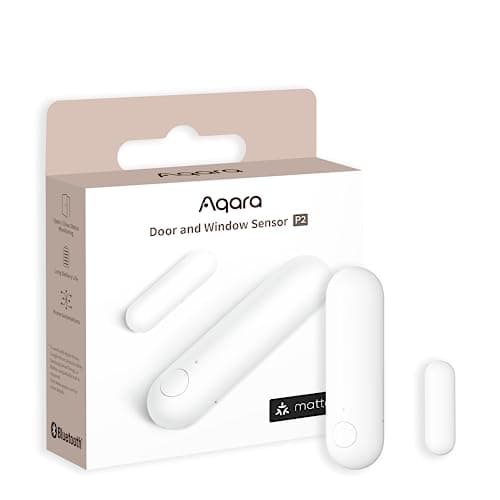
Covered here: Aqara Door and Window Sensor P2
$27.99on AmazonGuide
Smart Lock Codes and Guest Access
How smart lock access actually works: the three kinds of code, how a new code gets from the app to the lock, why that fails on Bluetooth-only locks, and the finite number of code slots nobody mentions.
Covered here: Yale Assure Lock 2 (Wi-Fi, keyed)
$197.00on AmazonGuide
How Much Data Do Security Cameras Use?
The uplink side of owning cameras: why local recording uses almost no internet data, what cloud upload and remote viewing actually cost, and how to run cameras on a metered, cellular or satellite connection.
Covered here: Reolink 8CH 4K PoE System with NVR + 2TB
$699.99on AmazonGuide
How to Secure a Sliding Glass Door
Why a sliding door's standard latch is the weak mechanical link, the three cheap fixes for the latch and the lift gap, the sensors that tell you it opened, and when a replacement smart lock is the right answer.
Covered here: eLinkSmart 2885 Slim Sliding Patio Door Lock
$131.96on AmazonGuide
Do Solar Security Cameras Work in Winter?
Solar cameras keep recording through winter; what stops is the charging. The published cut-off temperature, why a panel delivers a fraction of its rating in December, and the four fixes in order of how well they work.
Covered here: eufy SoloCam S340 (solar, dual camera)
$199.99on AmazonGuide
How to Power an Outdoor Security Camera
The four real ways to power an outdoor camera, ranked on how much human attention each needs afterwards - plus the two improvised methods that cause most failures, and why power decides whether continuous recording is possible at all.
Covered here: Reolink RLC-811A (4K PoE, 5x zoom)
$136.83on AmazonGuide
How to Secure Windows From Break-Ins
Mechanism first: why a standard sash catch or casement handle is a convenience latch rather than a lock, the four mechanical fixes that come before any purchase, what security film actually changes, and then the sensing layer.
Covered here: WSDCAM Glass Break Window Alarm (4-pack)
$27.99on AmazonGuide
Can You Use Your Existing Key With a Smart Lock?
A retrofit smart lock keeps your existing cylinder and therefore every key you own. A replacement deadbolt ships a new cylinder and new keys - and the three ways back to a single key, including re-keying and keyed-alike ordering.
Covered here: August Wi-Fi Smart Lock (with Yale Keypad)
$107.00on AmazonGuide
How Many Security Cameras Do I Need?
A counting method rather than a number: one camera per realistic entry route, one at the main approach, and stop. Why more cameras stop adding value, and what each additional camera costs in storage and in plan fees.
Covered here: Reolink 8CH 4K PoE System with NVR + 2TB
$699.99on AmazonGuide
Can You Install a Smart Lock in an Apartment?
Usually yes, if the lock changes nothing permanent and the landlord's key keeps working. What leases typically say, what to ask for in writing, which lock designs are genuinely reversible, and how to put the door back.
Covered here: SwitchBot Lock Ultra Touch Combo (with Hub Mini)
Check price on Amazon →Guide
How to Secure Your Front Door
Front doors fail at the frame, not the lock. The strike plate and screw-length fix that comes first, what to do about glass panels and sidelights, hinge-side reinforcement, and where a smart lock, a sensor and a doorbell actually help.
Covered here: Yale Assure Lock 2 (Wi-Fi, keyed)
$197.00on AmazonGuide
What ANSI/BHMA Grades Mean for Smart Locks
Two different grading systems - numeric Grade 1/2/3 and residential AAA - from two different standards, neither of which tests the electronics. What each certifies, how to verify a claim in BHMA's own directory, and why most smart locks publish no grade.
Covered here: Schlage Encode Plus Wi-Fi Deadbolt
$284.99on AmazonGuide
How Much Sun Does a Solar Security Camera Need?
What makers actually publish - eufy states two hours of direct sun a day, Reolink states only a few hours and no number - plus what counts as direct sun, how to pick the mounting spot, and the event load that changes the answer.
Covered here: eufy SoloCam S340 (solar, dual camera)
$199.99on AmazonGuide
Do Video Doorbells Need Wi-Fi?
Every consumer video doorbell needs Wi-Fi to notify you. What still works without it, why a network without internet is a different case, which models keep recording to a card, and the no-Wi-Fi options that actually exist.
Covered here: Reolink Video Doorbell WiFi (with chime)
$211.18on AmazonGuide
How to Secure a Garage Door
Four separate weaknesses: the emergency release cord, the service door, an old fixed-code opener, and the entry door into the house. What to fix first, what the safety rules require, and where a sensor earns its place.
Covered here: THIRDREALITY Smart Garage Door Opener (Matter)
$49.99on Amazon
Filed elsewhere, written for you
Also worth reading
These live under a different section of the site but answer the same question a guides buyer is actually asking.