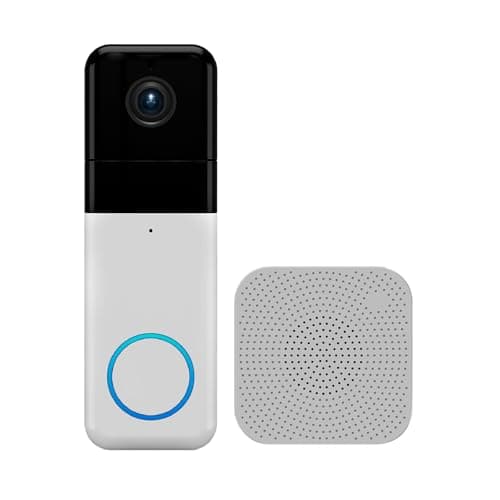
The best video doorbell for an apartment is the Wyze Wireless Video Doorbell Pro. Its 1:1 field of view is the right shape for a corridor — as tall as it is wide, so it frames a person head to toe and the parcel at their feet instead of two meters of the wall opposite — and it is battery powered with its own plug-in chime, so nothing has to be wired and nothing has to be asked of a landlord.
Why an apartment is a different problem
Buying guides for video doorbells are written for houses, and three of their assumptions are wrong in a flat. They assume there is a doorbell transformer behind the existing button to wire into — in most apartments there is not, or it belongs to a building-wide intercom you must not touch. They assume you can drill into the door frame — in a rented flat you usually cannot, and in a condo the corridor may be common property that is not yours to modify. And they assume a wide-angle lens is a good thing, which is true across a driveway and actively unhelpful in a corridor a meter and a half wide.
There is a fourth difference nobody mentions: your camera is pointed at a shared space. In a house the doorbell sees your own path. In an apartment it sees the corridor your neighbors walk down and, quite often, their front door. That is worth thinking about before you mount anything, and it is a reason to prefer a doorbell whose detection zones can be trimmed and whose footage stays on hardware in your flat.
The field of view is the specification that changes.A 160-degree wide-angle lens across a front garden is coverage. The same lens at the end of a corridor is a fisheye view of a wall with a small person in the middle. In a tight space you want a tall, square-ish frame — a 1:1 or head-to-toe aspect ratio — because the useful information is vertical: the face, the parcel, and the space between them.
How we ranked them
Mounting first: battery power with an adhesive or bracket mount, because that is the only install available to most renters. Then whether a chime is included in the box, since without a transformer the doorbell has nothing to ring — a plug-in chime is not an accessory in an apartment, it is the doorbell's only voice. Then the shape of the field of view, for the corridor reason above. Then storage and running cost on the same principle as the rest of this site: footage that lands on a card or a base in your home costs nothing to keep, and footage that lands in a rented cloud costs every month for as long as you own the device. The rubric is published at our methodology and is compiled from manufacturer specifications, not from testing.
Compiled from manufacturer specifications, August 2026. Battery life varies with traffic, temperature and detection settings.| Doorbell | Power | Chime included | View shape | Where footage lands |
|---|
| Wyze Wireless Video Doorbell Pro | Rechargeable battery | Yes | 1:1, head to toe | Card or cloud, plan for AI features |
|---|
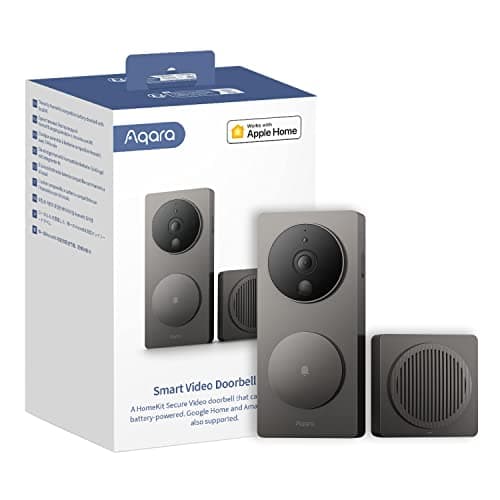
| Aqara Video Doorbell G4 | Battery or wired | Yes, doubles as the hub | Standard, HomeKit Secure Video | Local card in the chime, or iCloud+ |
|---|
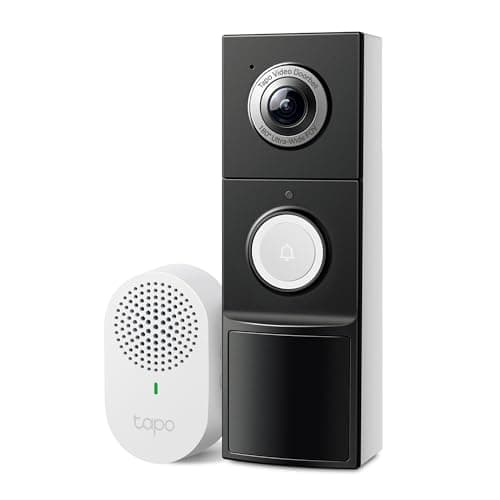
| TP-Link Tapo Video Doorbell | Battery or wired | Yes | 180° wide | Local card |
|---|
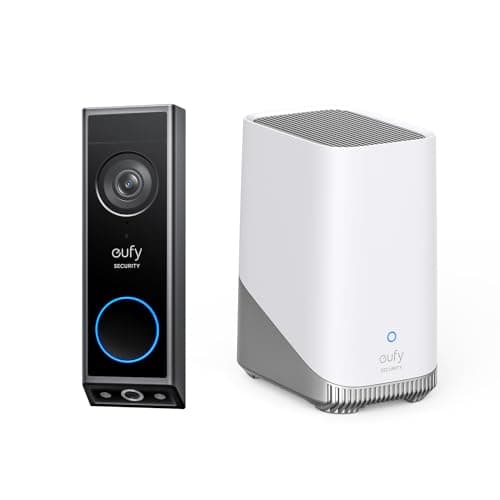
| eufy Video Doorbell E340 with HomeBase 3 | Rechargeable battery or wired | HomeBase included | Dual camera, doorstep view | HomeBase, no plan |
|---|
Wyze Wireless Video Doorbell Pro — the right shape for a corridor
The 1:1 aspect ratio is the whole argument. Most doorbells shoot a wide letterbox because they were designed to watch an approach; this one shoots a square, which in a narrow hallway means the frame is filled by the person at the door from head to feet rather than by the wall behind them. In a house that is a nice extra. In a corridor where the opposite wall is two paces away it is the difference between footage that identifies somebody and footage that shows the top of a head.
It is battery powered with a plug-in chime in the box, so the install is a bracket, a charge and a plug socket inside the flat. That is genuinely everything an apartment needs. The honest limitation is the running cost model: local recording works, but Wyze reserves some of its detection features for its Cam Plus plan, so the free experience is more basic than the marketing suggests. If you want the full picture on which doorbells gate what behind a plan, that is our doorbell subscription guide.
Aqara Video Doorbell G4 — the chime that is also the brain
The G4's chime is not a speaker, it is the system. It plugs into a socket inside your flat, holds the microSD card, does the recognition work and connects to your network, which means the doorbell outside your door is a battery camera and everything that stores or decides anything lives on your side of the door. For an apartment that arrangement is unusually neat: the exposed part is cheap to replace and holds nothing, and the valuable part is indoors.
It also runs battery or wired, does local face recognition on the chime rather than in somebody's cloud, and works with HomeKit Secure Video for anyone in the Apple ecosystem — which is why it wins the Apple category in our main doorbell roundup and has its own review here. It is 1080p where the rest of this page is 2K or better, so it is the least detailed image in the ranking. At corridor distances that matters far less than it would across a garden, which is precisely why it places this high on an apartment page and lower on a house one.
TP-Link Tapo Video Doorbell — the flexible install
Battery or wired, a chime in the box, 2K+, and local card storage with no plan for recording or playback. It is the doorbell to buy if you are not certain how long you are staying: battery for the flat you rent now, wired later if you move somewhere with a transformer, and no purchase wasted either way.
Its 180-degree field of view is the reason it does not win here. That is a genuinely good specification on a house, where it lets a single doorbell see the whole porch and the path; in a narrow corridor it spends most of its pixels on the wall opposite and distorts the edges of the frame where a neighbor's door usually sits. Wide is not free. If your entrance is a lobby or a wide shared landing rather than a tight corridor, that calculation flips and this becomes the strongest option on the page.
eufy Video Doorbell E340 with HomeBase 3 — local storage, no plan, at a price
A 2K dual-camera doorbell that ships with its own HomeBase 3, so recording, playback and alerts all work with nothing subscribed, ever. The dual camera gives a dedicated view of the doorstep as well as the person, which in an apartment is a parcel-shaped benefit: it sees what was left at the door as well as who left it.
Two apartment-specific caveats. It is the most expensive way onto this page, and a chunk of that price is the HomeBase, which is a piece of equipment you have to find a shelf and a socket for in a flat where both are scarce. And local storage means the footage lives in your home, which is a strength against a cloud subscription and a weakness if the box itself walks — less of a concern behind a locked apartment door than in a house, but worth naming. If subscription-free operation is the priority above all else, this is the pick, and the wider case is in our subscription-free doorbell roundup.
Mounting one without damaging anything
The install question in an apartment is almost always “what can I put up that comes down cleanly?” Three approaches cover nearly every case. The simplest is a heavy-duty adhesive mount on the door frame or the door itself — the doorbells here are light enough for it, but choose a mount rated well above the device weight, clean the surface with alcohol first, and expect a warm-weather adhesive to behave differently from a cold-corridor one. The second is a no-drill bracket that hooks over the top of the door or clamps to the frame, which is the most reversible option of all and the one to prefer if you expect to move.
The third is worth considering precisely because it is unglamorous: mount it just inside your own door frame, angled out, rather than on the corridor wall. It keeps the hardware entirely within your demise, avoids any argument about common parts, and in a narrow corridor loses you very little coverage. Whatever you choose, check your lease and your building rules before you fix anything to a shared surface — and check whether the building intercom already has a camera function you are about to duplicate.
The neighbor question
A doorbell in a corridor films a space other people use, and often films the door opposite. This is not a reason to skip one, but it is a reason to set it up deliberately. Trim the motion detection zones so the camera is not recording every trip to the bin store; most of these doorbells let you mask regions and set person-only detection, which cuts both the nuisance alerts and the amount of neighbor footage you are storing. Angle the device at your own threshold rather than down the length of the hallway. Consider turning off continuous audio recording if the app allows it separately, since audio in a shared corridor is more intrusive than video and less useful to you.
Local storage helps here too, for a reason that has nothing to do with money: footage of your neighbors sitting on a card in your flat is a smaller commitment than the same footage sitting on a company's servers indefinitely. That argument runs through everything on this site, and it is set out in full in our local storage versus cloud guide.