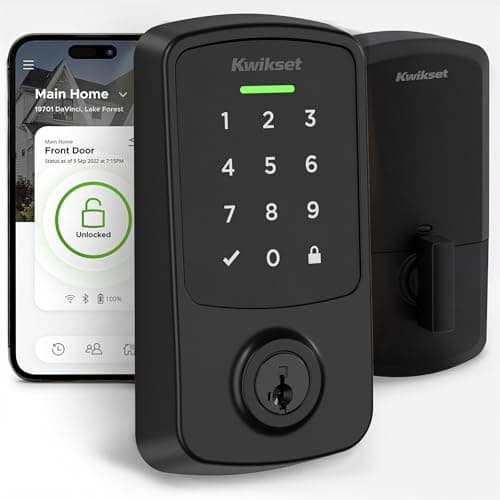
The best Matter smart lock is the Kwikset Aura Reach (Matter over Thread)— native Matter over Thread in a deadbolt that also publishes an ANSI/BHMA Grade 2 certification, which is a pairing almost nothing else in this category manages. The cheapest honest way in is the ULTRALOQ Bolt SE (Matter over Thread), which ships in Matter mode and still has a fingerprint reader.
What actually makes a lock a Matter smart lock
Matter is a standard for how a device and a smart home controller talk to each other. A Matter lock is one that speaks it, which in theory means you can add it to Apple Home, Google Home, Alexa, SmartThings or Home Assistant without any of them needing a brand-specific integration, and share it with more than one of them at once. That is a genuinely valuable property and it is why the badge is on so many boxes.
The word does a lot of work, though, and it hides two things buyers keep discovering afterward. The first is that “Matter” says nothing about how the lock is reached. Almost every Matter lock uses Thread, a low-power mesh radio, which means it needs a Thread border router in the house before it can join anything. The second is that Matter defines far more for locks than any controller currently shows you, so the app you were promised freedom from is usually still where the codes and the fingerprints live.
So this page does not rank on which lock has the badge — all five do. It ranks on how each one implements it: whether Matter is the lock's own radio or a card fitted into it, what you still need to buy before the badge does anything, and what survives the trip into your controller. If you want the protocol explained before the products, our plain-English guide to Matter and Thread is the shorter route.
The five Matter locks, side by side
Compiled from manufacturer product pages and support documentation, September 2026.| Model | Matter class | Radio | Published door grade | Ways in |
|---|
| Kwikset Aura Reach | Native | Matter over Thread + Bluetooth | ANSI/BHMA Grade 2 | Keypad, app, key, geofence auto-unlock |
|---|
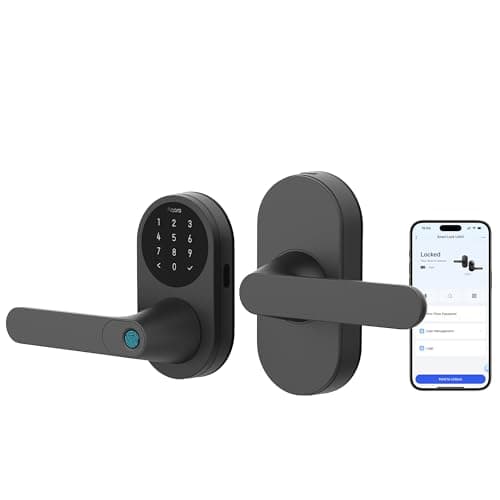
| Aqara Smart Lock U300 | Native | Matter over Thread | None published | Fingerprint, keypad, PIN, Apple Home Key, key |
|---|
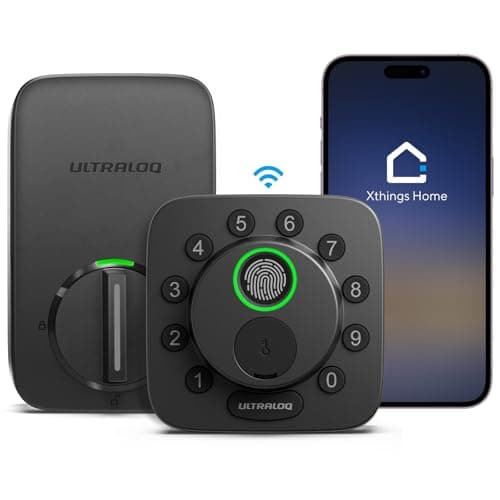
| ULTRALOQ Bolt SE | Native, mode-switchable | Matter over Thread or Wi-Fi | None published for this model | Fingerprint, keypad, app, watch, key |
|---|
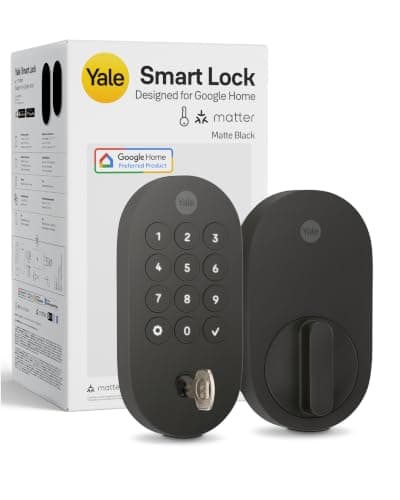
| Yale Assure Lock 2 with Matter | Module | Thread via Yale Smart Module, Bluetooth fallback | None published for this configuration | Keypad, app, key |
|---|
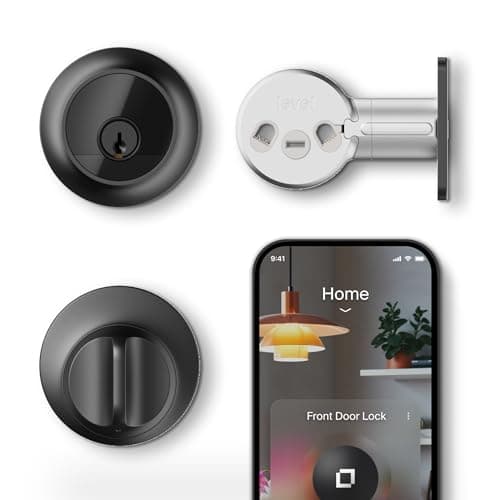
| Level Lock Pro | Native | Matter over Thread | None published | Apple Home Key, NFC fobs, app, key |
|---|
Native Matter against a Matter module
Four of these locks have a Matter radio inside them. The Yale does not: it is a lock body with a slot, and the connectivity lives on a card you drop into the battery compartment. Yale sells that slot filled with Wi-Fi, with Z-Wave, or with Matter, and the module is swappable after purchase.
Both designs are defensible and the trade is clean. The module is a hedge — if the standard moves somewhere you do not want to follow, or if the radio is the part that fails, you replace a card rather than the door hardware. That is a real argument, and it is the reason the Yale is on this page at all. The cost is that Matter is one more component with its own firmware, so “the lock will not pair” has an extra possible cause, and it is genuinely easy to buy an Assure Lock 2 with the wrong module fitted because the lock body looks identical either way.
A native Matter lock has no such ambiguity: the box either is a Matter device or it is not. The exception on this page is the ULTRALOQ, which is one SKU with two personalities — it ships in Matter-over-Thread mode and can be switched to Wi-Fi in the app. That is flexibility rather than a module, but it has the same practical consequence, which is that reviews and forum advice about “the Bolt SE” are often describing the mode you are not running.
What your controller actually shows you
This is the part that generates the support tickets. The Matter specification's door lock cluster is large. It defines lock and unlock commands, a lock-state attribute, and credential management covering PIN codes, RFID, fingerprint and even face credentials, plus users and access schedules. On paper, a Matter lock could be managed entirely from your controller.
In practice, what you get is whatever your controller chose to implement, and that is a much shorter list. Support for setting PIN codes over Matter varies substantially between platforms — Apple Home is currently the most complete of the mainstream controllers and will prompt to set an access code the first time you open a compatible lock's details. Fingerprint enrollment, in every case here, still happens at the lock or in the manufacturer's app, because you have to physically present the finger.
Expect to keep the vendor app.On all five of these locks, at least some of what you bought — guest schedules, fingerprint enrollment, auto-unlock behavior, firmware updates — is managed in the manufacturer's app. Matter buys you a lock that any platform can operate and share. It does not, today, buy you a lock you can fully administer from that platform.
That is not a reason to avoid Matter. It is a reason to buy it for what it does deliver: local control, multi-admin sharing across households that carry different phones, and independence from a manufacturer integration that can be withdrawn. The lock keeps working when the vendor's cloud does not, which is the same structural argument we make about hardware throughout this site.
The Thread border router is the purchase nobody mentions
Every lock on this page reaches Matter over Thread, and Thread is a mesh that needs a border router to connect to the rest of your network. Without one, a Matter lock is a Bluetooth lock: it works at the door, from a phone, in the manufacturer's app, and nothing else.
The good news is that you may already own one. A HomePod, a HomePod mini, a recent Apple TV, several Nest and Echo devices, and various SmartThings and Aqara hubs include a Thread border router. The bad news is that the packaging on these locks rarely says the word “required” in a font anyone reads. Check what you own before you order, and if the answer is nothing, which hub to buy for a security build works through the options and what each one covers.
There is one wrinkle worth knowing. Recent iPhones include a Thread radio and can commission a Matter device directly, which makes setup look like it worked without a hub. It did — but a phone that leaves the house is not a border router, and the lock will go unreachable when it does. ULTRALOQ says as much: a border router is still recommended for proper operation. If you want the wider protocol comparison, Z-Wave against Zigbee against Matter covers where Thread sits among the alternatives. And if the reason you are looking at Thread is simply that you do not want the lock on your Wi-Fi, the broader shortlist — including Z-Wave locks and deadbolts with no radio at all, which no page here can include by definition — is ranked in the best smart locks that work without Wi-Fi.
Matter does not make a lock secure
Matter is a communications standard. It says nothing about how hard the bolt is to defeat, how the cylinder resists picking, or how the lock behaves when someone leans on the door. That is what ANSI/BHMA grading covers, and it is measured by an entirely different set of people.
It is worth noticing which locks on this page publish a grade. Kwikset states ANSI/BHMA Grade 2 for the Aura Reach. ULTRALOQ references BHMA and ANSI in general terms without publishing a grade for the Bolt SE. Aqara and Level publish no grade we could find for these models. That is not an accusation — grading is voluntary and expensive, and a lock without a published grade is not automatically weak. But if a published, independently defined rating is part of how you buy, it narrows this page to one product, and that is worth knowing before the protocol conversation starts.
The other thing Matter will not do is make a lock fit. Backset, bore diameter, door thickness and whether you have a deadbolt at all decide more returns in this category than any radio does — the Aqara here is a lever handle set rather than a deadbolt, which is a genuine difference in what it secures. Measure first; will a smart lock fit my door is the checklist.
Where this page stops
Matter is not the only reason to buy a lock, and a few adjacent questions have their own pages. If tap-to-unlock with an iPhone is the actual requirement, that is a narrower field than Matter and it is ranked in the best Apple Home Key smart locks. If the destination is Home Assistant specifically, the integration class matters more than the badge and that is ranked in the best smart locks for Home Assistant.
And whichever lock you buy, it reports that the bolt moved — not that the door was shut when it did. A contact sensor on the same frame closes that gap for the price of a coffee, and the rankings are in the best door and window sensors. The rest of the lock field starts at the smart locks hub, and the rubric behind every score here is published at how we pick.
How to choose a Matter smart lock
Four questions, in this order. The first one eliminates more of this category than the other three combined.
1. Do you have a Thread border router?
If yes, every lock on this page is available to you. If no, you are buying two things, not one, and the hub should be in the budget from the start. Do not let a successful phone-based setup convince you otherwise — commissioning a lock is not the same as keeping it reachable.
2. Deadbolt or handle?
On a front door, the deadbolt is what secures it, and four of these five replace one. The Aqara U300 is a lever handle set, which makes it a strong choice for an interior door, a garage-to-house door or an office, and the wrong choice if the deadbolt was the thing you meant to upgrade.
3. Who needs to get in, and how?
Count the people and the methods honestly. A cleaner or a dog walker needs a code. A child without a phone needs a code or a fob. A guest for one weekend needs something you can revoke. The Level Lock Pro has no keypad in the box, which is a real constraint dressed as a design decision; the Aqara and the ULTRALOQ have the widest sets on this page.
4. Does a published door grade matter to you?
If it does, the Kwikset is the only lock here that publishes one. If it does not, say so to yourself deliberately rather than by omission — it is the one specification in this category that an outside body verified.
What decides the price
The spread on this page is wide, and Matter itself is not what moves it. Three things do. The first is the reader: a fingerprint sensor and a touchscreen keypad cost real money, which is why the two locks with the most ways in sit in the middle of the range rather than the bottom. The second is the door hardware and its certification — a graded, rekeyable cylinder is a manufacturing and testing cost, not a firmware feature. The third, at the top of the range, is industrial design: the Level Lock Pro is expensive because the electronics are hidden inside the bolt and it reads as an ordinary deadbolt from both sides, which is a legitimate thing to want and a poor value per feature.
What does not move the price much is the badge. Matter certification is now cheap enough to appear on a sub-hundred-dollar lock, which is why the least expensive product here is also natively Matter over Thread.
The mistake buyers make
They read Matter as “works with everything, out of the box.” It means any Matter controller can operate and share the lock. It does not mean every feature crosses over, and it does not mean no hub. Both of those disappointments arrive in the first hour and both are avoidable by reading one sentence on the box.
They buy the wrong variant. This category is unusually bad for it. Yale sells the same lock body with three different radios. ULTRALOQ sells one lock with two connectivity modes. Aqara sells a U-series lock in deadbolt and lever versions. Confirm the exact configuration in the listing title before ordering, not the product family.
They let the protocol decide a hardware purchase. Matter is a good reason to prefer one lock over another when the locks are otherwise comparable. It is not a reason to put a lever set where a deadbolt belongs, or to skip a published grade, or to buy a lock nobody in the house can open without a phone. The radio is the part you will think about least after week one.
Two of the brands here take opposite approaches to the radio — a swappable module against one switched in software — and that difference outlives the Matter question entirely. Ultraloq vs Yale is that head-to-head.