HUB 06 · Guides
How to Secure a Garage Door
Most houses defend the front door and leave a second, larger, less-watched door on the same elevation. The garage has four separate weaknesses and three of them are free to fix.
We earn a commission if you buy through our links. It does not change the price you pay, and it does not decide our picks — our selection criteria are published in full. How this works.
Verdict
The bottom line
Fix four things, in this order. First, the emergency release cord: on many installations it can be reached from outside through the gap at the top of the door with a hooked wire, which disengages the opener and lets the door be lifted by hand. A simple shield over the release mechanism, or shortening the cord so it cannot be fished, closes it — but do not permanently disable the release, because you need it to open the door in a power cut. Second, the service door at the side: it is usually the cheapest door on the house and often has a latch rather than a deadbolt. Third, the opener's code: modern openers use a rolling code, but a pre-1990s fixed-code unit can be captured, and that is a reason to replace an opener rather than secure it. Fourth, the door from the garage into the house — the one most people leave unlocked, which is also code-regulated, so what you may fit to it is constrained. Then, and only then, add a sensor that tells you the door is open, because the actual garage failure mode is not a break-in: it is a door left up all night.
A garage is a security problem with its own rules. It is the largest opening in the building, it is usually on the street elevation, it is rarely covered by a camera, and once somebody is inside it they are out of sight of the road and standing next to a door into your house that is very often unlocked. None of the four fixes below needs a smart home, and three of them are free or nearly so.
1. The emergency release
Every residential opener has a manual release — the red cord hanging from the trolley — so you can disconnect the door from the motor and lift it by hand when the power is out. It is a safety feature and it is not optional.
It is also, on a lot of installations, reachable from outside. Where the door sits slightly proud at the top, or where a weather seal has perished, a gap opens up that is enough to pass a stiff hooked wire through and catch the cord. Pull it and the door is free of the opener, at which point it lifts.
Three proportionate fixes. Fit a shield — a plate or cover over the release lever that a hook cannot engage, sold for exactly this purpose. Shorten the cord so the handle sits too high to be fished, as long as an adult standing in the garage can still reach it. Or close the gap: a new top weather seal is a twenty-minute job and fixes a draught too. What not to do is zip-tie or bolt the release shut permanently. The one night you need it will be the night the power is out, and in a fire a garage you cannot open by hand is a genuinely dangerous thing.
Never defeat the safety systems. US residential openers made since 1 January 1993 are required to have secondary entrapment protection — photo eyes across the opening, or an edge sensor — under UL 325, following the Consumer Product Safety Improvement Act of 1990. Those sensors are a backstop against a closing door, not a reason to close a door you cannot see; do not tape, bypass or realign them to make a stubborn door behave. If the eyes are triggering, fix the alignment or the obstruction.
2. The service door, and the windows
The side or rear personnel door into the garage is usually the lowest-specification door on the property: a thin slab, a cylinder nobody has ever thought about, and in plenty of houses a sprung latch instead of a deadbolt. It is also the least overlooked door you own. Treat it like a front door: a deadbolt with a decent throw, a reinforced strike plate, and 3-inch screws into the framing behind the jamb. The method is identical to our front door guide and the cost is a box of screws.
Garage windows deserve one sentence each. If a window lets someone see whether a car is inside, frost it or cover it — an empty garage advertises an empty house. If a window opens, it needs the same treatment as any other ground-floor opening, which is in our window guide.
3. The opener and its code
Openers made in the last couple of decades use a rolling code: the remote and the opener agree a new code on every press, so capturing one transmission does not give an attacker a reusable key. Openers from before that generation used a fixed code set by DIP switches, and a fixed code can be captured and replayed, or brute-forced through a small keyspace. If your opener is that old, no amount of hardening around it helps — replacing the opener is the fix, and it buys you the required safety sensors as well.
Two habits worth more than any hardware. Do not leave the remote clipped to a visor in a car parked on the driveway, which is a key to your house in an unlocked box. And use the opener's vacation or lock mode when you are away — most units have one, it disables the remotes entirely, and almost nobody knows it is there.
Adding a smart controller to the opener changes who can open the door, which is a governance question rather than a hardware one: a controller tied to a vendor cloud can lose integrations or change terms after you have bought it. That is ranked explicitly in our smart garage door opener roundup, which is also where the Matter and local-control options are.
4. The door into the house, which is the one that matters
If somebody is in your garage, the garage is not the target. This door is, and it is the door most households leave unlocked because it feels internal. It is not internal; it is an exterior door with a roof over it.
It is also regulated, which changes your options. Under the International Residential Code (R302.5.1) the opening between a garage and the dwelling has to be a solid wood door, a solid or honeycomb-core steel door at least 1⅜ inches thick, or a 20-minute fire-rated assembly, and it must be self-closing and self-latching. Two consequences for anyone fitting hardware: a listed fire door drilled beyond what the manufacturer permits can have its listing voided, and a self-closing door needs a lock that engages reliably every time it swings shut rather than one you remember to throw. The hardware that fits, including the no-drill retrofit option, is ranked in our garage entry door roundup.
The practical version: lock it, every time, and fit something that locks itself if nobody in the house will remember. Auto-lock on a timer is the single most useful smart-lock feature in this specific position.
Where a sensor earns its place
Here is the honest statistic about garages that nobody sells hardware against: the usual incident is not a forced entry, it is a door left open. Left up for an afternoon, or overnight, or for the weekend, because the car pulled away before the door finished closing and nobody looked back.
A sensor fixes that and nothing else does. The arrangements that work:
- A door-position sensor with a left-open timer. Tells you the big door has been open for fifteen minutes, which is the alert that actually changes behavior. Some smart controllers include a real position sensor in the box; several do not and infer the state, which is not the same thing.
- A contact sensor on the service door. Cheap, adhesive-mounted, and it covers the door most likely to be used. One that sounds its own alarm is useful out in a garage where a phone notification may not be seen.
- A long-range sensor for a detached garage. Zigbee, Thread and Wi-Fi do not reliably cross a yard and a brick wall. LoRa does, which is the whole reason that technology is in our registry at all. The sensor field generally is in our door and window sensor roundup, and the Alexa-specific paths are in our Alexa sensor roundup.
A camera is the layer after that, and in a garage it is mostly useful pointed at the interior rather than the driveway — the car, the bikes and the tools are the things being taken. Cameras for outbuildings, including the no-mains and no-Wi-Fi cases, are in our shed and barn roundup.
The order to work in
- Stand outside and look at the top of the closed door. If you can see daylight or a gap big enough for a wire, the emergency release is the first job. Shield it or shorten the cord — never disable it.
- Check the service door's lock and screws. Deadbolt, reinforced strike, 3-inch screws. Same job as the front door, usually never done.
- Find out how old the opener is. Fixed-code DIP switches mean replace, not harden. While you are there, find the vacation or lock mode in the manual.
- Lock the door into the house. And check it is the code-compliant kind of door before you fit anything to it.
- Add a position sensor with a left-open alert. This is the one that pays for itself, because it addresses what actually goes wrong.
- Then cover the inside with a camera if the contents justify it. Bikes, tools and a car are worth more than most people insure them for.
What this costs
The first four items are a hardware-store trip: a release shield, a strike plate, long screws, and reading a manual. Nothing recurring, nothing to charge, nothing that stops working when a company changes its terms. A contact sensor is the price of a takeaway. A smart controller for the opener is the most expensive item and the one that buys convenience rather than security — worth having, but after the four above, not instead of them. None of the hardware below charges a subscription for its core function.
The mistake people make
Treating the garage as storage rather than as part of the house. The door into the kitchen is an exterior door, the service door is an exterior door, and the big door is the largest opening in the building. Secure them in that order of consequence — and if you only do one thing after reading this, go and check whether the door from the garage into your house is locked right now.
The hardware
The hardware this guide is about
The products this guide refers to, with prices pulled live from Amazon and dated on every card. Full rankings live in the roundups linked above.
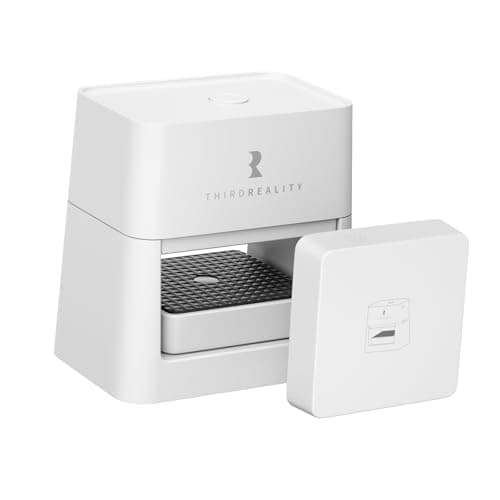
Best smart garage door opener
THIRDREALITY Smart Garage Door Opener (Matter)
The only controller here that is both Matter certified and ships a real door-position sensor. It drives the door through the existing remote interface rather than the motor wiring, so a brand-specific security system has nothing to block.
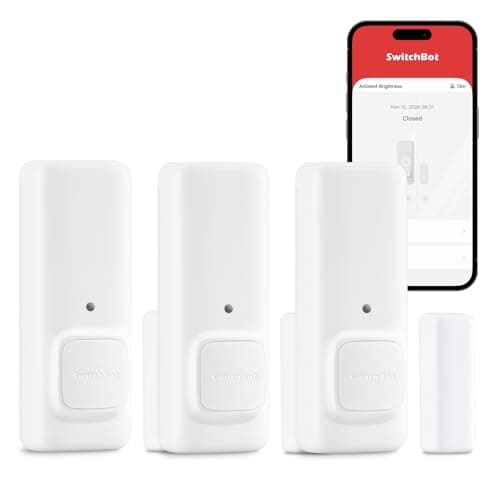
Best standalone alarm sensor
SwitchBot Contact Sensor
A contact sensor with a built-in motion detector and its own audible alert, so it does something useful before you have bought a hub or picked an ecosystem.
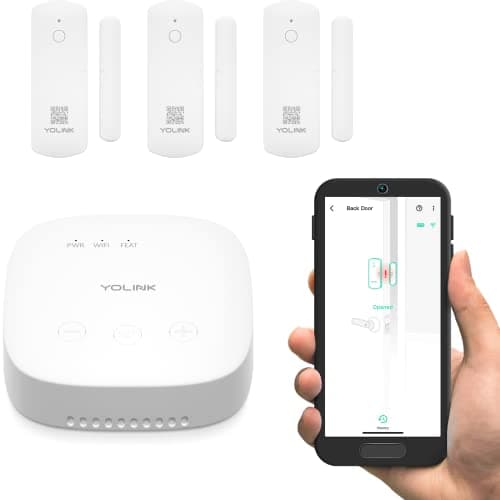
Best long range
YoLink LoRa Door Sensor Starter Kit
For the outbuilding. LoRa radio gives quarter-mile open-air range, which is the only technology here that reaches a detached garage, a barn or a gate at the end of a drive.
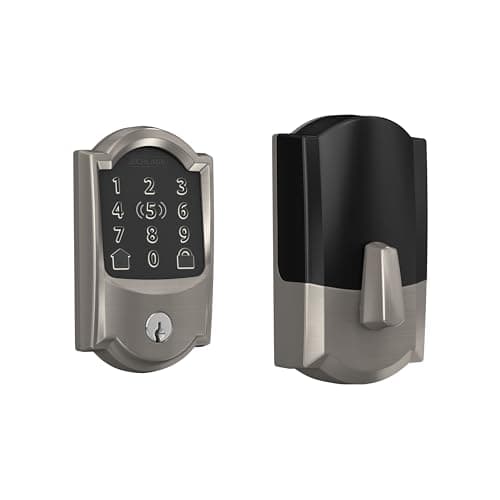
Best build quality
Schlage Encode Plus Wi-Fi Deadbolt
The one with the strongest published hardware pedigree. Schlage's deadbolt line is the reference point for BHMA Grade 1 in residential locks, and the Plus adds Apple Home Key so you tap a phone or watch instead of typing.
#ad · As an Amazon Associate we earn from qualifying purchases.
Questions
Frequently asked
Can someone break into my garage through the emergency release?
Should I lock the door between my garage and my house?
Are garage door openers easy to hack?
What is the best sensor for a garage door?
Is it safe to put a padlock on the garage door track?
Keep reading
Related
- Best smart locks for garage entry doorsThe code-regulated door into the house, and what may be fitted to it.
- Best smart garage door openersControllers ranked on who the door answers to.
- How to secure your front doorThe strike plate and screw method, which the service door needs too.
- How to secure windows from break-insGarage windows get the same treatment as any ground-floor opening.
Receipts
Sources
- DASMA — UL 325 secondary entrapment protection required on US residential openers manufactured since 1 January 1993 (Consumer Product Safety Improvement Act of 1990)
- International Code Council — IRC R302.5.1, openings between a private garage and the dwelling
- THIRDREALITY — Matter smart garage door opener documentation and included sensors
- YoLink — LoRa range statement and door-left-open alert documentation
We do not run a testing lab and we do not pretend to. Specifications come from the manufacturer's own published documents and from published standards; prices come from the live Amazon API. Where a figure is not published, the page says “not published” rather than guessing. Read the full method.