HUB 06 · Guides
What ANSI/BHMA Grades Mean for Smart Locks
There are two grading systems, they use different symbols, and neither of them tests the part of a smart lock that is smart. Here is what each one certifies, and how to check whether a grade on a box is real.
We earn a commission if you buy through our links. It does not change the price you pay, and it does not decide our picks — our selection criteria are published in full. How this works.
Verdict
The bottom line
There are two systems and they are not the same scale. Grade 1, 2 and 3 come from ANSI/BHMA A156.36, the auxiliary locks standard that covers deadbolts; BHMA states that a product must meet all the criteria for its grade in each of five test classifications — operational, cycle, strength, security and finish. The letter grades, up to AAA, come from BHMA's residential standards (A156.39 for locksets, A156.40 for deadbolts), which grade three things separately — security, durability and finish — so AAA means a top mark in all three rather than one overall score. The thing to understand before you shop on either: certification is voluntary, it covers the mechanical lock, and it does not test the radio, the app, the cloud or the keypad's resistance to anything digital. And a grade is only verifiable if the product is listed in BHMA's Certified Products Directory, which most smart locks are not. That is why our product entries keep saying “no published grade” rather than guessing.
“ANSI Grade 1” is the most-quoted specification in door hardware and one of the least understood. The confusion is not the buyer's fault: there are two grading systems in use, they look like they should map onto each other, and the trade press publishes conflicting numbers for both. This page sorts out what is actually published, and says clearly where we will not print a figure.
System one: Grade 1, 2 and 3
These come from the commercial-lineage standards, and for a deadbolt the relevant one is ANSI/BHMA A156.36, Auxiliary Locks. BHMA's own description of its scope is that the standard “establishes requirements for Auxiliary Locks” and “includes dimensional criteria and five classifications of tests: operational, cycle, strength, security and finish.”
The grading rule is stricter than most people assume, and it is worth quoting because it is the part that gets lost. The standard says manufacturers shall indicate the grade level to which their product is certified, that products shall meet all grade requirements for the listed tests, and that “a Grade 1 product shall meet all Grade 1 criteria, a Grade 2 product shall meet all Grade 2 criteria, and a Grade 3 product shall meet all Grade 3 criteria in each classification.”
In other words a grade is not an average. A lock cannot be strong but short-lived and still be Grade 1; it has to clear the Grade 1 bar in operational, cycle, strength, security and finish. Roughly, Grade 1 is the commercial-duty tier, Grade 2 is the tier most residential front doors are specified at, and Grade 3 is the lightest.
Why we do not print cycle counts and hammer-blow figures. You will find tables across the web giving exact cycle counts and numbers of impacts per grade. They do not agree with each other, and the authoritative text is the standard itself, which is a paid document. Rather than copy one secondary source and present it as certified fact, we state the test classifications BHMA publishes and tell you where to verify a specific product's grade. A figure we cannot check is not better than no figure.
System two: the residential letters, up to AAA
In the 2010s BHMA published a separate residential family of standards so that house hardware was not being judged against commercial-duty criteria: ANSI/BHMA A156.39, Residential Locksets & Latches and ANSI/BHMA A156.40, Residential Deadbolts. These grade a product in three categories — security, durability and finish — on a letter scale where A is the highest. A lock marked AAA has earned the top letter in all three. Certified products carry BHMA's Certified Secure Home label on the retail packaging.
Two consequences worth holding onto. First, because the three categories are graded separately, you can shop on the one you care about: a lock that is A for security and B for finish is a perfectly rational buy for a front door, and a better buy than paying for a finish grade you will never notice. Second, the residential letters do not convert into the numeric grades. An A in residential security is not “the same as” Grade 1, and anyone telling you the exchange rate is guessing.
The part that matters most for a smart lock
Neither system tests the smart half. Both are door-hardware standards: they test the bolt, the cylinder, the housing, the finish and the mechanical cycles. There is no grade in either system for the strength of the Wi-Fi pairing, the quality of the manufacturer's cloud, whether the app has had a disclosed breach, how a keypad resists someone reading the worn digits, or what happens to the lock when the vendor stops supporting it.
That is not a criticism of the standards — they are doing the job they were written for — but it changes how you should read a box. A Grade 1 or AAA smart lock is a well-made piece of door hardware with electronics attached, and the electronics are ungraded. The digital side has to be assessed separately, and we do that in our smart lock safety guide and, sorted by where an attacker has to be standing, in our protocol risk guide.
How to check whether a grade claim is real
This is the practical skill this page exists to teach, and it takes about a minute.
- Look for the standard number, not just the grade. “ANSI/BHMA A156.40 Grade AAA” is a checkable claim. “Grade 1 security” on its own, with no standard named, is marketing copy.
- Check BHMA's Certified Products Directory. BHMA publishes a directory of certified products, and a product that is not listed in it is not certified under the program — whatever the box says. Certification is voluntary and requires independent laboratory testing; manufacturers do not have to be BHMA members to do it.
- Check the exact model, not the product line. Brands certify specific SKUs. A grade earned by the mechanical version of a lock does not automatically transfer to the smart version of it, because the housing and the internals differ.
- Treat silence as information. A manufacturer that has paid for certification advertises it. When a listing references standards bodies in general terms without naming a grade — which several smart lock brands do — the honest reading is that there is no grade to quote.
Why most smart locks carry no grade
Three reasons, and none of them is a conspiracy. Certification costs money per model and smart lock lines turn over fast, so a brand shipping a new model every eighteen months has less incentive to certify than one selling the same deadbolt for a decade. Many of the cheapest keyless locks are made by small brands on shared platforms, where nobody in the chain is paying for independent lab testing. And the newest designs — retrofits that clamp over an existing thumbturn, locks for sliding patio doors — are not the product the standards were written around, so there is often no applicable grade at all.
That last case is the honest one to understand. A retrofit lock is a motor attached to somebody else's deadbolt: whatever grade applies belongs to the deadbolt underneath, not to the motor. If a published grade is important to you, a retrofit cannot give you one, and the field is in our no-drilling roundup with that stated. Sliding patio door locks are the same story and worse — the mortise cases they fit have no equivalent residential grade, which our sliding door roundup says explicitly rather than implying one.
How much should a grade move your decision?
Less than the frame does, and this is the part no hardware brand will tell you. A Grade 1 deadbolt bolted into a jamb held by three half-inch screws fails at the jamb, exactly like a Grade 3 one — the grade describes the lock, and the failure is in the woodwork. Fix that first; it is ten minutes and a box of long screws, and it is laid out in our front door guide.
After that, a published grade is a genuine signal and worth paying something for, because it means an independent lab tested the thing and the brand was confident enough to publish the result. Just hold it in proportion: it tells you about the metal. It tells you nothing about whether the app will still exist in 2031.
What to do with this when you are shopping
- Decide whether a grade is actually one of your requirements. If you want a retrofit, or a lock for a patio slider, it cannot be — no grade applies to those designs. Knowing that up front saves you looking for something that is not there.
- Prefer a named standard and a named grade. A156.36 with a numeric grade, or A156.39 / A156.40 with letters. Anything else is a word, not a certification.
- Shop the residential letters by category. Security is the one that matters on a front door. Paying up for a higher finish grade is paying for how the brass looks in five years, which is a legitimate thing to want and not a security upgrade.
- Verify in the directory before you pay a premium for a grade. One search of BHMA's Certified Products Directory, on the exact model number.
- Assess the electronics separately. Grades stop at the metal. For the digital half, look at whether codes are verified inside the lock, whether remote access needs a vendor cloud, and the brand's disclosure history — our safety guide is the checklist.
- Fix the frame either way. It outranks the grade, and it costs almost nothing.
What a grade adds to the price
Certification is a per-model cost to the manufacturer, and the locks that carry a published grade tend to be the ones from long-established door hardware brands at the upper end of the price band. That correlation is real but it is not causation: you are paying for heavier castings, a better cylinder and a longer product life, and the grade is the evidence rather than the product. At the bottom of the market the absence of a grade is usually an absence of testing, not proof of a bad lock — the cheapest keyless deadbolts we rank work fine and we say plainly that nobody has independently graded them. The full field, with grade status recorded per product, is in our main roundup, and the budget end in our budget roundup.
The mistake this page exists to prevent
Treating a grade as an overall quality score for a smart lock. It is a mechanical certification with a defined scope, awarded per model, verifiable in a public directory, and silent on everything digital. Read it for what it covers, check it where it is claimed, and decide the rest on the lock's own documented behavior. The whole category sits at the smart locks hub, and how to choose across all of it is in our lock buying guide.
The hardware
The hardware this guide is about
The products this guide refers to, with prices pulled live from Amazon and dated on every card. Full rankings live in the roundups linked above.
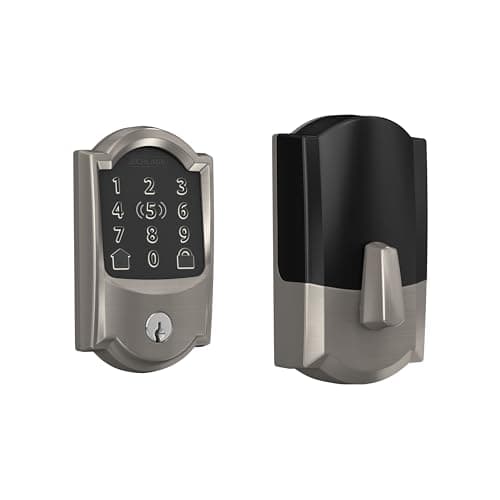
Best build quality
Schlage Encode Plus Wi-Fi Deadbolt
The one with the strongest published hardware pedigree. Schlage's deadbolt line is the reference point for BHMA Grade 1 in residential locks, and the Plus adds Apple Home Key so you tap a phone or watch instead of typing.
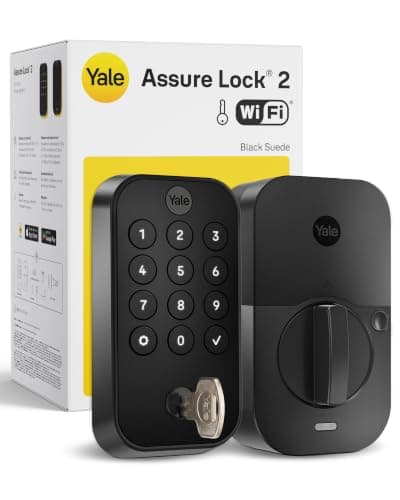
Best overall smart lock
Yale Assure Lock 2 (Wi-Fi, keyed)
The modular one. Yale sells the same lock body in keyed and key-free, touchscreen and keypad, with the radio as a swappable module — so you buy the connectivity you want instead of the connectivity that shipped.
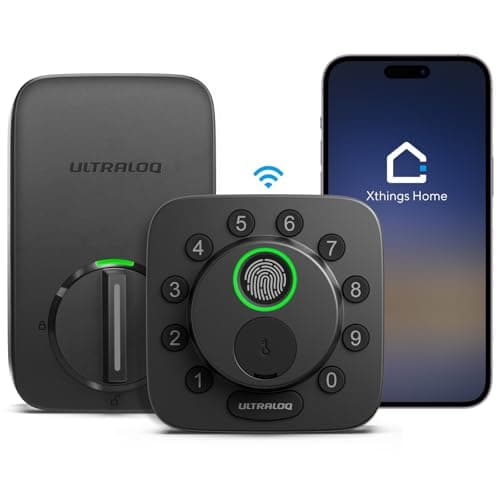
Cheapest way into Matter
ULTRALOQ Bolt SE (Matter over Thread)
The cheapest genuine route into Matter, and it still has a fingerprint reader. One box, two personalities: ULTRALOQ ships it in Matter-over-Thread mode and lets you switch it to Wi-Fi in the app.
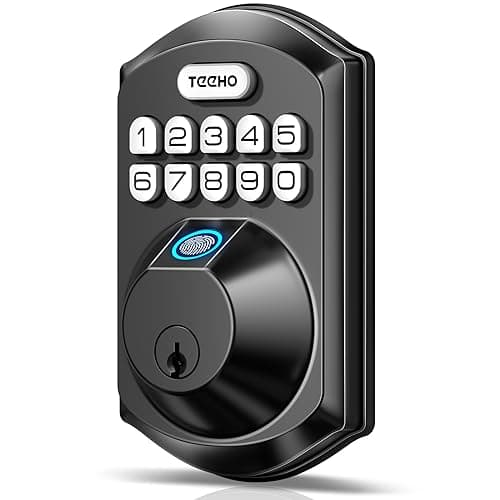
Best cheap keyless deadbolt
TEEHO TE002 Fingerprint Deadbolt
A fingerprint and keypad deadbolt at a fraction of the branded price, with no radio at all — which is exactly why it is cheap, and also why nothing about it can be remotely attacked.
#ad · As an Amazon Associate we earn from qualifying purchases.
Questions
Frequently asked
Is ANSI Grade 1 or Grade 2 better for a house?
What does BHMA Grade AAA mean?
Do ANSI/BHMA grades test the electronics in a smart lock?
How do I check whether a lock really has the grade it claims?
Why do so many smart locks have no grade at all?
Does a grade matter more than the door frame?
Keep reading
Related
- Best smart locks overallThe field ranked, with grade status recorded per product.
- How to secure your front doorThe frame work that outranks any grade on the box.
- Are smart locks safe?The half of a smart lock that no grade covers.
- How to choose a smart lockWhere grade sits among the specifications that actually decide it.
Receipts
Sources
- BHMA — ANSI/BHMA A156.36 Auxiliary Locks: scope, five test classifications and grade criteria
- BHMA — Certified Products Directory and the BHMA Certified mark
- Locksmith Ledger — ANSI/BHMA publishes its first two residential standards (A156.39 and A156.40)
- Locksmith Ledger — BHMA Certified Secure Home label and the residential grading categories
- Construction Canada — how the residential standards grade security, durability and finish separately
We do not run a testing lab and we do not pretend to. Specifications come from the manufacturer's own published documents and from published standards; prices come from the live Amazon API. Where a figure is not published, the page says “not published” rather than guessing. Read the full method.