These two brands sit next to each other in every search result and solve different problems. The confusion is understandable: both sell contact sensors, both sell motion sensors, both sell smart locks, both sell a hub, and both position themselves as the affordable alternative to a monitored alarm. The difference that matters is architectural, it is published by both companies, and once you see it the choice stops being a brand preference.
Where the radio lives
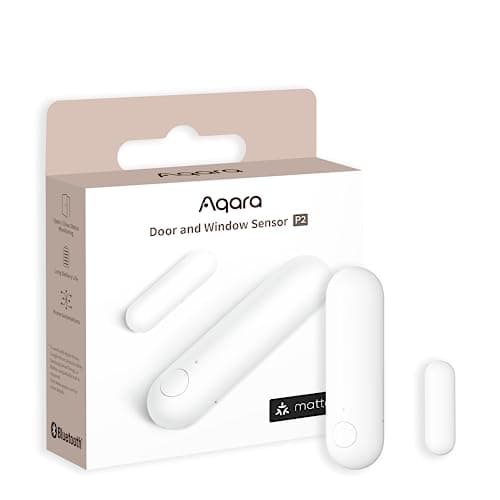
Aqara's devices carry a mesh radio. The older and cheaper range is Zigbee 3.0, which needs an Aqara hub to join; the newer range — the Door and Window Sensor P2 is the one this site ranks first — is Matter over Thread, which joins a Matter fabric directly through any Thread border router you already own, with no Aqara hub and no Aqara account in the path at all. Either way the sensor is a full member of a local network that exists in your house.
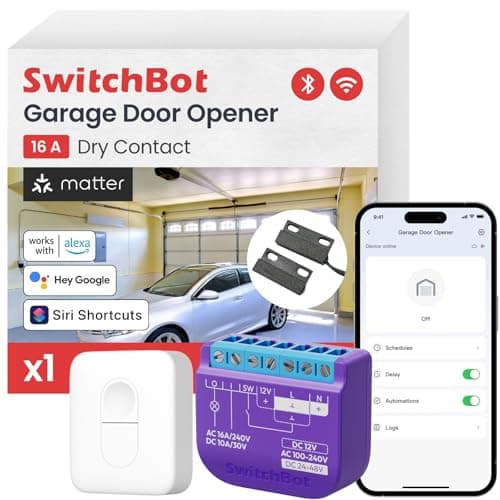
SwitchBot's devices are Bluetooth. That is a deliberate choice — it is cheap, it sips power and it lets a device work straight out of the box with a phone next to it — and it has one consequence: Bluetooth does not reach the rest of your house, so anything beyond standing-next-to-it range goes through a SwitchBot hub, which bridges Bluetooth to Wi-Fi. SwitchBot also publishes Matter support through that hub for a specific, named list of device types rather than for everything it sells. The exception is worth knowing because it is the brand's better engineering: its mains-powered controllers, the Matter-certified garage opener among them, carry Wi-Fi and Matter in the device and need no SwitchBot hub at all. The pattern is that anything running on a battery is Bluetooth and anything plugged into the wall may not be. A bridge is one more box to power, one more point of failure, and a translation layer between your device and your platform.
Neither brand charges a subscription for its core functions, which is why both appear repeatedly in this site's rankings. The comparison is about architecture, not about recurring cost. Protocol by protocol, the mechanism is in Z-Wave vs Zigbee vs Matter.
The two hubs are not the same kind of product
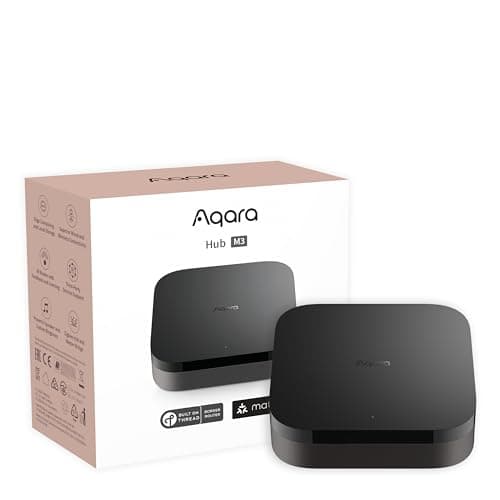
This is the single most misread line item when people compare these brands on price. The Aqara Hub M3 is a protocol hub: a Zigbee coordinator for Aqara's mesh devices, a Thread border router for its Thread ones, a Matter controller that can expose the lot to Apple Home, Google Home, Alexa or SmartThings, with an Ethernet and PoE option and automations that execute on the box. Unplug your router and those automations keep firing, because the logic is in the house.
A SwitchBot hub is a bridge. Its job is to put Bluetooth devices onto the network and to present the supported ones to a Matter platform; it is also an infrared blaster, which is a genuinely useful trick for old air conditioners and televisions that have no smart anything. What it is not is a place where your automation logic lives independently of a vendor. The hub costs less than Aqara's for a reason, and the reason is the capability gap. The hub-buying decision in full — including the case for using a HomePod or Apple TV you already own instead of either — is in best smart home hubs for security.
Compiled from both manufacturers' published product and support documentation, October 2026.| | Aqara | SwitchBot |
|---|
| Device radio | Zigbee 3.0, or Matter over Thread on newer models | Bluetooth LE bridged by a hub; Wi-Fi and Matter on some mains-powered models |
|---|
| Hub role | Zigbee coordinator, Thread border router, Matter controller | Bluetooth-to-Wi-Fi bridge, Matter bridge, IR blaster |
|---|
| Works with no hub at all | Thread models yes, via any Thread border router; Zigbee models no | Battery devices locally, with a phone beside them; mains Matter models fully |
|---|
| Matter exposure | Hub acts as controller and bridge for its device range | Published for a named list of device types, not all products |
|---|
| Automations during an outage | Execute on the hub | Depend on the bridge and, for several features, the cloud |
|---|
| Strongest category | Sensing: contact, motion, leak, temperature | Actuation: retrofit locks, openers, curtains, button pressers |
|---|
| Lock design | Replacement deadbolts and handle sets | Retrofit over the existing thumbturn, key still works |
|---|
| Stand-alone alarm | No; the hub or platform makes the noise | Yes, the contact sensor has its own audible alert |
|---|
What each brand is actually for
Aqara is a sensing company. Its catalog is dense with small, cheap, long-lived devices that report a state change and then go quiet for a year: contact sensors, motion sensors, leak sensors, vibration and multi-state sensors, temperature and humidity. That shape of device is where Zigbee and Thread are strongest, which is why the brand leads our door and window sensor rankings and the no-hub list. Its locks and cameras are competent and are not the reason to pick the brand.
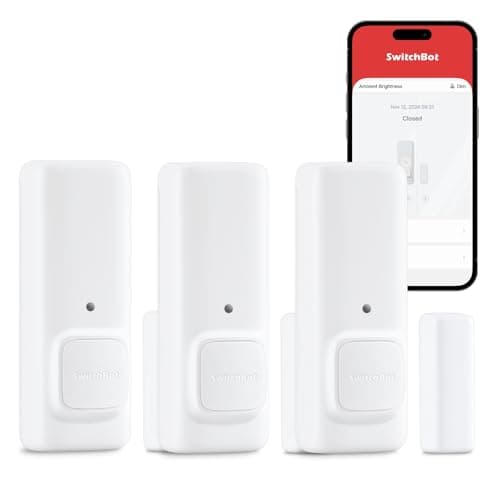
SwitchBot is a mechanical company. Its best products are motors: a retrofit lock that grips the thumbturn you already have, a garage controller, a curtain mover, a bot that physically presses a button on a device that has no network interface at all. Nothing Aqara makes competes with that, and it is why SwitchBot ranks where it does in the no-drilling renter lock roundup and in our smart garage door opener rankings. Its sensors are decent and do one thing neither Aqara nor most competitors do: the contact sensor has a siren in it, so a single sensor on a side door makes a noise with no hub, no platform and no account.
Where each one disappoints people
Aqara's failure mode is the hub requirement nobody reads. A Zigbee sensor bought without a hub joins nothing; a Thread sensor bought without a Thread border router joins nothing. Neither the box nor the listing says this clearly enough, and it is the most common reason an Aqara device comes back. Aqara's app is also the only comfortable place to configure its hubs, which is a soft form of lock-in even on a system that otherwise runs locally. When sensors do drop off a mesh, the cause is usually structural rather than defective hardware — the diagnosis order is in our sensor troubleshooting guide.
SwitchBot's failure mode is range and dependency. Bluetooth through two internal walls is unreliable in a way a mesh is not, so the sensor at the back of the house is the one that stops reporting. Features arrive tied to the app and the bridge rather than to an open interface, and the Matter device list is explicitly partial, so a device you bought may be invisible to your platform even though the brand “supports Matter”. On the lock side the retrofit design has its own hard limit: a motor driving your existing deadbolt is only as good as that deadbolt, and a stiff bolt will jam a SwitchBot that would have had no trouble with a well-aligned one.
The decision rule
Buy Aqara ifyou are putting sensors on more than two openings, you want the automations to survive an internet outage, or you intend to run the house from Apple Home, Home Assistant or SmartThings rather than from a brand's app. The entry purchase is a hub plus a Zigbee multipack; the better purchase, if you already own an Apple TV, HomePod mini or another Thread border router, is a Thread sensor and no hub at all.
Buy SwitchBot ifthe hardware you want to automate must stay exactly as it is — a rented door, a landlord's deadbolt, a garage opener, an appliance with a physical button — or if you want one door to alarm audibly today with nothing else installed. Buy the bundle that includes the hub rather than the device alone, because remote access is not optional once you have lived with it for a week.
Buy both if your situation is the common one: Aqara sensors reporting to a hub that runs the logic, plus a SwitchBot motor on the one thing you cannot replace. They coexist fine, and in a Matter-centric house they coexist without either app being the center of anything.
Buy neither ifwhat you want is cameras. Neither brand is the answer there — that field is ranked in best home security cameras and the brand-level camera comparisons are on the comparisons hub. And if the real question is which platform to build on rather than which brand of device to buy, that is best smart home ecosystem for security. How we score hardware without a test lab is published at our methodology.