HUB 06 · Guides
Do Solar Security Cameras Work in Winter?
Yes, and the thing that fails is not the camera or the panel. It is the battery refusing to accept a charge below freezing, which is a protection feature rather than a fault.
We earn a commission if you buy through our links. It does not change the price you pay, and it does not decide our picks — our selection criteria are published in full. How this works.
Verdict
The bottom line
Solar security cameras keep working in winter — they record, detect and notify in the cold exactly as they do in July. What stops is the charging, and for two separate reasons that compound. The panel delivers a fraction of its rated output because December days are short, overcast and low-angled; and the lithium cell physically refuses to accept a charge when it is cold, which is a deliberate protection rather than a defect. Reolink publishes a charging range starting at 0°C and states charging pauses below roughly 38°F to protect the battery. So a camera that ran all summer on sunlight can drift down through January and go flat. The fix, in order: point the panel better, drop the recording load, or accept one winter charge by hand — and if the position never sees sun, the camera should not have been solar.
What actually stops working, and what does not
It is worth separating three things that get blamed for each other. The camera's electronics are fine in the cold: makers publish operating ranges well below freezing, and Reolink rates the Argus 3 Pro down to −10°C in operation. The panel is fine too — photovoltaic cells actually convert slightly more efficiently when they are cold. The thing that fails is the battery's willingness to be charged, and that is a chemistry fact rather than a quality problem.
Lithium-ion cells are damaged by charging below freezing: metallic lithium plates onto the anode instead of intercalating into it, which permanently reduces capacity and, in the worst case, creates an internal short. Every reputable battery management system therefore refuses the charge rather than accepting it. Reolink lists a charging range of 0°C to 45°C for its solar panels and says charging may temporarily stop below zero specifically to protect the cell. That is the camera looking after itself.
So a frozen camera is not broken.It is a device that has been told it may not charge, running down a battery it cannot refill. The symptom is a camera that reports a healthy percentage in November, declines steadily through December and dies in a cold snap in January — which is exactly when people assume the hardware failed.
Why the panel underperforms as well
A panel's rating — 6W, 3.2W, whatever is printed on it — is its output in full, direct, perpendicular sunlight. Three things take that apart in winter and they are all geometry rather than quality.
- The day is shorter. Fewer hours of any sun at all, and the useful window either side of noon is narrower still.
- The sun is lower.A panel mounted flat against a wall, or angled for a summer sun high overhead, meets winter light at a bad angle — and output falls with the cosine of that angle. The same panel aimed 20 degrees differently can gather meaningfully more in December and slightly less in June, which is the right trade.
- The sky is worse. Overcast, rain and the low winter haze all cut irradiance, and a panel under a skeleton of bare branches still spends half the day in moving shade.
None of that needs a measurement to act on. It needs you to stand where the panel is at midday in January and notice whether the sun is on it. That observation is worth more than any specification on the box.
The load side: a camera that triggers constantly cannot be solar
Charging is only half the arithmetic. A solar camera survives on the gap between what it harvests and what it spends, and winter squeezes both ends: less harvest, and often more spend, because bare trees move, headlights sweep across more of the scene in the dark, and infrared night vision runs for sixteen hours instead of eight. A camera on a busy pavement recording a hundred clips a night in December is not a solar problem, it is a siting problem.
The useful levers, in the order they are worth pulling: narrow the detection zone so the pavement and the neighbour's drive are excluded; raise the sensitivity threshold or switch to person-only detection if the camera does that on-device; shorten clip length; and turn off continuous or scheduled recording, which no battery camera should be doing anyway. Why no battery camera can record continuously — and what that costs in disk if you want it — is in our guide to continuous recording.
The four fixes, in order of how well they work
- Re-aim the panel, or move it off the camera. The single highest-value change, and free. Many solar cameras take a separate panel on a few metres of cable, so the camera can watch the shaded door while the panel sits on the sunny gable. If your model supports a detached panel, this is the answer.
- Cut the trigger count. Detection zones and person-only detection, above. Free, and it often doubles the margin.
- Use a panel designed for the cold.Reolink's 6W Solar Panel 2S is rated to power the camera directly down to −20°C, bypassing a battery too cold to charge, and has built-in heating for stable charging at −10°C. That is a maker-published specification and it is the only one of these fixes that addresses the cut-off itself rather than working around it.
- Accept one manual charge. Bring the camera in on the coldest week, charge it indoors, put it back. Unglamorous, works every time, and for a camera on a shed seen twice a year it is a perfectly reasonable annual chore.
What is not on that list: a bigger battery pack, which only moves the date the camera dies, and a second panel on the same shaded wall, which multiplies nothing.
When the honest answer is “do not buy solar”
If the mounting position gets no direct winter sun — a north elevation, under a deep porch, beneath a dense evergreen, in a courtyard between two houses — a solar camera is an expensive battery camera you now have to climb up to charge. That is not a marginal case; it is most of the complaints in this category. Two better answers exist.
The first is a long-life battery camera that never pretended to harvest anything: Blink publishes two years on a pair of AA lithium cells, and in the shade that beats any solar camera in the world. Note that AA lithium cells also hold up far better in the cold than alkalines, which is why the published figure is specifically for lithium. The second is to stop fighting it and run a cable — a PoE camera is immune to all of this, records continuously, and never needs a thought again. Both routes, and the trenching question, are in our guide to powering an outdoor camera.
What about the cameras themselves in the cold?
Two secondary effects worth knowing, neither of them a reason to avoid winter. Battery capacity itself falls in the cold — a cell holds less usable charge at −5°C than at 20°C even when it is fully charged, which is why the percentage reading can drop sharply overnight and recover a little by afternoon. And condensation inside a housing is a real failure mode on cameras that are repeatedly cycled between cold nights and sunny afternoons; it is why IP ratings and a mounting position under a modest overhang matter. The rating digits are explained in our guide to outdoor ratings, written for locks but with the same IEC 60529 basis.
The hardware this question applies to
The four products below are one per route rather than a ranking: the two solar cameras this site ranks highest, the long-life battery camera that is the right answer for a shaded position, and the PoE camera that makes the whole question disappear. Their prices come live from the Amazon API and were last checked October 15, 2026. The full solar field is ranked in our solar camera roundup, the outbuilding case in our shed and barn roundup, and the rubric at our methodology.
The hardware
The hardware this guide is about
The products this guide refers to, with prices pulled live from Amazon and dated on every card. Full rankings live in the roundups linked above.
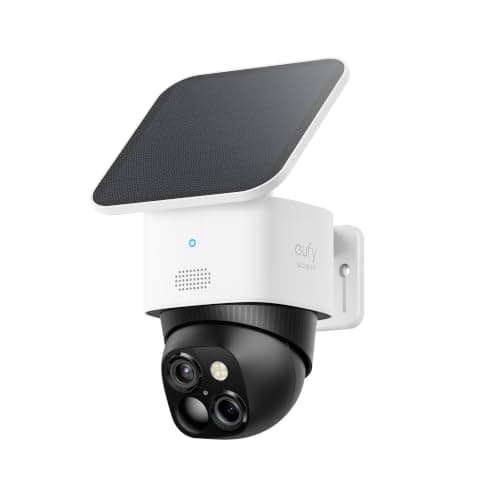
Best subscription-free outdoor camera
eufy SoloCam S340 (solar, dual camera)
Solar panel, pan and tilt, dual lenses and onboard storage — no wire, no monthly fee, and no recording leaving the device unless you choose to send it.
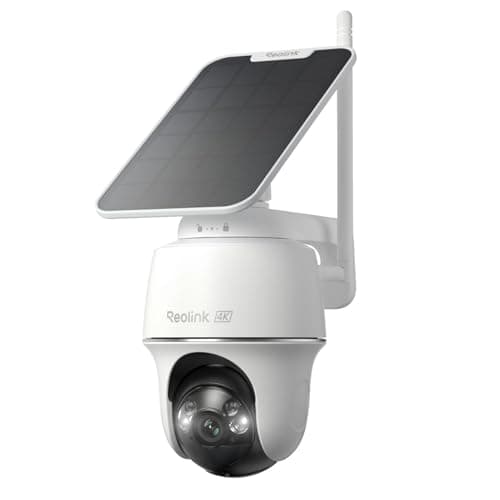
Best value 4K camera
Reolink Argus PT Ultra (4K solar)
4K, pan-tilt and solar with an SD card slot and no account required to record. Reolink is the brand that keeps not charging for basic functionality, and that is the entire reason it is here.
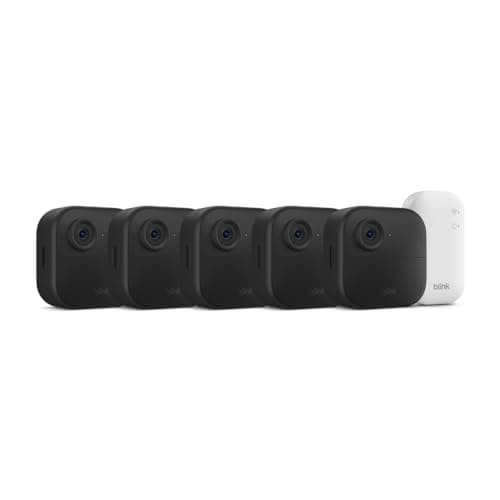
Best battery life
Blink Outdoor 4
Two years on a pair of AA cells is a real engineering achievement, and it is also the reason the camera is 1080p and event-only. Cheap, easy, and honest about being basic.
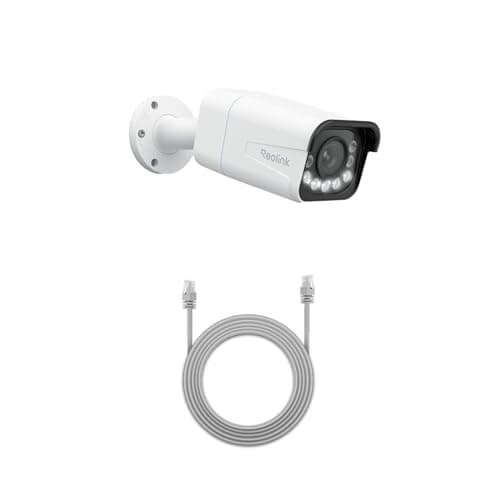
Best wired camera
Reolink RLC-811A (4K PoE, 5x zoom)
One cable for power and data, 4K with a real 5x optical zoom, and continuous recording to a card or an NVR. This is the camera for someone who wants a serious install rather than a convenient one.
#ad · As an Amazon Associate we earn from qualifying purchases.
Questions
Frequently asked
Do solar security cameras stop working in cold weather?
Why is my solar camera battery dropping in winter?
Will snow on the panel ruin it?
Is there a solar camera that works properly in freezing temperatures?
Should I just use a battery camera instead of solar in a cold climate?
Keep reading
Related
- Best solar security camerasThe product rankings this guide sits behind.
- How to power an outdoor cameraEvery alternative to solar, ranked, including the cable run.
- Best cameras for sheds and barnsWhere the shaded-position problem bites hardest.
- Do cameras record all the time?Why no battery camera records continuously, whatever the season.
Receipts
Sources
- Reolink — published solar panel charging temperature range and cold-weather camera guidance
- Reolink — Solar Panel 2S specifications, direct-power and heating ratings
- eufy — SoloCam S340 integrated solar specifications and operating conditions
- Blink — published two-year battery life on AA lithium cells
We do not run a testing lab and we do not pretend to. Specifications come from the manufacturer's own published documents and from published standards; prices come from the live Amazon API. Where a figure is not published, the page says “not published” rather than guessing. Read the full method.