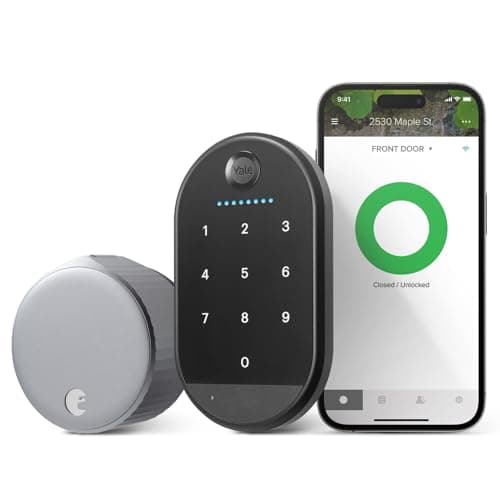
The August Wi-Fi Smart Lock is our pick for best retrofit lockfor one concrete reason: it clamps onto the inside of your existing deadbolt and turns the thumbturn, so the outside of the door does not change at all. Your landlord's hardware stays, your existing key still works, and the whole thing reverses with a screwdriver on move-out. The catch is equally concrete: there is no keypad on the lock, so entry without your phone means the original physical key or the Yale Keypad that the bundle we link sticks to the wall beside the door.
What a retrofit lock actually is
Most smart locks replace the deadbolt. You take the old one off, you drill or reuse the bore, and you bolt on a new lock with a new key and new exterior hardware — which is fine if you own the door and a problem if you do not. A retrofit does the opposite. It leaves the entire deadbolt in place, exterior cylinder and all, and fits only over the thumbturn on the inside. A small motor then turns that thumbturn for you. Nothing on the street side of the door changes, which is the whole point: the lock the landlord installed is still the lock, your key still opens it, and the smart part is a unit on the inside that you can take with you.
The August is the lock that established this pattern, and it is still the cleanest expression of it. Because it drives the deadbolt you already have, the security of the door is the security of that deadbolt — the retrofit inherits whatever grade the underlying lock carries rather than setting its own, which is worth knowing if the existing hardware is old or cheap. What August adds is control, awareness and convenience on top of a lock you are not allowed, or do not want, to remove.
How it installs: a screwdriver, no drilling
The install is genuinely a few minutes with a screwdriver, and that is not marketing. You take off the interior thumbturn cover or the whole interior escutcheon depending on your deadbolt, fit August's mounting plate and adapter to match your specific lock, and clip the August body on. There is no drilling, no new bore, and no change to the exterior, so there is nothing to make good when you leave. Reversal is the same steps backward: pull the August off, put the original thumbturn back, and the door is exactly as you found it. That reversibility is the feature renters are actually buying, more than any single smart function.
The one physical thing to check before you order is clearance. The interior unit is chunky, and on a narrow door edge, behind a storm door that swings across the frame, or against a deadbolt set very close to a wall or handle, it can foul. Measure the flat area around the inside thumbturn and confirm the August body has room to sit and rotate. August publishes a compatibility check for exactly this; run it against your deadbolt brand and model rather than assuming, because the adapter has to match the thumbturn it clamps.
What keeps working, and what needs no plan
This generation builds Wi-Fi into the lock, so there is no separate Connect bridge to buy, site and power the way the older August required — remote lock, unlock and notifications run straight from the unit. None of that sits behind a subscription: app unlock, remote access and alerts are all included, with no monthly fee for the core lock. The feature people keep using a year later is auto-unlock, which uses your phone's location and Bluetooth to sense you arriving and throws the bolt before you reach the door, so you walk up to a house that is already open. It is the one convenience that changes the daily experience rather than just replacing a key with a phone.
August also includes a door-position sensor — DoorSense — that reports whether the door is actually shut, not merely whether the bolt threw. That distinction matters more than it sounds: a deadbolt can be extended into thin air if the door is ajar, and a lock that only knows the motor turned will happily tell you the door is locked when it is standing open. The sensor closes that gap by confirming the door is closed andlocked. It is still, though, one sensor on one door — more on the limit of that below.
The running cost: two CR123A cells and nothing else
The August runs on two CR123A lithium cells, and the honest running-cost line is short: those two cells, replaced when they run down, and no subscription for anything. There is no plan to keep the app working, no fee for remote access, and no gate on notifications. Against a cloud-tethered product where the recurring bill never ends, that is the entire argument for this style of lock, and it holds here.
Two qualifications keep it honest. CR123A cells are less common on a supermarket shelf than the AA cells most locks use and cost a little more each, so factor a small ongoing hardware line rather than none — it is minor, but it is not zero. And battery life is set by use, not by the number on the box: heavy auto-unlock, which keeps Bluetooth and location active, and a lot of remote Wi-Fi operation both draw more than a lock that is mostly opened by hand. A door opened a few times a day will run a long time on a pair of cells; a busy household leaning on auto-unlock will change them more often. Keep a spare pair in a drawer and the low-battery alert stops being an inconvenience.
The renter angle, which is the whole point
If you rent, most smart locks are quietly off-limits. A full deadbolt replacement means removing your landlord's hardware, storing it, and reinstalling it perfectly on move-out — and getting permission first. The August sidesteps all of that. The exterior is untouched, so the landlord's lock and the building key still work exactly as before; you have simply added a unit on the inside that you own and will take with you. For a shared house where some people want the app and others just want their key, that is ideal: the key people carry on as normal, because their key never stopped working. This is the case the whole no-drilling renters roundup is built around, and the August is the lock it leads with.
The honest cons
- No keypad on the lock. Nothing on the door takes a code. The bundle we link includes the Yale Keypad, but that is a separate Bluetooth pad you stick or screw to the wall beside the door, on its own AAA cells, and it does codes rather than fingerprints.
- The interior unit is chunky. On a narrow door edge or behind a storm door it can foul, so the clearance check is not optional. It is the price of a design that clamps over existing hardware instead of replacing it.
- It inherits the deadbolt underneath.A retrofit is only as good as the lock it drives. If the existing deadbolt is worn, poorly aligned or low-grade, the August makes it smart, not stronger — and a stiff bolt will drain the motor.
- CR123A cells over AA. A slightly less common, slightly pricier battery, and a running cost that is small but not nil.
Who should skip it
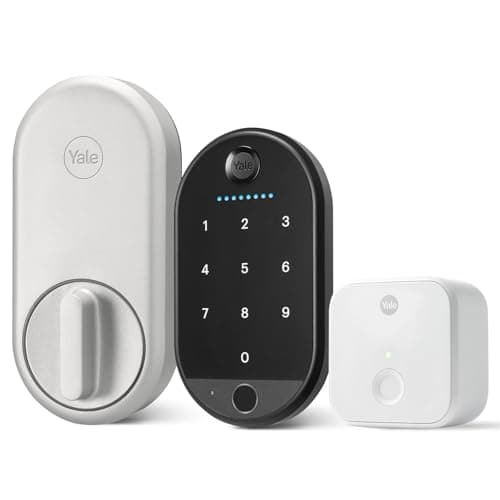
Anyone who wants a pad on the door, or a fingerprint. This is the clean disqualifier, and it comes straight from what the lock is: nothing on the August reads a code or a print. Codes come from the wall-mounted Yale Keypad in the bundle, and that pad is code-only. If a touchscreen or a thumb on the door itself is the reason you are buying, this is the wrong lock. Buy a keypad model, or buy the SwitchBot Lock Ultra Touch Combo, or step up to the Yale Approach with its keypad — both bundles ship a fingerprint pad with the lock on the same retrofit idea.
Anyone whose deadbolt already sticks. A retrofit motor drives your existing bolt, so a lock that already needs a shoulder against the door to throw will jam a motorized unit, drain the cells, and report failures. Fix the strike alignment or replace the deadbolt before adding any retrofit, August included.
Anyone who owns the door and wants the tidiest result.If you can replace the deadbolt outright, a purpose-built keypad or fingerprint deadbolt gives you a keypad, a cleaner exterior and often a published security grade for similar money. The retrofit's reason to exist is that you cannot or will not change the exterior; if that constraint is not yours, the full-replacement locks on the smart locks hub are worth the look.
The thing this lock cannot tell you
Whether anything else on the house is open. The August, with DoorSense, knows the state of the one door it is on — but it has nothing to say about a ground-floor window, the back door, or the garage side door, and it cannot watch the approach the way a camera does. A few contact sensors close those openings for a fraction of the price per point and report a plain binary fact rather than an inference. They are ranked at best door and window sensors, and pairing one good lock with a handful of sensors is usually a better spend than a second, fancier lock.
How this review was compiled
Products we claim to have tested: zero. We have not put this lock on a door, and we are not going to imply otherwise. What this review is built from is August's published product and support documentation, its compatibility checker and install guide, and the general engineering of retrofit motors driving existing deadbolts and of the lithium cells that power them — every one of which is a source you can open yourself, and they are listed below. Our scoring rubric and the weightings behind it are published in full at methodology, so you can disagree with our conclusion using the same public material we used to reach it.
The alternatives worth comparing
SwitchBot Lock Ultra — the retrofit that brings its own keypad
If fingerprint entry is the sticking point, the SwitchBot Lock Ultra is the first alternative to weigh. It mounts over the existing thumbturn and keeps your key exactly as the August does, and the Touch Combo bundle we link ships a fingerprint keypad with it, so thumb entry — the thing the August's code-only pad cannot do — needs nothing else ordered. It runs on a rechargeable pack rather than disposables. The trade-off is that remote access, Matter and voice control all run through a SwitchBot hub, which is in that bundle but is still a second device to power, where the August has Wi-Fi built in. The full head-to-head is at August vs SwitchBot Lock.
Yale Approach Lock — the retrofit with a real keypad option
Yale's Approach is August's answer to itself, built by the same parent. It is the same interior-only retrofit that keeps the exterior and your keys, and the bundle we link ships a biometric keypad with it, where the August bundle's pad reads codes only. The catch is that its Wi-Fi is not in the lock — remote access runs through the plug-in Yale Connect bridge, which is included but needs a socket within range of the door — and like every retrofit it still inherits a poorly aligned strike. Choose the Approach over the August when code entry matters but you still need the exterior and key to stay put.
Where the August still wins
For a renter who opens the door by phone and key and is happy taking codes on a pad beside the door, the August remains the cleanest pick: built-in Wi-Fi with no bridge, the most mature auto-unlock in the category, DoorSense in the box, and the reversibility that started the whole retrofit idea. It is the one to beat, and the alternatives above beat it only on the specific axis of fingerprint entry. The invisible, keyless route is compared directly at Level Lock vs August, and the rest of the category is indexed on the smart locks hub.