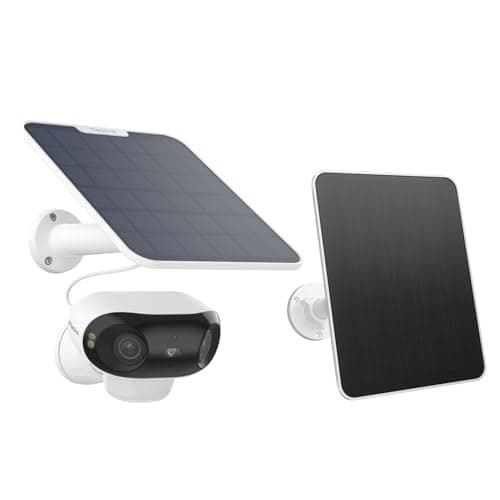
“Color night vision” is printed on nearly every camera listing sold today and it describes two completely different pieces of engineering. One is a fast lens on a large sensor gathering the light that is already there. The other is a white LED that switches on and floods the scene so an ordinary sensor has something to work with. Both produce a color picture. They behave nothing alike in a real yard, and no listing explains which one you are buying.
The best color night vision security cameras start with how the color is made
Three mechanisms, and it is worth being precise about them because the specification sheet will tell you which one a camera uses even when the marketing will not.
- Optics. A wide aperture — f/1.0 rather than f/1.6 or f/2.1 — on a physically larger sensor collects enough photons from ambient light that the image stays in color without any help. This is what Reolink markets as ColorX, and its own FAQ says the camera still provides color night vision with the spotlight off.
- A spotlight. White LEDs fire on motion and the sensor records a lit scene in color. This is the common arrangement, it works at any price, and the light is the product: without it the camera falls back to monochrome or to nothing.
- Infrared. 850nm LEDs that your eye cannot see. Infrared is not color night vision and never will be — it produces the familiar gray image — but it is the quiet fallback almost every camera keeps for when there is no ambient light at all.
The useful question when comparing two cameras is therefore not “does it do color at night” but “what does it do at night with every light off.” The answer is in two published numbers: the aperture and the sensor size.
How we ranked them
On the mechanism, in this order. First, whether the camera produces color without adding light, because a camera that has to switch a spotlight on has already changed the scene it is recording. Second, what it does when there is genuinely no ambient light — an infrared fallback is worth having, and one camera here deliberately does not have one. Third, what the chosen mechanism costs: a spotlight on a battery camera is the single largest drain in its power budget, and a spotlight behind glass is useless.
One honest note about the order. The score on each product card is this site's all-round rating, compiled from published specifications at our methodology. The ranking on this page follows the page's own axis instead, so the two disagree in two places — most obviously at the bottom, where the Reolink Argus PT Ultra rates well as a camera and ranks last here because its color mode is entirely spotlight-dependent. We would rather show you the inconsistency than hide it by reordering one of the two.
Apertures, sensor sizes, spotlight ratings and night-vision descriptions as published by each manufacturer, October 2026. Prices on the cards above are pulled live and dated November 12, 2026; no price appears in this table.| Camera | How color at night is produced | Published aperture | Infrared fallback | Power |
|---|
| Reolink Argus 4 Pro | Optics (ColorX), spotlight optional | F1.0, 1/1.8in sensor | None at all | Battery and solar |
|---|
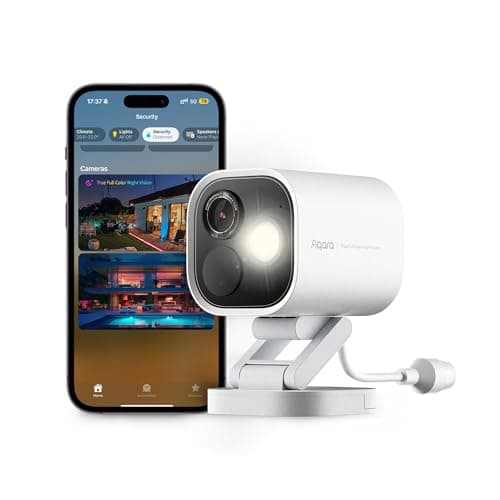
| Aqara Camera Hub G5 Pro | Optics, with a 3W spotlight in reserve | F1.0, 4.2mm | Yes | PoE or USB-C |
|---|
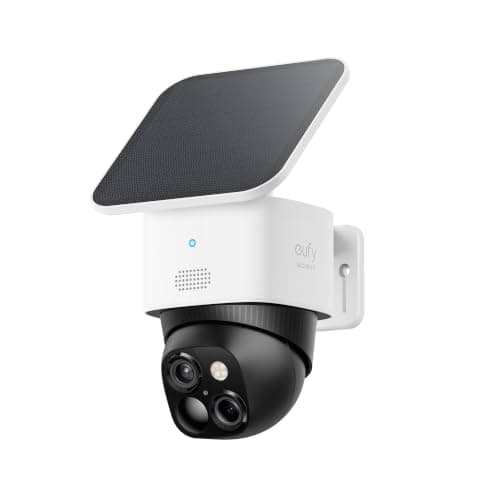
| eufy SoloCam S340 | Mixed: faster glass plus a 100-lumen spotlight | F1.6, both lenses | Yes | Battery and solar |
|---|
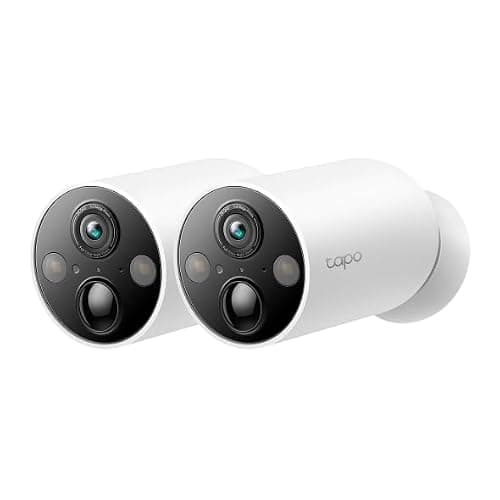
| Tapo MagCam 2K+ (C425) | Starlight sensor plus spotlights | Published two ways, F1.6 or F2.1 | Yes | Battery |
|---|
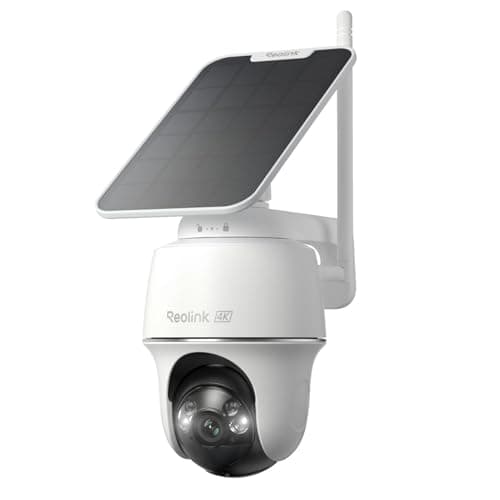
| Reolink Argus PT Ultra | Spotlight for color, infrared for mono | Not published, fixed lens | Yes, 850nm to about 10m | Battery and solar |
|---|
Reolink Argus 4 Pro — color without switching a light on
This is the only camera on the page whose color at night is a property of the hardware rather than an event. Reolink publishes a fixed 4mm lens at F1.0 in front of a 1/1.8-inch CMOS sensor, 5120 x 1440 at 15 frames per second across a 180-degree stitched dual-lens view, and its FAQ states that the camera can still provide color night vision without the spotlight on. It has five 2W, 6500K spotlights available, and they are there to improve color in very dark conditions rather than to create it.
Why that matters more than it sounds: a camera that does not fire a light does not tell the person in the yard where it is, does not wake the neighbors, and does not spend the biggest single item in a battery camera's power budget every time a cat walks past. On a solar install, which this listing includes a panel for, the difference between a spotlight that fires forty times a night and one that never fires is the difference between a camera that holds charge through a gray week and one that does not.
Three honest costs, all from Reolink's own page. There is no infrared mode at all, so in a genuinely black yard with no streetlight, porch light or moon, the spotlight is the only option left and the camera is back in the same class as everything below it. The frame is a panorama: 180 degrees horizontally and only 50 degrees vertically, which is a great shape for a frontage and a poor one for a doorstep directly beneath the camera. And Reolink's own battery figure is roughly two months per charge at 300 seconds of recording a day, on a non-removable 5000mAh cell. Storage is a microSD card up to 512GB with no plan at any tier.
Ambient light is free performance, and siting is how you get it. A fast-lens camera pointed at a drive with a streetlight thirty meters away is working in conditions it was designed for. The same camera on the dark side of a house is not. Before you pay for an f/1.0 lens, go and stand where the camera will go, at night, and see whether you can make out a face. That is roughly what the sensor has to work with.
Aqara Camera Hub G5 Pro — the same aperture, and a cable
Aqara publishes F1.0 at a 4.2mm focal length on this camera, Quad HD at 2688 x 1520, and a 3W, 3000K spotlight with a 120-degree beam. The listing calls it true color night vision. Aqara does not publish a minimum illumination figure, so what the aperture alone delivers on a given night is not something we can state for you — but the physics of the number is the same as the camera above, and this one does not have to ration anything, because it runs on PoE at IEEE 802.3af or on USB-C.
That is the real argument for it: a permanently powered camera can afford to keep its spotlight, its infrared and its processing running without a power budget, and the published operating range of -30C to +50C is the widest on this page by a long way. It is also the only camera here that is a piece of smart-home infrastructure in its own right — a Thread border router and a Zigbee hub, with HomeKit Secure Video support, which is why it appears in our HomeKit camera rankings and why it can carry the sensors ranked in the Home Assistant sensor roundup.
The costs are the cable and the resolution. There is no battery variant, so this is a camera for a position you can reach with Ethernet or a USB supply — the options are in how to power an outdoor security camera and the networking side is PoE vs Wi-Fi. And 2688 x 1520 is Quad HD, not 4K: this camera is for seeing a scene in color, not for reading a plate at distance, which is a different job covered in the driveway rankings.
eufy SoloCam S340 — the mixed approach, done well
eufy sits between the two mechanisms and is honest about it on its own page: both lenses are f/1.6, which eufy says captures 20 percent more light, and there is a motion-activated 100-lumen spotlight on top. eufy publishes that details are visible up to 26 feet at night. So the glass does part of the work and the light does the rest, which in a suburban yard with some ambient light is a perfectly sensible engineering answer.
The rest of the camera is the reason it leads several other pages on this site: 3K on a 135-degree wide lens plus a 2K telephoto with 8x hybrid zoom, 360 degrees of pan and 70 of tilt, 8GB of storage inside the body, and a removable solar panel that eufy rates at 800 to 1,200mAh collected per day in good sun against 100 to 200mAh of average use. No plan is needed for recording or playback.
The honest limits: 100 lumens is a modest spotlight, so past about eight meters you are relying on whatever ambient light exists, and the solar story collapses in a shaded position — eufy's own guidance is two hours of direct sun a day, and how literally to take that is covered in how much sun a solar camera needs. It is also a pan-and-tilt head, which means the camera is only pointing one way at a time and a 180-degree panorama is not something it can do.
Tapo MagCam 2K+ — the cheap way in, and what cheap costs
The C425 reaches color at night with a starlight sensor and built-in spotlights, which is the mainstream arrangement at the bottom of the market, and it does it for less than half the money of anything above it. 2K QHD at 2560 x 1440, microSD to 512GB with no plan, IP66, and a magnetic base that makes repositioning free. The full write-up is in our Tapo MagCam review, including the detail that matters on this page: TP-Link publishes two different apertures for this model number across its own sites, f/1.6 at a 142-degree diagonal on one and f/2.1 at 150 degrees on another, so you cannot be certain from the listing which variant is in the box.
The cons are the spotlight ones, and they are real. Every color clip at night is a clip where the camera turned a light on — which drains the battery hardest of anything it does, announces its position, and blows out a face at close range while leaving the background black. For a side gate or a shed door that is an acceptable trade at this price. For a camera whose whole job is to see without being seen, it is the wrong mechanism.
Reolink Argus PT Ultra — the older arrangement, from the same brand
Including this one is deliberate, because it shows how little the phrase on the box tells you. Reolink publishes 3840 x 2160 at 8 megapixels on a 1/2.7-inch sensor, 355 degrees of pan and 140 of tilt, two 2.4W 6500K spotlights for color mode and two 1.2W 850nm infrared LEDs reaching about 10 meters for monochrome. No aperture is published. It is the same brand as the camera at the top of this page, sold with the same two words on the listing, and the mechanism is the other one entirely.
It is a good camera and a poor pick for this specific requirement. If you want 4K, pan and tilt, solar and auto-tracking at the lowest price Reolink offers them, it is excellent value and it earns its place in the 4K rankings and the solar rankings, with its own model review. If you want color at night without lighting up the yard, it cannot do that, and Reolink's specification page is where that becomes clear. One more note from that page for anyone cross-checking: its own spec table gives two different microSD limits, 128GB and 512GB, so confirm before buying a large card.
Two of the five cameras here are Reolink and two are TP-Link, which is not an accident — they are the two brands competing hardest at the plan-free end of this market. The brand-level version of the decision, decided on open protocols rather than on night performance, is Reolink vs Tapo.
What a spotlight actually costs you
Four costs, none of which appear on a box. Battery: white LEDs are the heaviest load a battery camera carries; a busy frontage can halve a published runtime. Concealment: a light that fires announces the camera's position to the one person you would rather did not know it. Image quality at close range: a bright LED a meter from a face produces a white blur and a black background, which is worse evidence than a clean monochrome infrared frame. Glass: a spotlight or an infrared array behind a window reflects straight back into the lens, which is why cameras indoors looking out need their lights disabled — the mechanism is covered in our window camera page.
The flip side, stated fairly: a spotlight is also a deterrent, it is cheap, it works in absolute darkness where no aperture can, and on a mains-powered camera the battery argument disappears entirely. The mechanism to prefer depends on the position, which is the whole reason this page ranks rather than declares.
The three numbers that decide a night image
Aperture. A smaller f-number is a wider opening. The step from f/2.1 to f/1.0 is roughly two stops, which is about four times the light reaching the sensor from the same scene. It is the single most informative number on a night-vision specification sheet and the one most often left out: of the five cameras here, three publish it and two do not.
Sensor size. A 1/1.8-inch sensor has substantially more area per pixel than a 1/2.7-inch one at the same resolution, and area per pixel is how a sensor gathers light. This is why a 2K camera with a big sensor and fast glass often beats a 4K camera with a small sensor after dark, and why resolution is the wrong first question — an argument we make at length in how to choose a security camera.
Whether infrared exists. Not a performance number, a behavior one. A camera with infrared has something to do in absolute darkness. A camera without it has a spotlight or nothing. Both are defensible; only one of them is usually disclosed.
A fourth figure would be more useful than all three, and almost nobody publishes it: minimum illumination in lux. Where it is absent — which is everywhere in this category — the aperture and the sensor are the proxy, and we are not going to invent a lux rating to fill the gap.
What decides the price
Glass and silicon, not features. The two f/1.0 cameras on this page sit at the top of the range, and what you are paying for is a larger piece of optics and a bigger sensor — components that cannot be added by firmware. Spotlight-based color is cheap because an LED is cheap, which is why it is what you get at the bottom of the market and why that is not a scandal: it is a reasonable engineering choice at a price.
Power changes the math more than brand does. A permanently powered camera can carry a big sensor, a bright spotlight and continuous recording at once, because none of those compete for a battery. That is the real reason the wired options in our PoE rankings outperform battery cameras at night at a similar price, and why — if a cable can reach the spot — the night-vision question largely solves itself.
Running cost is a coin toss between batteries and electricity, and nothing on this page needs a subscription for recording, playback or detection. If a camera ever asks for a monthly fee to show you footage at night that it already captured, the plan is the product, and the alternatives are in the no-subscription rankings.
The mistake buyers make
Buying color at night when what they needed was identification at night. Those are different problems. Color is useful for describing a vehicle or clothing; it does nothing for a face at thirty meters, which is a question of optical reach and pixel density on the subject. If the goal is to recognize somebody at distance, a wired camera with real optical zoom beats every camera on this page after dark, which is why the Reolink RLC-811A keeps winning that argument on this site.
The second mistake is placing a fast-lens camera where there is no light to gather. An f/1.0 lens multiplies the light available; it does not create any. In a yard with no ambient light at all, the cheapest spotlight camera here will produce a more useful image than the most expensive optics on the page — and the right fix is usually one porch light on a dusk-to-dawn sensor, which improves every camera you own at once and costs less than any of them. Where to put the camera once that is sorted is where to place security cameras, and the rest of the category is on the cameras hub.