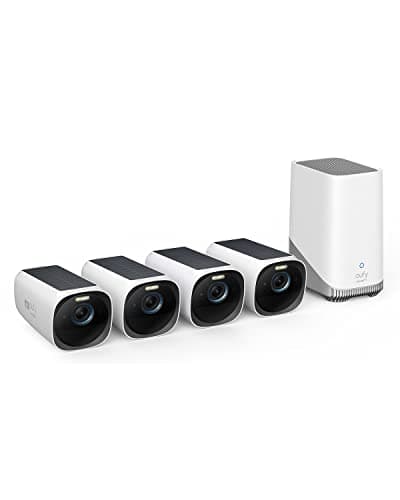
The best security camera system under $500 is the eufyCam 3 (S330) 4-camera kit, because it is the only one at this ceiling that includes the cameras, the recorder and the retention. The budget pick is the Blink Outdoor 4 five-camera system. Here is the structure of the decision.
A “system” is not a bag of cameras. It is three separate purchases that people discover in the wrong order:
- The cameras. How many approaches you cover, and how they get power.
- The recorder. The base station, NVR or server that receives the streams and makes them searchable.
- The retention. How far back you can look. This is either a drive you own or a subscription tier, and it is the one people never budget for.
Under $500 you can have all three, but only by buying one of them small. That is the trade-off this page ranks on, and each pick below makes a different version of it.
What the cap excludes, stated plainly. Our ranking of camera systems with no price ceiling puts a Reolink 8-channel 4K PoE kit with an NVR and a 2TB drive at the top, because it is the complete answer: four wired cameras, continuous recording, weeks of retention, nothing in anybody's cloud. It costs well over $500 and is therefore deliberately absent from this page. If the ceiling is soft, read that page instead — the step up is worth knowing about before you spend $490 here.
The four ways to get under $500, and what each one costs you
Buy a packaged wireless kit. The eufyCam 3 kit is four solar 4K cameras plus a HomeBase 3 with expandable local storage. You give up continuous recording — battery and solar cameras record events, not timelines — and you accept that everything lives on one box in your house, so a burglar who takes the base takes the footage. It is also the previous generation: eufy's current flagship is the eufyCam S3 Pro, which adds color night footage without a spotlight and hybrid 24/7 recording. You buy the S330 because it is four cameras rather than two.
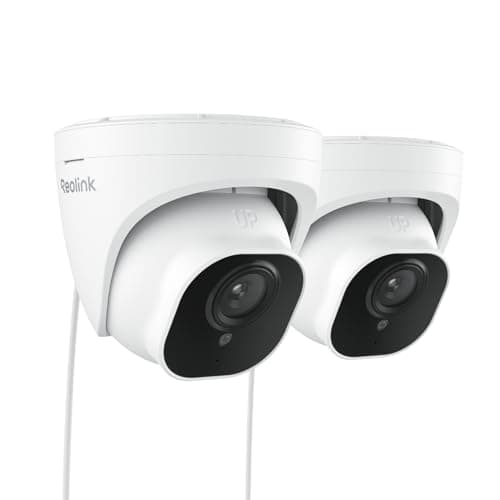
Build a PoE system incrementally. Two RLC-520A domes land well under the cap and leave budget for a recorder, which can start as the cards in the cameras and become a proper NVR or a Frigate box later. You give up convenience: this is cable runs and a weekend. You gain continuous recording, open RTSP and ONVIF, and a system nobody can change the terms on. Start with PoE vs Wi-Fi and IP camera vs NVR if the words are unfamiliar.
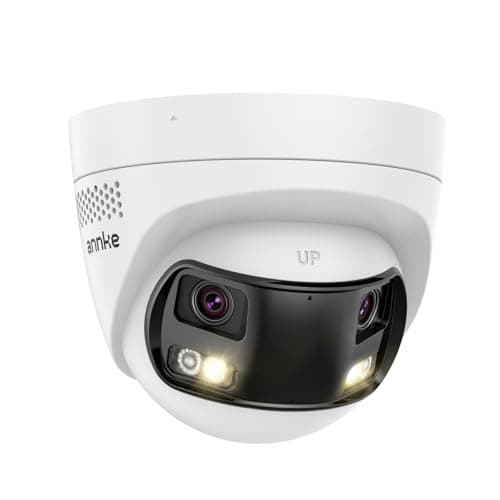
Use fewer, wider cameras. A dual-lens 180-degree camera like the ANNKE FCD800 covers a corner that would otherwise need two cameras, two mounts and two cable runs. Four approaches do not always mean four cameras, and this is the cheapest honest way to discover that. The caveat is real: some recorder software handles stitched panoramic streams badly, so check yours before committing.
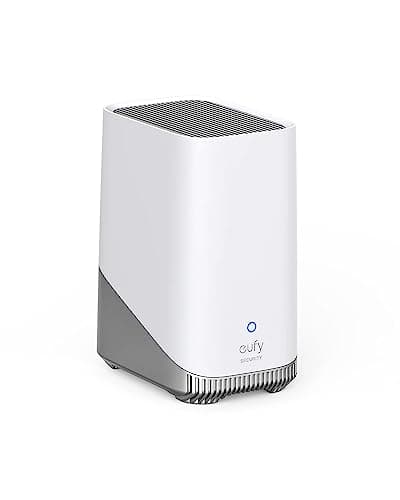
Buy the recorder first. If you already own eufy cameras, the HomeBase 3 on its own converts them into a genuinely plan-free system with up to 16TB of expandable storage and face recognition that runs on the box rather than in a cloud. It only serves eufy devices, which is exactly why it is the right $200 for some houses and the wrong $200 for others.
The systems compared
Compiled from eufy, Reolink, ANNKE and Blink product and support documentation, November 2026. Prices appear only on the cards above, pulled live and dated November 24, 2026.| Option | Cameras included | Recorder included | Retention | Recording mode |
|---|
| eufyCam 3 (S330) kit | Four, 4K, solar | Yes — HomeBase 3 | Expandable local drive | Event clips |
|---|
| Reolink RLC-520A 2-pack | Two, 5MP, PoE | No — cards, or add an NVR | Your own card, NVR or server | Continuous |
|---|
| ANNKE FCD800 | One, 8MP, dual-lens 180°, PoE | No — card on camera, or any ONVIF NVR | Your own card or recorder | Continuous |
|---|
| eufy HomeBase 3 | None — it is the recorder | Yes | Up to 16TB expandable | Whatever the paired eufy cameras do |
|---|
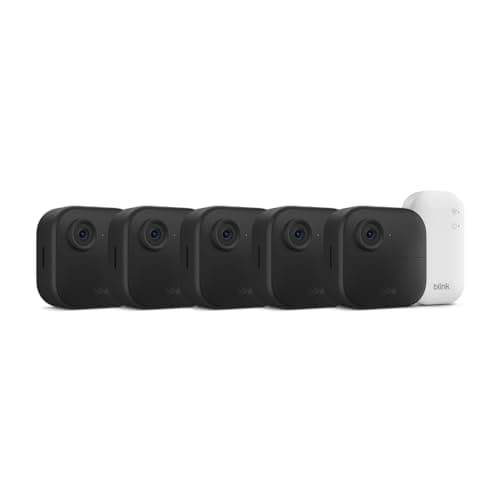
| Blink Outdoor 4 (5-camera) | Five, 1080p, 2-year AA battery | Sync Module Core — no local storage | Plan, or add a Sync Module 2 and a drive | Event clips |
|---|
Which route your property points to
Four approaches, no cabling, one purchase: the eufyCam 3 kit. It is the complete answer at the ceiling, and the no-fee claim is structural rather than promotional — the footage is on your HomeBase.
You want a timeline and you can drill: the RLC-520A 2-pack now, a third and fourth camera later, an NVR or a Frigate box when you want search. This is the route that ends up cheapest over five years and costs the most effort in month one.
One corner, two directions: the ANNKE FCD800. Check your recorder handles a stitched 180-degree stream first.
You already own eufy cameras: the HomeBase 3, which is the cheapest way to turn a plan into a drive. Useless if you own no eufy hardware — it is not a general-purpose NVR.
Maximum camera count for minimum money: the Blink 5-camera system, which is the budget pick. Five mounting points for roughly the price of one mid-range camera, and a published two-year battery life on AA lithium cells that nothing else here approaches. The honest total is higher than the sticker: Blink's own documentation says the included Sync Module Core supports neither local storage nor clip backup, so plan-free recording needs a Sync Module 2 and a USB drive as well. Budget for that or budget for the plan — see subscription costs compared.
Costing a system rather than a camera
Write down three numbers before you shop: how many approaches you actually need to see, how many days back you want to be able to look, and whether you can run cable. Those three determine almost everything, and two of them are usually wrong on a first attempt — people overestimate cameras and underestimate retention.
Retention is where the money hides. A single 4K camera recording continuously fills storage fast, and a plan that keeps 30 days of clips for a few dollars a month looks cheap until you multiply it by sixty months. That arithmetic, by brand, is the whole point of our five-year subscription table, and it is the strongest argument for a local recorder even when the local recorder costs more up front.
Then be honest about cabling. PoE is the better system in every technical respect — continuous recording, no batteries, no Wi-Fi congestion, power and data in one run — and it is a weekend of work or a contractor's invoice. A wireless kit you actually install beats a wired system you keep meaning to. Our guide to how many cameras you need and local storage vs cloud cover both halves of that decision.
Finally, remember that a system has a single point of failure wherever the footage lives. A HomeBase or an NVR in a cupboard is one thing to steal. Mount it out of sight, and if the footage genuinely matters, accept that off-site backup is the one thing a local system does not give you for free.