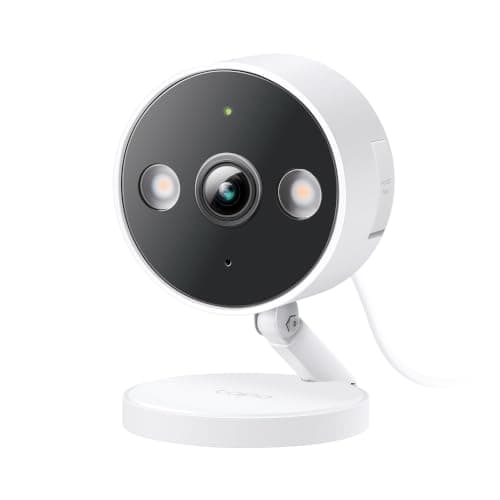
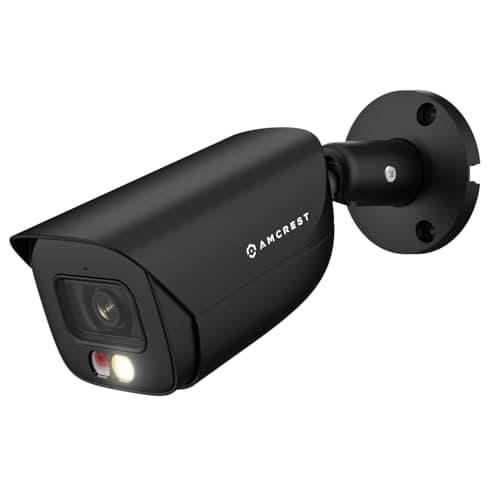
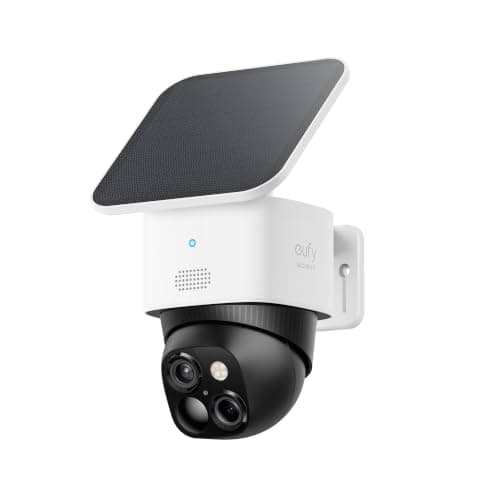
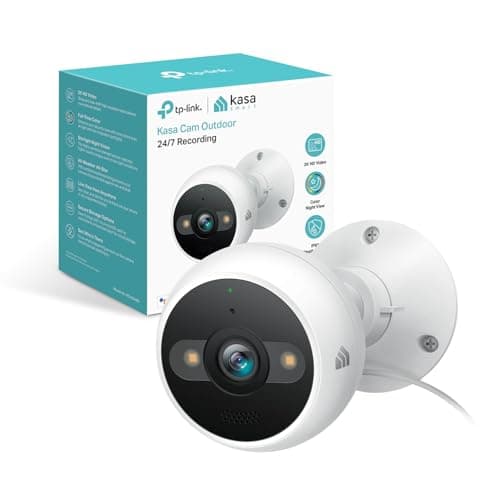
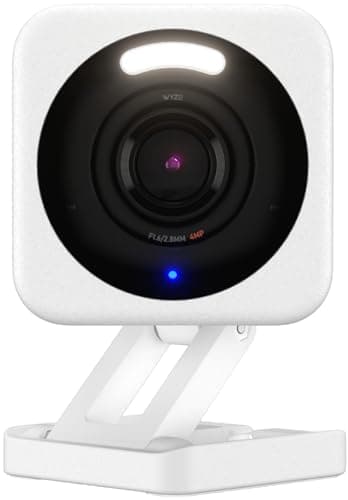
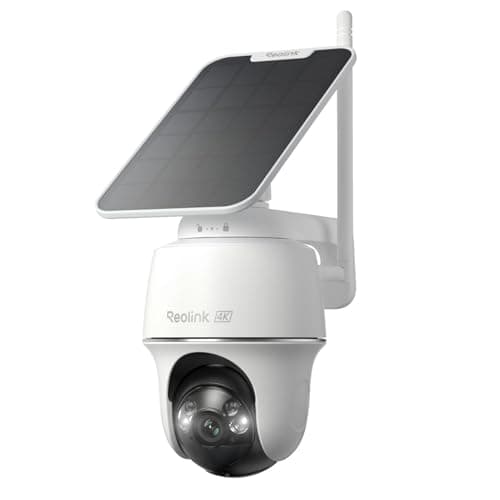
The best security camera for a garage is the Reolink Argus PT Ultra, because solar removes the one thing that stops most garage installs: no socket where the camera needs to be. The budget pick is the Tapo 2K+ wired camera. Before the picks, the three facts about garages that decide which of them is right.
Why a garage is its own problem
1. The power is in the wrong place. Almost every garage has mains inside — a ceiling socket for the opener, often a light fitting — and nothing at all outside. So an interior camera is trivially easy and an exterior one is a wiring job, which is the reverse of how people shop. Decide which side of the door you are covering before you decide anything else.
2. Wi-Fi may not reach. A detached garage is often the worst Wi-Fi location on a property: a run of open ground, a masonry wall and a metal door between it and the router. If the signal is marginal there, a Wi-Fi camera will drop clips rather than fail cleanly. Either run Ethernet, add a mesh node, or choose a camera that records locally to a card so a dropout costs you the notification rather than the footage.
3. What you are watching is usually a door, not a face. Garage footage is used to answer three questions: did the door get left open, did somebody go in, and did the car leave. All three are coverage questions, not identification questions, which is why a 5MP or 2K camera is genuinely sufficient here and why pan-and-tilt beats resolution. If you want to know the door's state rather than watch it, a smart garage controller or a contact sensor answers that more reliably than any camera.
Temperature is the specification people skip. An unheated garage in a northern winter is colder than the porch, and battery chemistry does not like it. Mains-powered and PoE cameras are indifferent; battery and solar cameras lose runtime in the cold and charge slowly on short, low-sun days. Our guide to solar cameras in winter has the mechanism, and how much sun a solar camera needs has the siting rules.
The best garage cameras, compared
The columns are the decision: how it gets power, whether it needs your network to work, where the footage lands, and which side of the garage door it belongs on.
Compiled from Reolink, TP-Link, Amcrest, eufy and Wyze product and support documentation, November 2026. Prices appear only on the cards above, pulled live and dated November 24, 2026.| Camera | Power | Storage | Recording mode | Best side of the door |
|---|
| Reolink Argus PT Ultra | Integrated solar | microSD in the camera | Event clips | Outside, any wall with sun |
|---|
| Tapo 2K+ Wired | Mains socket | microSD in the camera | Continuous 24/7 | Inside, or outside near a socket |
|---|
| Amcrest 5MP PoE Bullet | Power over Ethernet | microSD up to 256GB, plus any NVR | Continuous, with on-camera detection | Either, if you can run cable |
|---|
| eufy SoloCam S340 | Integrated solar | Onboard, local | Event clips | Outside, 360-degree apron coverage |
|---|
| Kasa 2K+ Outdoor Wired | Mains cable | Local | Continuous 24/7, built-in siren | Outside, side passage or apron |
|---|
| Wyze Cam v4 | Mains socket | microSD in the camera | Event clips, continuous to card | Inside only, low-stakes view |
|---|
Which one your garage points to
Detached garage, no outdoor socket: the Reolink Argus PT Ultra. Solar plus a card in the camera means neither the mains nor a marginal Wi-Fi link can stop it recording. The eufy SoloCam S340 is the alternative if you want pan-and-tilt with eufy's better app, at a higher price.
Attached garage interior, socket available: the Tapo wired camera or the Wyze Cam v4. Both are cheap, both record to a card, and the Tapo does genuine 24/7 recording rather than clips — which is what you want for “when did the door open?”. Read Wyze's published incident history before choosing theirs; for a garage view it is an easy yes, for anywhere private it is not.
You can run cable: the Amcrest PoE bullet. One cable, continuous recording, documented RTSP so it drops into Home Assistant or Frigate, and a card in the camera so it keeps recording even if the network dies. This is the most reliable garage camera on the page and the most work to install — see PoE vs Wi-Fi and how to power an outdoor camera.
Outside, with a socket, and you want a response: the Kasa. The built-in siren means somebody on the apron gets a reaction rather than just being filmed, and color night vision avoids a floodlight blazing at the neighbours all night.
Spending as little as possible: the Tapo wired camera is the budget pick because it is the cheapest camera here that still records continuously to storage you own, with no plan. Its constraint is honest and absolute: it needs a socket within reach of the mounting point.
Siting a garage camera so it is actually useful
Point it across the opening, not at it. A camera facing the garage door head-on sees a large flat panel and, at night, its own infrared bouncing back off it. A camera mounted to one side, looking along the face of the door and across the apron, sees the approach, the vehicle and anyone at the handle — and it does not blind itself.
Mount above reach, below the eave. Three metres is the usual compromise: high enough that the camera cannot be unclipped, low enough that faces are not all forehead. Avoid tucking it right under a deep overhang if it is solar — the panel needs sky, and an eave is very good at removing sky. Our placement guide works through the angles.
Expect vehicle headlights and settle the exposure question first. A garage apron is the one place a camera is routinely pointed at full-beam headlights. A camera with a real HDR implementation or starlight sensor handles it; a cheap one shows you a white rectangle and a silhouette. This is a bigger practical difference than the resolution figure on the box.
Decide what the camera is for, then buy the cheaper thing instead if it fits. If the actual problem is “the garage door gets left open”, a controller or a long-range contact sensor solves it for less money and with no false positives — covered in how to secure a garage door and best smart garage door openers. Cameras are for seeing what happened; sensors are for knowing that it did.