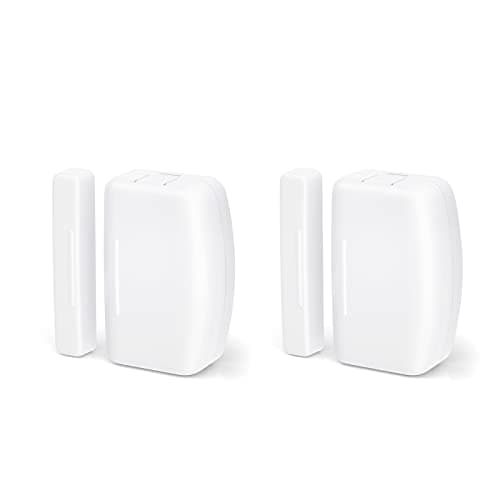
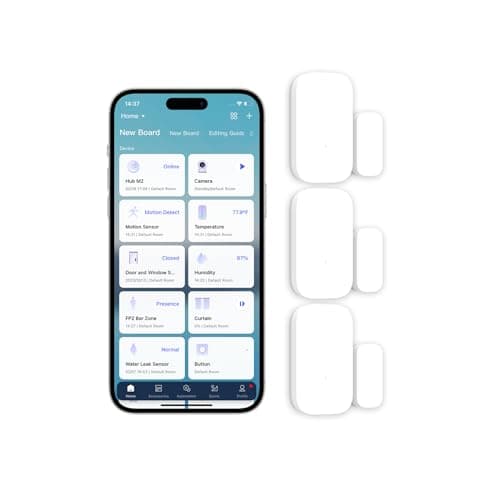
The best door and window sensor with no subscription is the Aqara P2, because Matter over Thread puts your smart home rather than a vendor at the other end of it. The budget pick is the Aqara Zigbee 3-pack. The reason this page exists is that the question is usually asked about the wrong device.
No contact sensor on the market charges a monthly fee. It is a magnet, a reed switch and a coin cell; there is nothing to store and nothing to process. So the honest version of “door sensors without a subscription” is a question about what the sensor reports to. A sensor is an endpoint. Something has to receive it, decide what it means and tell you — and that something is where every cost in this category lives, monthly or otherwise.
Four things a sensor can report to, and what each one costs
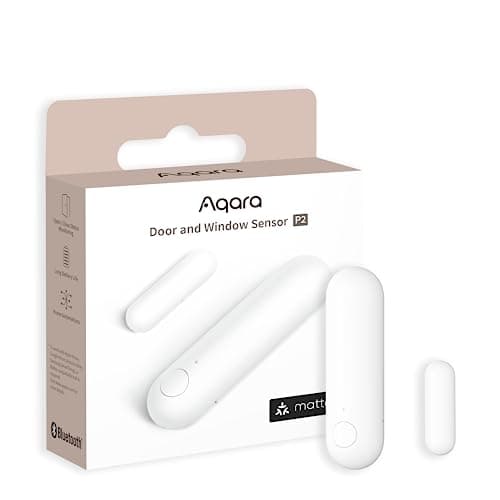
A Matter fabric, over Thread. The Aqara P2 joins Apple Home, Google Home, SmartThings or Home Assistant as a standard Matter device. There is no manufacturer cloud in the path, automations run locally, and the sensor keeps working when the internet does not — which is precisely when you want a door sensor. The cost is a Thread border router: an Apple TV 4K, HomePod mini, recent Nest Hub or SmartThings Station. Aqara is clear that this is not optional, and nothing on the box says so loudly enough.
Your own Zigbee coordinator. The THIRDREALITY sensor is plain Zigbee with no vendor hub requirement at all: it joins any coordinator, and it is explicitly documented against Home Assistant, SmartThings and Hubitat. Nothing can be discontinued out from under you because there is no manufacturer in the path to discontinue it. The cost is that you need to be the kind of person who runs a Zigbee stick.
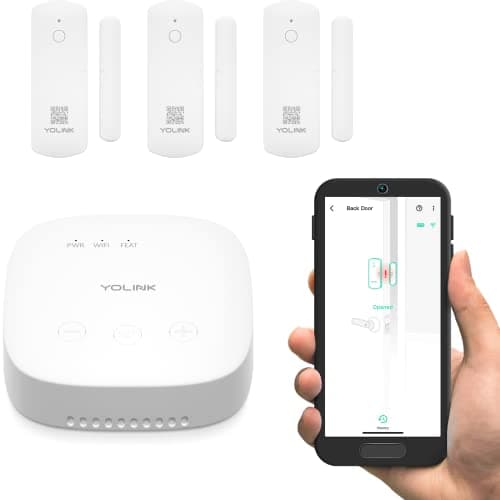
A manufacturer hub you buy once. The Aqara 3-pack is Zigbee bound to an Aqara hub, and the YoLink kit ships its own SpeakerHub in the box. Both run with no plan. This is hardware lock-in rather than a subscription: a real constraint, but a one-off one.
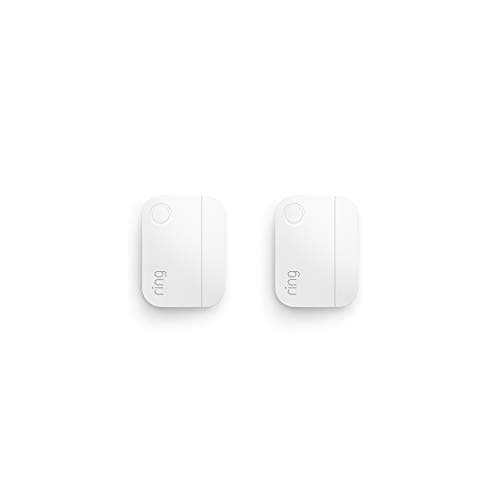
A closed alarm base. The Ring Alarm Contact Sensor is the cheapest sensor on this page per opening and has the longest published battery claim — Ring states roughly three years — and sensor alerts to the app genuinely do not need a plan. But it pairs to a Ring Alarm base station and nothing else, so it is only in contention if you already own one, and the sensors cannot be repurposed later. Our system-level ranking covers that trade in full.
The exception worth knowing about. Some alarm ecosystems reserve meaningful features — or professional response — for a plan, even though the sensors themselves are free to use. That is a monitoring charge, not a sensor charge, and it is the right thing to buy if you want somebody to call the police for you. It is just not what this page is ranking. The five-year arithmetic is in subscription costs compared.
The best no-fee door and window sensors, compared
Compiled from Aqara, THIRDREALITY, SwitchBot, YoLink and Ring product and support documentation, November 2026. Prices appear only on the cards above, pulled live and dated November 24, 2026.| Sensor | Reports to | Works with no hub | Local automations | Battery |
|---|
| Aqara P2 | Any Matter controller, over Thread | No — border router required | Yes | 1x CR2032 |
|---|
| THIRDREALITY Zigbee (2-pack) | Any Zigbee coordinator | No — coordinator required | Yes | Replaceable cells |
|---|
| Aqara Zigbee (3-pack) | An Aqara hub | No — Aqara hub required | Yes, via the hub | 1x CR1632 each |
|---|
| SwitchBot Contact Sensor | Itself, or a SwitchBot hub | Yes — local audible alert | Hub needed for automations | Replaceable cells |
|---|
| YoLink LoRa kit (3 sensors) | The included SpeakerHub, over LoRa | No — hub is in the box | Yes, plus spoken alerts | AAA cells |
|---|
| Ring Alarm Contact Sensor (2-pack) | A Ring Alarm base station only | No — base required | No | Approx. 3 years (Ring) |
|---|
Which one your house points to
You own an Apple TV, HomePod mini, Nest Hub or SmartThings Station: the Aqara P2. The border router is already paid for, and Thread plus Matter is the most future-proof shape in this category.
You run Home Assistant: THIRDREALITY. Plain Zigbee, fully local, no vendor account, and the best-documented option in exactly the communities where this category's real information lives. Check the sensor body against narrow window sashes first — it is larger than the Aqara units.
You are covering six to twelve openings: the Aqara Zigbee 3-pack, and an Aqara hub if you do not have one. This is the budget pick because a real perimeter is not one sensor, and per-opening cost is the number that decides whether you cover the whole ground floor or just the front door. The full sensor field compares the hardware itself.
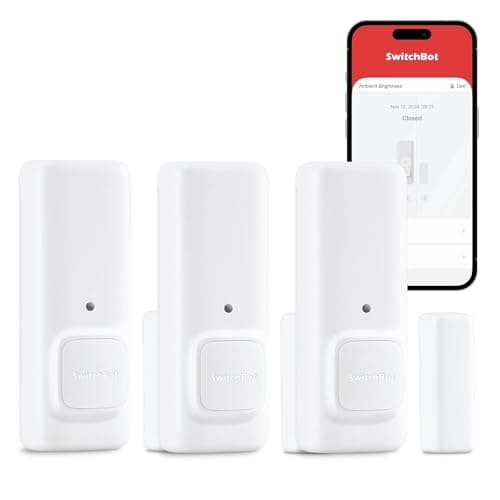
You own nothing and want one door covered today: the SwitchBot Contact Sensor. It detects the door opening and movement in front of it, and it makes a noise by itself — which is the right answer on a garage side door where a phone notification is not enough. Phone alerts while you are out need a SwitchBot hub. The no-hub field as a whole is in our no-hub rankings.
The door is in a detached garage, a barn or a gate: the YoLink kit. LoRa reaches roughly a quarter of a mile in open air, and nothing else here gets out of the house. See how to secure a garage door.
You already own a Ring Alarm: the Ring 2-pack, for the lowest per-opening cost and a three-year battery claim. Buy nothing else in Ring's sensor line if you might move to Matter later, because none of it travels.
Costing a sensor estate properly
The mistake is comparing sensor prices. The right comparison is cost per opening, including whatever has to exist behind them. A three-pack at fifty dollars covering three windows is cheaper per opening than a twenty-eight dollar single sensor, and both are irrelevant if you also need a hub you do not own. Write down the number of openings you actually care about — it is usually six to twelve on a ground floor, not two — then price the whole set plus the base.
The second number is battery shape. A contact sensor only transmits when the state changes, which makes it the best battery-life profile in home security: coin cells lasting years rather than months. Watch for two things anyway — whether the cell is a type you can buy anywhere (CR2032 yes, CR1632 less so), and how many sensors you are signing up to change. Twelve sensors on a two-year cell is six battery changes a year averaged out.
The third is physical fit, which sounds trivial and is the most common returned-item reason in this category. A sensor has two parts that must sit within a few millimetres of each other when the door or window is closed, on frames that are often not flat. Measure the gap and the available flat area on the sash before ordering, and prefer the smaller bodies for windows. If sensors drop off the network after install rather than at install, our dropout troubleshooting guide covers the usual causes.
Finally, decide up front whether you want these sensors to do something or just tell you something. A sensor that triggers a siren, a light or a camera recording needs an automation engine, which means a hub with local execution — and that is a better reason to buy one than remote access is. The self-monitored model is set out in self-monitored home security explained.