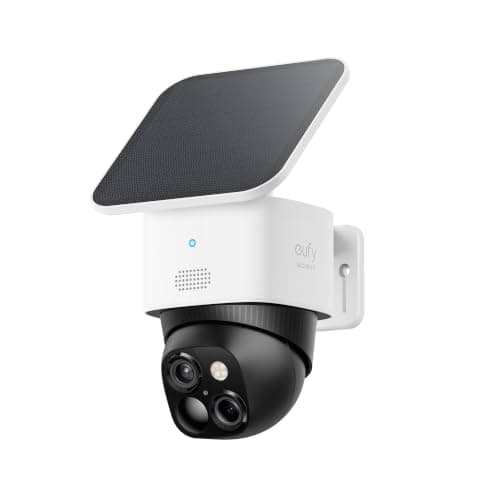
The best Blink alternative is the eufy SoloCam S340: solar, local recording, no monthly fee. The budget pick is the Tapo 2K+ wired camera. Here is the specific reason people leave, because it is narrower than the general grumbling suggests.
Why people replace Blink cameras
Blink is not a bad product and this page is not going to pretend it is. Two years on a pair of AA cells is a real engineering achievement, and nothing else in the category comes close. Blink is also the cheapest honest way to put several cameras up at once.
The reason to leave is the storage arrangement, and it has got harder rather than easier. Blink's own support documentation states that the Sync Module Core now shipped with its kits supports neither Local Storage nor Clip Backup — it has no USB port. A Sync Module is required for the cameras to work at all, so out of the box, saved clips go to Blink's cloud on a plan. Getting to plan-free recording means buying a Sync Module 2 and a USB drive on top of the kit you already bought. That is the whole complaint, stated accurately.
The secondary reason is resolution. The long battery life and the 1080p sensor are the same decision — a lower-resolution event-only camera is what makes two years on AAs possible — and a field that has moved to 2K and 4K makes that trade increasingly visible on a driveway.
The cheapest fix may be staying. If you own Blink cameras and like them, a Sync Module 2 plus a USB stick converts the system to plan-free local storage without replacing a single camera. That is a genuinely smaller spend than any camera on this page, and we would be doing you a disservice not to say so. Everything below is for people who also want the resolution, the continuous recording or the solar.
The five alternatives compared
The columns are the trade: what you gain in storage, and what you give up against Blink's two genuine strengths.
Compiled from eufy, Reolink and TP-Link product and support documentation, November 2026, with Blink's own Sync Module support pages for the baseline. Prices appear only on the cards above, pulled live and dated November 24, 2026.| Camera | Power | Storage | Plan needed to record | Resolution |
|---|
| Blink Outdoor 4 (the baseline) | 2x AA lithium, up to 2 years | Sync Module Core: none | Yes, unless you add a Sync Module 2 | 1080p |
|---|
| eufy SoloCam S340 | Integrated solar | Onboard, local | No | 3K dual camera |
|---|
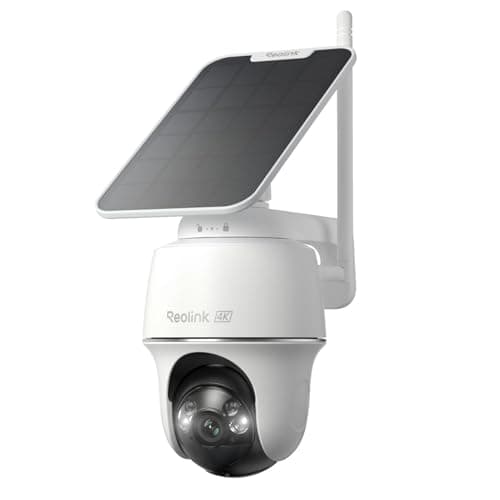
| Reolink Argus PT Ultra | Integrated solar | microSD in the camera | No | 4K |
|---|
| Kasa 2K+ Outdoor Wired | Mains cable | Local, continuous | No | 2K+ with starlight night vision |
|---|
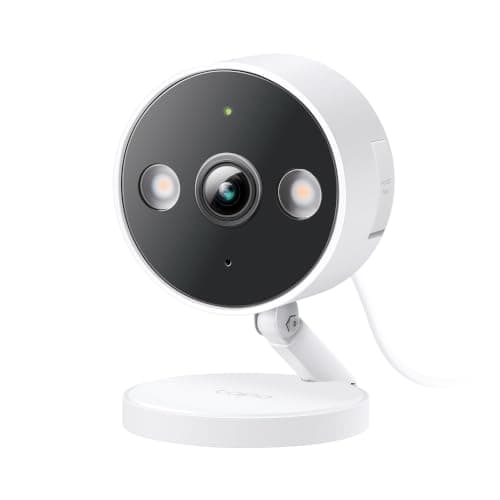
| Tapo 2K+ Wired | Mains socket | microSD, continuous | No | 2K+ |
|---|
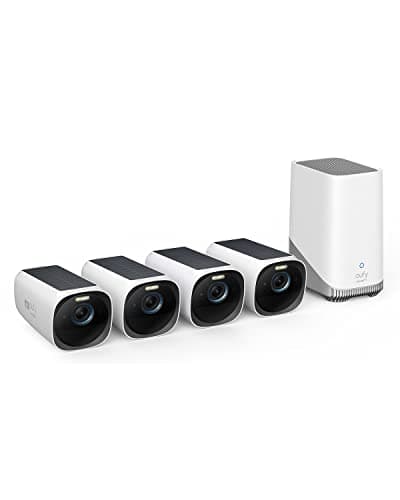
| eufyCam 3 (S330) kit | Integrated solar, four cameras | HomeBase 3, expandable drive | No | 4K |
|---|
Which alternative matches what you liked about Blink
You liked never touching it: the eufy SoloCam S340 or the Reolink Argus PT Ultra. Solar is the honest replacement for a two-year battery — not the same mechanism, same outcome, as long as the mounting spot gets real sun. Under a deep eave or on a shaded north wall that argument collapses completely, and you should buy a wired camera instead.
You liked the price: the Tapo 2K+ wired camera, which is the budget pick here. It is the cheapest camera on this site that does continuous 24/7 recording to a card you own, and it costs less than a single Blink camera. Its constraint is absolute: it needs a socket within reach of the mount.
You wanted a response, not just a recording: the Kasa, which has a built-in siren and color night vision without a floodlight blazing at the neighbours all night. Mains powered, continuous recording, no plan.
You are replacing a five-camera Blink kit: the eufyCam 3 (S330) kit. Four 4K solar cameras and a HomeBase that holds the footage locally, so retention becomes a drive-size decision rather than a plan tier. It is one camera fewer and a great deal more capable. If budget is the constraint, the price-capped routes are in camera systems under $500.
What you will miss
The battery life, straightforwardly. Blink publishes up to two years on two AA lithium cells. The solar cameras here are install-once only where there is sun; the wired ones need a cable. There is no camera on this page you can put on a shaded wall and forget for two years, and anyone telling you otherwise is selling something.
Amazon-scale support. Blink's documentation and returns process are better than most of the brands here. That is worth something, particularly for a first camera.
For the brand-versus-brand view rather than a leaving-Blink list, we have three head-to-head pages: eufy vs Blink, Ring vs Blink and Wyze vs Blink. Each ends in a decision rule rather than a verdict.
Switching off Blink without losing coverage
Keep the mounting points. You already know where the cameras need to be, which is the hard part of this job. Check the new camera's mount pattern before ordering — some use a ball joint on a plate, some a magnetic puck — and reuse the holes where you can.
Decide clips or timeline before you decide brand. Battery and solar cameras record events; mains and PoE cameras can record continuously. If the question you want answered is “what time did the van arrive” rather than “did something move”, no amount of money spent on a battery camera will do it. Explained in do security cameras record all the time.
Buy the card at the same time. Card-based cameras almost never include one, and a camera with no card in it records nothing. Check the maximum capacity the manufacturer documents — it varies from 128GB to 512GB across these brands — and buy a card rated for continuous video if the camera records 24/7.
Then check the exit cost on the old system. If you are mid-plan, the Sync Module 2 route may be the cheaper decision for this year, with a camera upgrade later. Our five-year subscription table is the right place to work out whether the plan or the hardware is the real cost, and local storage vs cloud covers what you are actually choosing between.